What the 395 patients did, and what changed
Keren Doenyas-Barak, Shai Efrati and colleagues published the analysis in Frontiers in Neurology. Between January 2017 and January 2025, patients at the Sagol Center completed 60 daily hyperbaric chamber sessions, five days a week, breathing 100% oxygen at 2.0 ATA for 90 minutes with periodic air breaks, in a multiplace chamber under medical supervision.
Sleep was measured with the Pittsburgh Sleep Quality Index, a 19-item questionnaire that produces a global score from 0 to 21 across seven components. Higher is worse. Above 5 counts as disturbed sleep.
The 395 patients fell into three groups. Healthy aging was the largest at 180, defined as people over 50 living independently with no neurodegenerative disease, who had come for age-related decline rather than for an illness. Long COVID accounted for 92 and PTSD for 123. Mean age was 58.
Every group improved on the total score, all at p below 0.001. Healthy aging went from 7.1 to 6.5, long COVID from 8.4 to 7.7, and PTSD from 12.1 to 10.9. Effect sizes ran from 0.37 in the aging group to 0.91 across the whole cohort.
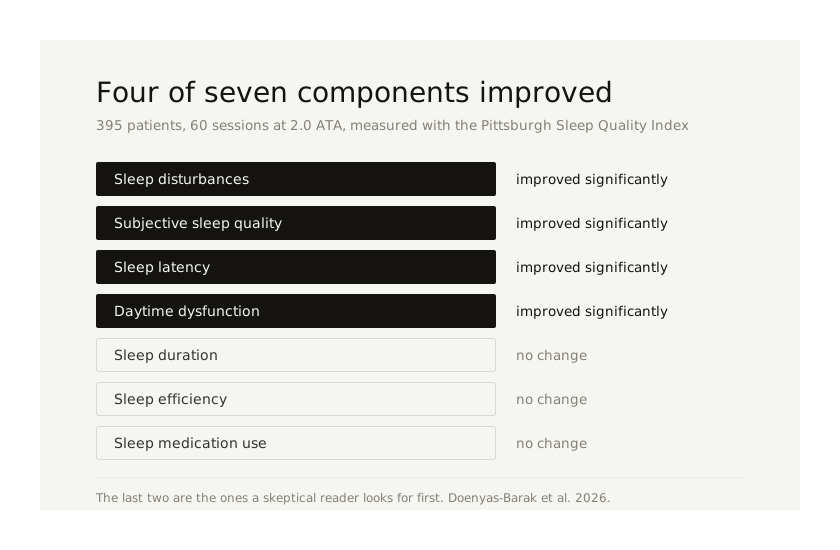
Four of the seven components moved. Sleep disturbances improved most strongly, followed by subjective sleep quality, sleep latency, and daytime dysfunction. In plain terms, people fell asleep faster, woke less often, rated their nights better, and functioned better the next day.
Sleep improved most in the people sleeping worst
The authors went further than reporting an average. They ran a regression on the result, entering baseline score, age, sex and diagnosis together.
Only one predictor survived. Baseline sleep score came out at B = 0.492, p below 0.001. Age did not predict improvement. Sex did not. Neither did which condition someone had been treated for.
The relationship is close to linear, and the authors plot it. Improvement rises by roughly a third of a point for every point of baseline score. Someone arriving at 15 can expect several points of movement. Someone arriving at 4 can expect almost none.
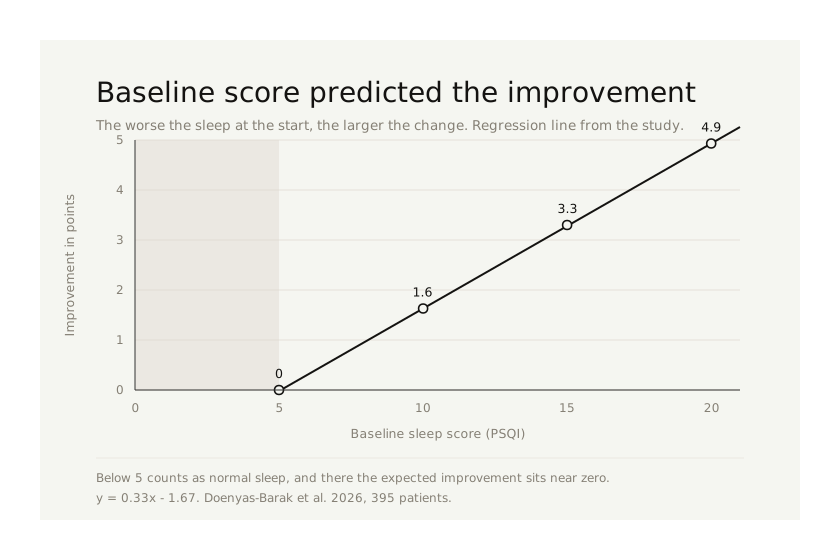
They tested that directly. Removing the 63 participants who slept normally at baseline left 332 with disturbed sleep, and in that group the improvement was both larger and broader. Total score fell from 10.8 to 8.8, with significant gains in duration, disturbances, daytime function, subjective quality and latency.
The 63 normal sleepers showed minimal change on anything.
The finding cuts in both directions. If your sleep is already good, the evidence does not suggest a course of hyperbaric oxygen will make it better. If your sleep has been poor for years, you are in the group where the numbers moved.
Sleep efficiency and medication use did not change
Two components sat still, and they are the two a skeptical reader will look for first.
Sleep efficiency, which is the proportion of time in bed actually spent asleep, did not shift in any group. Neither did use of sleep medication.
The second of those is the awkward one. If sleep genuinely improved across 395 people over a two-month course, you might expect at least some of them to have reduced or stopped a sleeping tablet. They did not. The authors report it plainly rather than burying it, and they also note that they lacked detailed prescription data, so a change in dose rather than in use would not have shown up.
An honest reading is that this sits unresolved. People reported falling asleep faster and waking less while continuing to take the same medication. Both things can be true, and neither explains the other.
The trial that measured sleep instead of asking about it
The Sagol analysis has a structural limit, and its authors state it in the first line of the discussion. The study was retrospective, uncontrolled, and based entirely on a questionnaire.
One study has done it the harder way. In 2018, Jeffrey Walker, Lindell Weaver and colleagues published a sleep substudy of the BIMA trial in Sleep Medicine, covering 71 service members with persistent symptoms after mild traumatic brain injury, randomized double-blind against a sham chamber.
Their baseline picture is striking on its own. Of the participants, 87% had insomnia, 70% screened at high risk for obstructive sleep apnea, 32% had restless legs, and 49% had comorbid PTSD. This is a population whose sleep was comprehensively disrupted.
Their headline finding was that hyperbaric oxygen improved reports of sleep quality, but not the other sleep measures.
So under blinded conditions, with objective assessment alongside the questionnaires, the subjective improvement appeared and the objective one did not.
Why reported sleep and measured sleep disagree
Both results can hold at once, and the reason is a known problem in sleep medicine rather than a problem with hyperbaric oxygen.
Subjective and objective sleep measures diverge routinely. People with insomnia underestimate how long they sleep. People with apnea often report sleeping fine. Mood, expectation and attention all shape how someone rates a night, and none of them show up on a sensor. The literature treats the two as complementary, not interchangeable, which is to say they measure different things and both are real.
The Sagol authors make this argument themselves, and then concede what follows from it. Reliance on a questionnaire alone, in an uncontrolled cohort, cannot separate a change in sleep physiology from a change in how sleep is perceived. They call for prospective trials with actigraphy or polysomnography.
That is the right conclusion, and it sets the weight the finding can carry. What has been shown is that people report sleeping better. Whether their sleep architecture changed is a separate question nobody has answered.
How you rate your own sleep is not a trivial outcome either. It predicts daytime function and quality of life better than some objective measures do. It is simply not the same claim.
What the sham-controlled trials found about sleep
Two findings do come from controlled work.
In the randomized, sham-controlled post-COVID trial at the same center, sleep was among the secondary outcomes that separated from sham after 40 sessions, with a net effect size of 0.48. That is a blinded comparison with a genuine placebo arm, and sleep moved.
And when the same cohort was revisited more than a year later, at 486 days after the final session, sleep quality had held. Improvements appeared on the global score and across five sleep domains with moderate effect sizes. That follow-up had no control group at that distance, so it shows persistence without proving causation.
Ten sessions did nothing for sleep. Forty did.
The sleep literature shows the same pattern that runs through the rest of this field.
The Karolinska trial of ten sessions in long COVID found no sleep benefit. The 40-session trial in the same condition did. In children with cerebral palsy, ten sessions produced no change in sleep while 20 did. And the 395-patient analysis ran 60.
The authors draw the obvious inference, putting it as a relationship between cumulative oxygen exposure and symptomatic improvement, which is the same pattern that runs through how many sessions a course needs. Nobody has run the trial that would confirm it, which would mean randomising the same patients to different course lengths. But the pattern is consistent enough that a short course should not be expected to do what a long one does.
What nobody has tested
No controlled trial has made sleep its primary outcome. Every finding above is a secondary measure or a retrospective analysis.
Nobody has measured sleep objectively in a population where the subjective improvement was large. Actigraphy is cheap and wearable, and the trial has not been run.
Nobody knows how long it lasts in people without a diagnosis. The one-year persistence data comes from post-COVID patients, not from healthy sleepers in a longevity program.
And the mechanism is proposed rather than shown. The candidates are reasonable, including autonomic balance, inflammation, mitochondrial function and effects on adenosine and melatonin signalling, but in humans they remain candidates.
The protocols behind the evidence
| Study | Pressure | Session | Course | Design | Sleep outcome |
|---|---|---|---|---|---|
| Doenyas-Barak 2026, mixed | 2.0 ATA | 90 min, air breaks | 60 sessions, 5/week | Retrospective, no control | PSQI improved in all three groups |
| Walker 2018, BIMA | 1.5 ATA | 60 min | 40 sessions | Double-blind, sham | Reported quality improved, other measures did not |
| Zilberman-Itskovich 2022, post-COVID | 2.0 ATA | 90 min, 5 min every 20 | 40 sessions | Double-blind, sham | Sleep separated from sham, d = 0.48 |
| Hadanny 2024, follow-up | 2.0 ATA | 90 min | 40 sessions | Single-arm follow-up at 486 days | Gains held, moderate effect sizes |
| HOT-LoCO 2025, long COVID | 2.4 ATA | 90 min | 10 sessions | Double-blind, sham | No sleep benefit |
Where Age Back Clinic sits on this
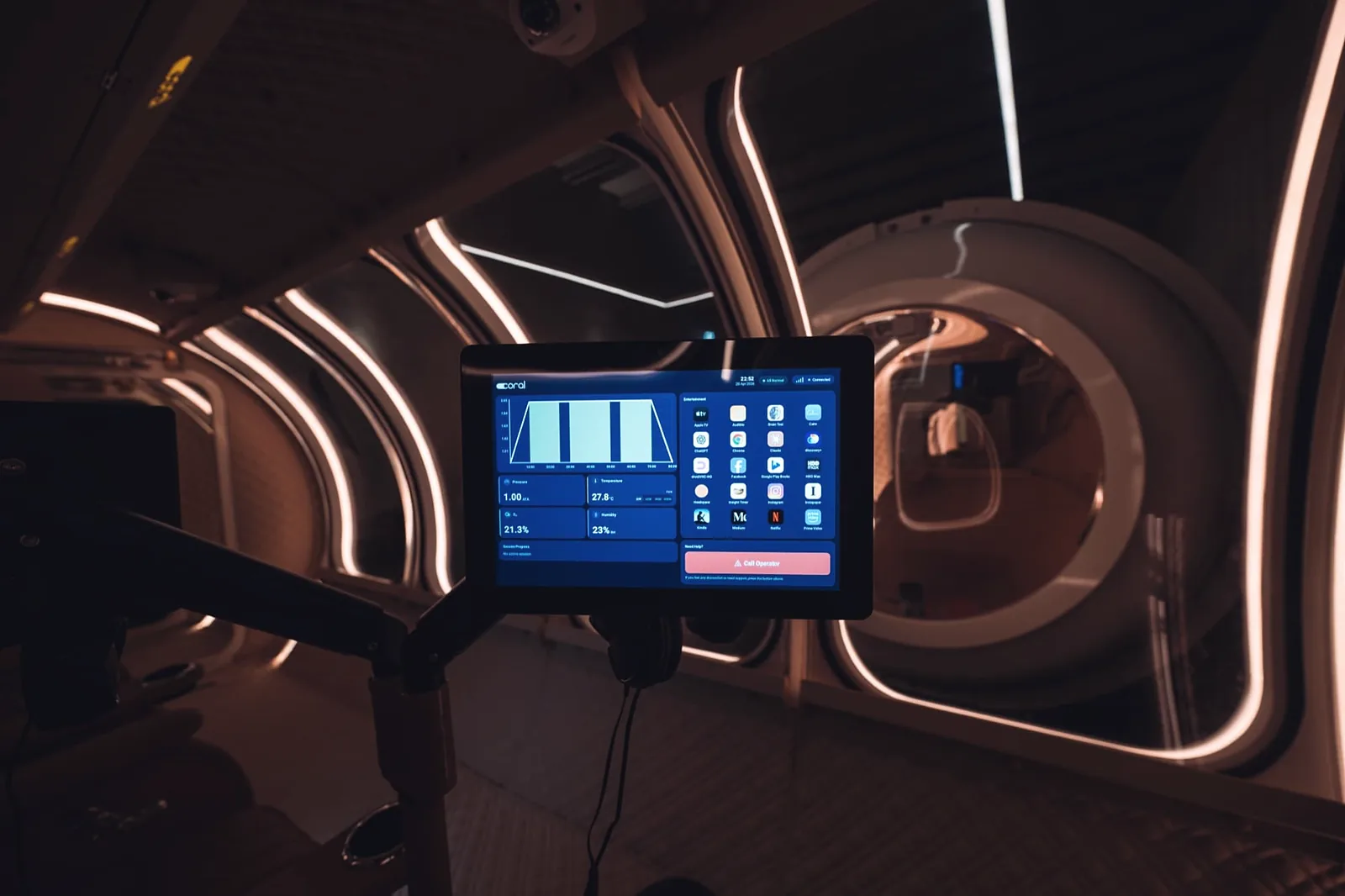
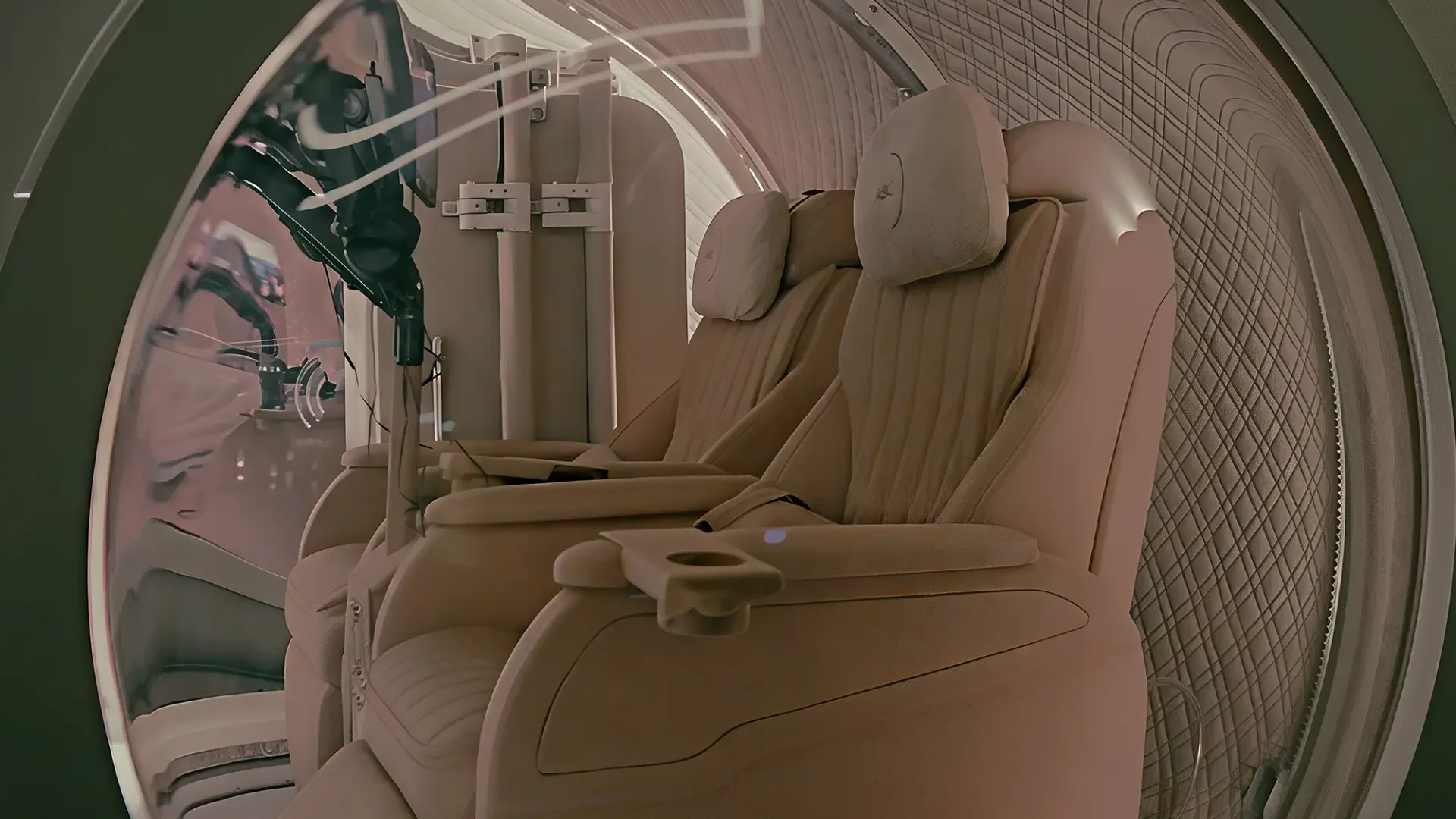
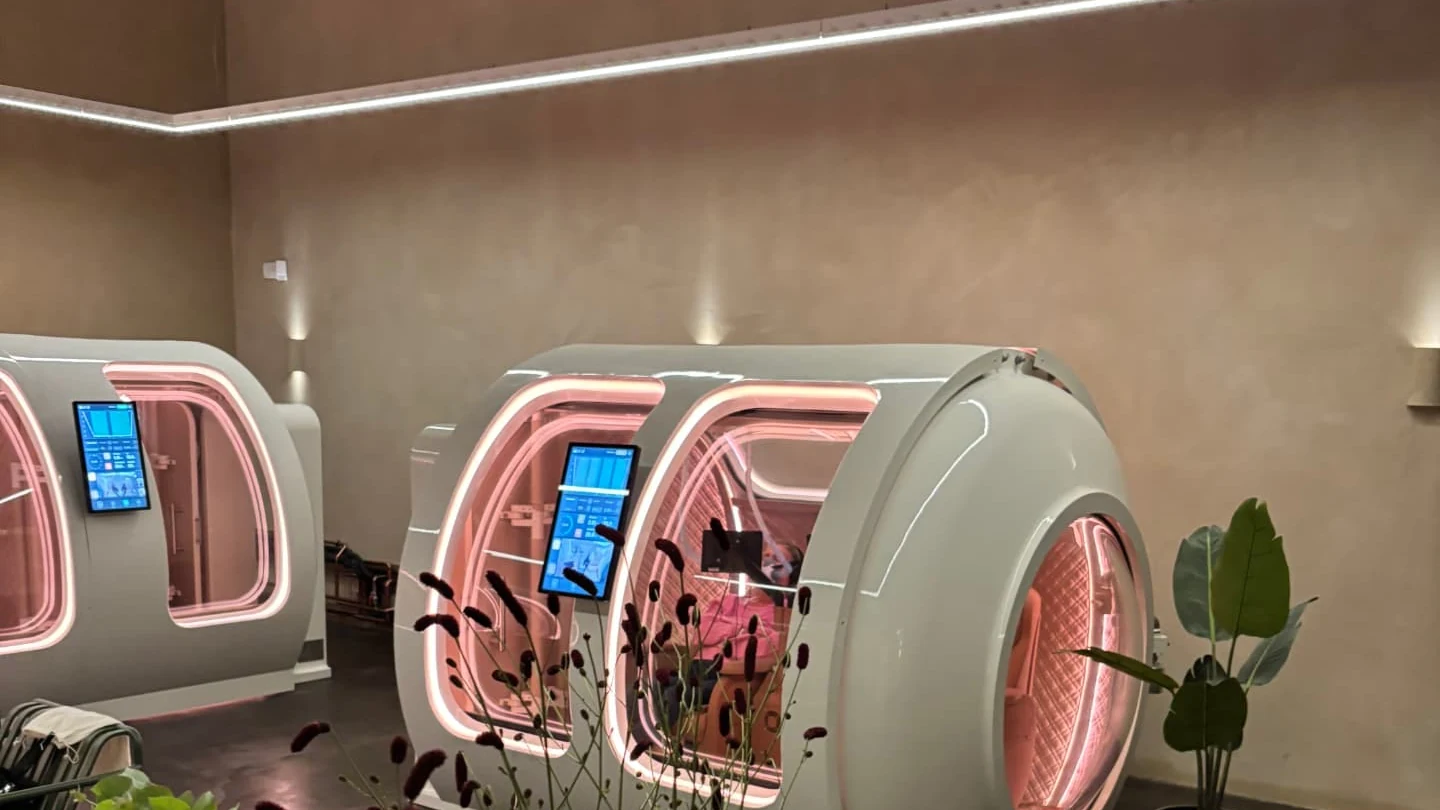
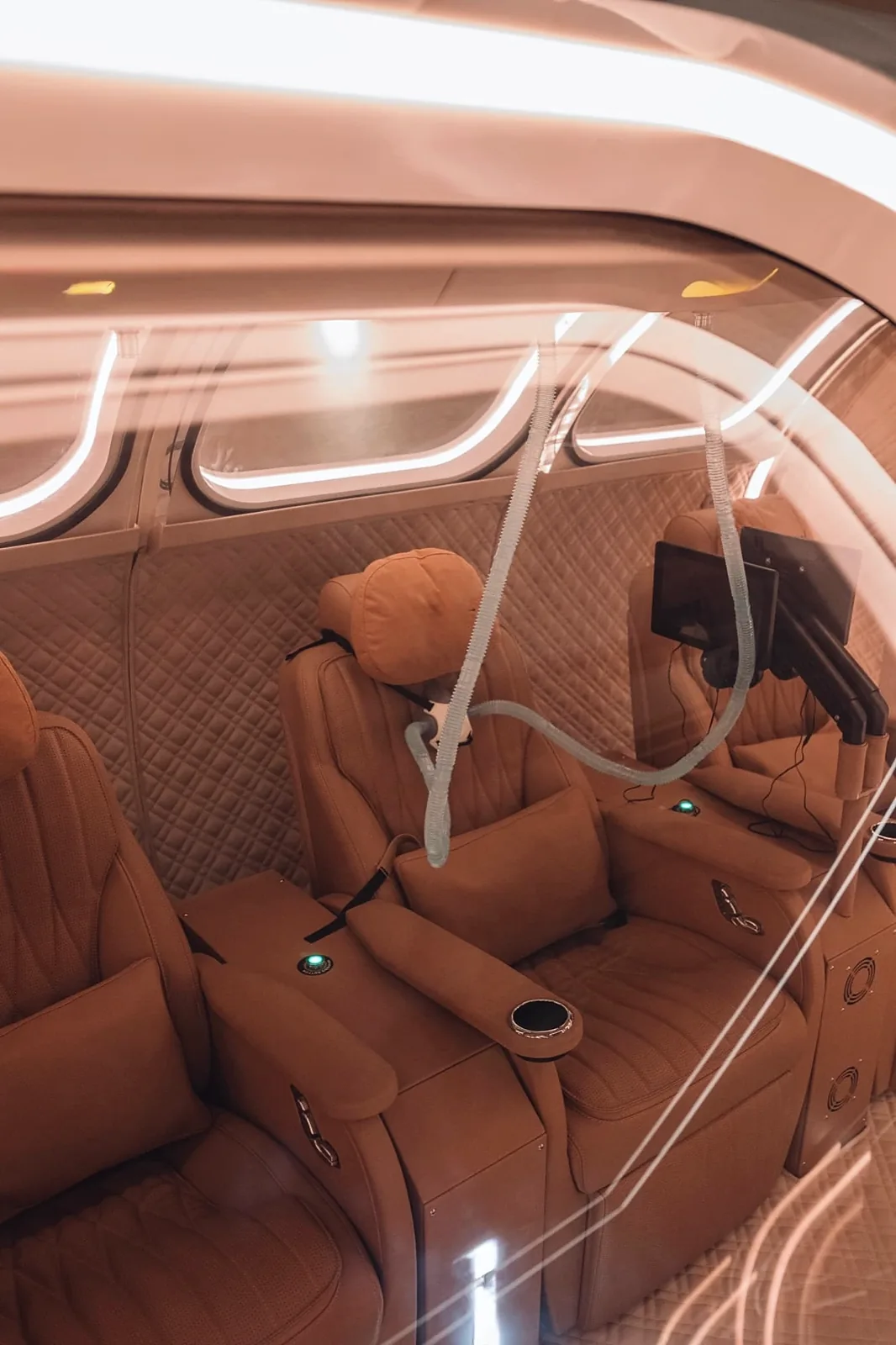
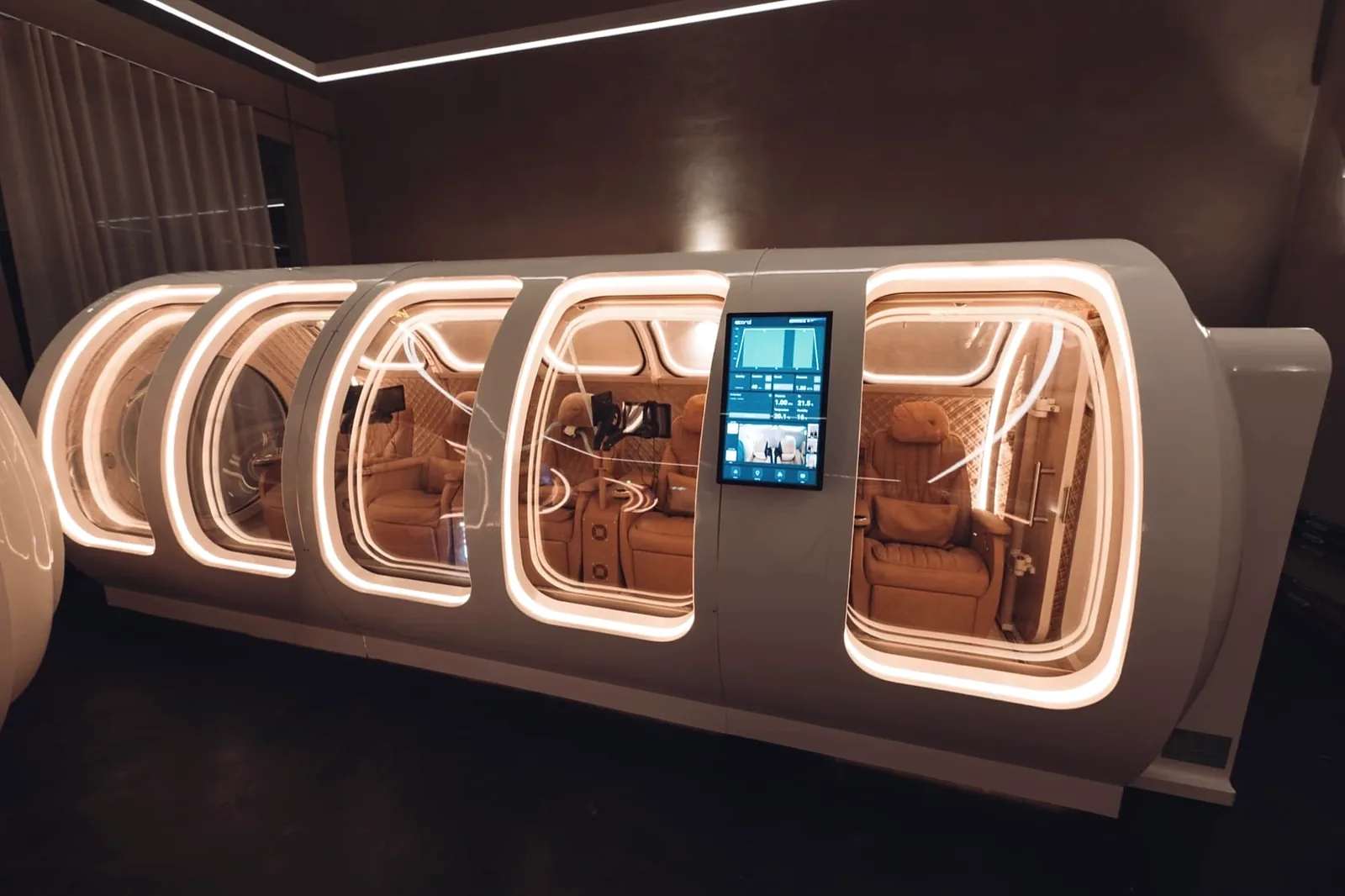
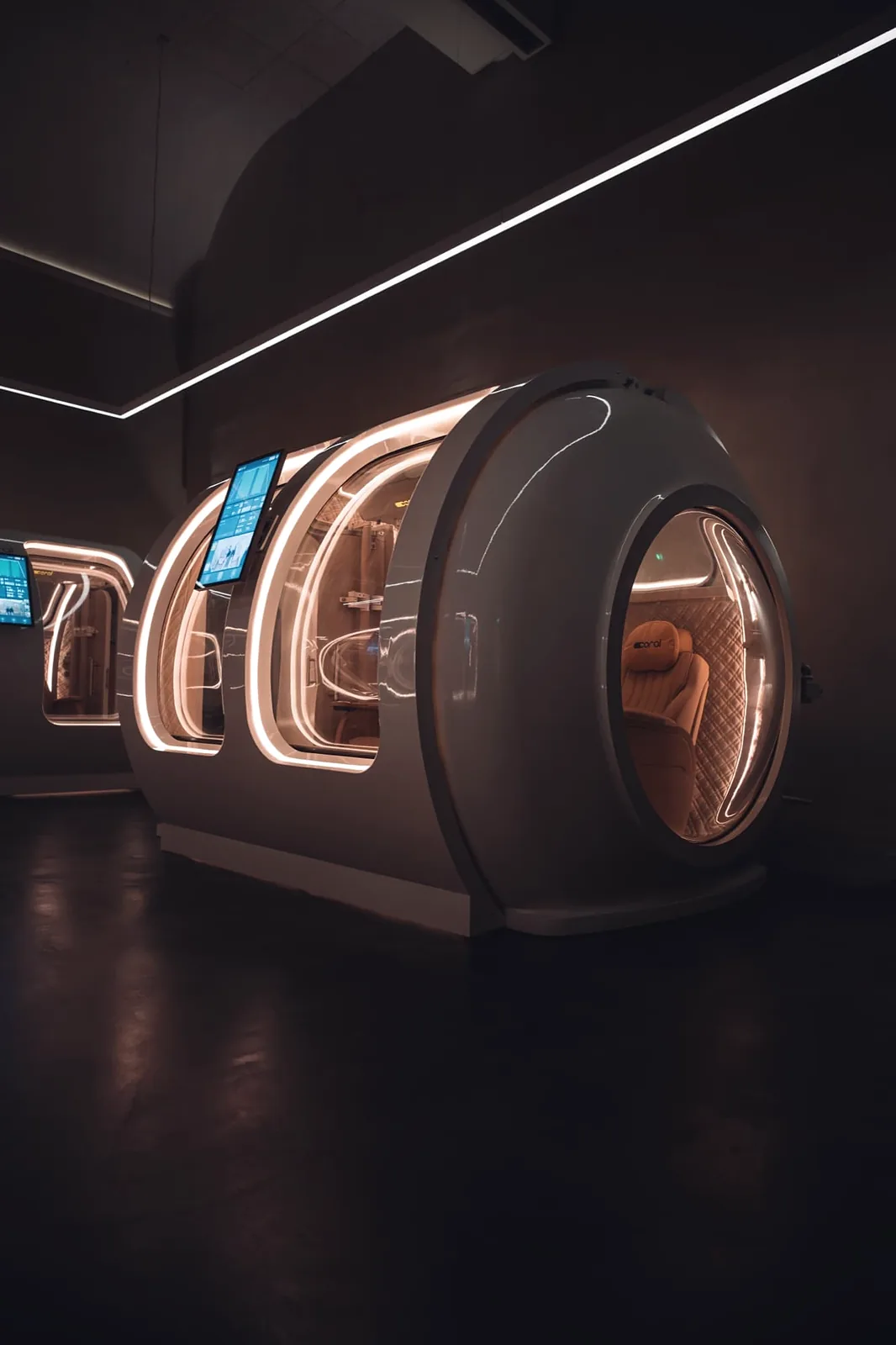
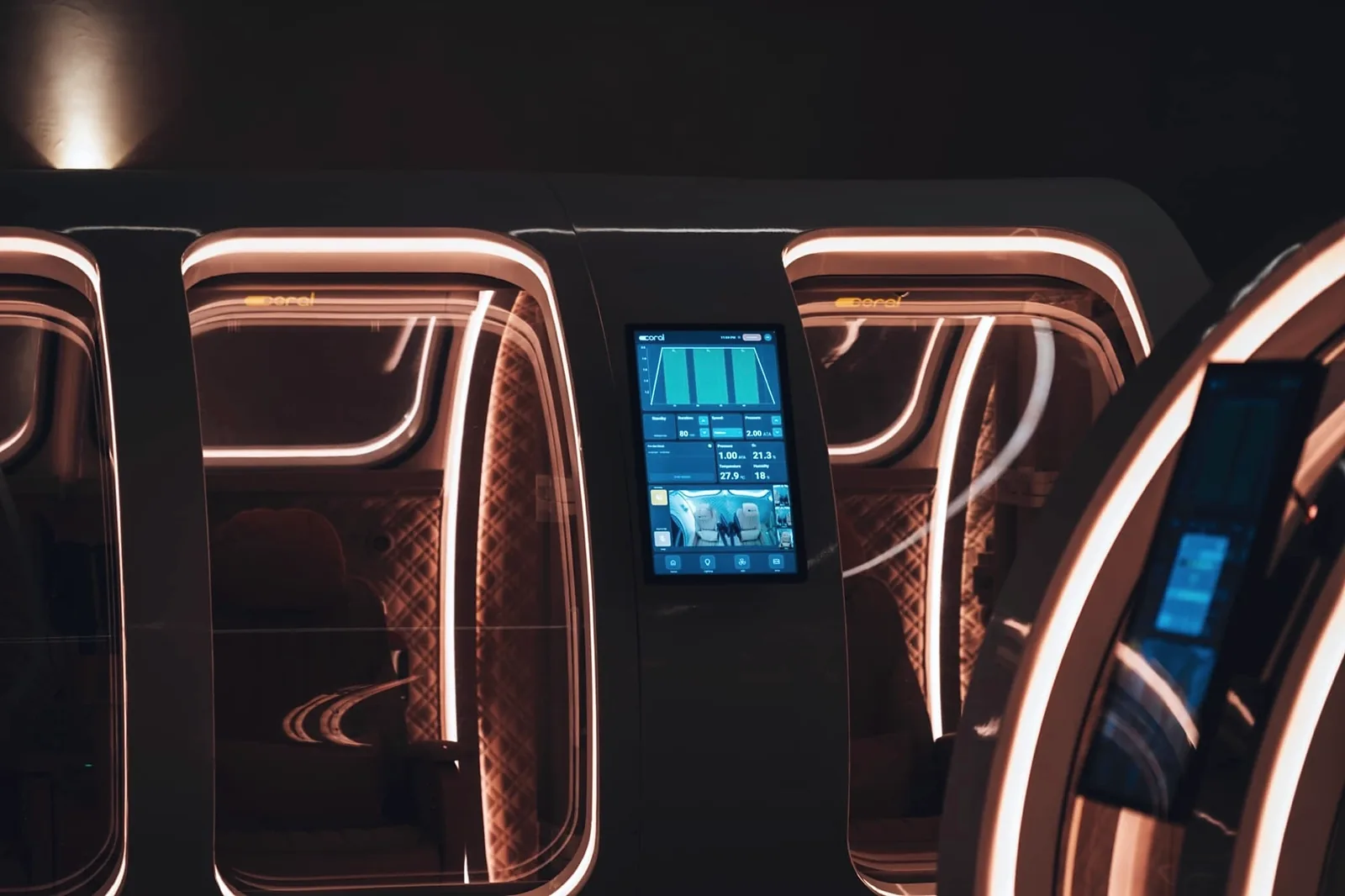
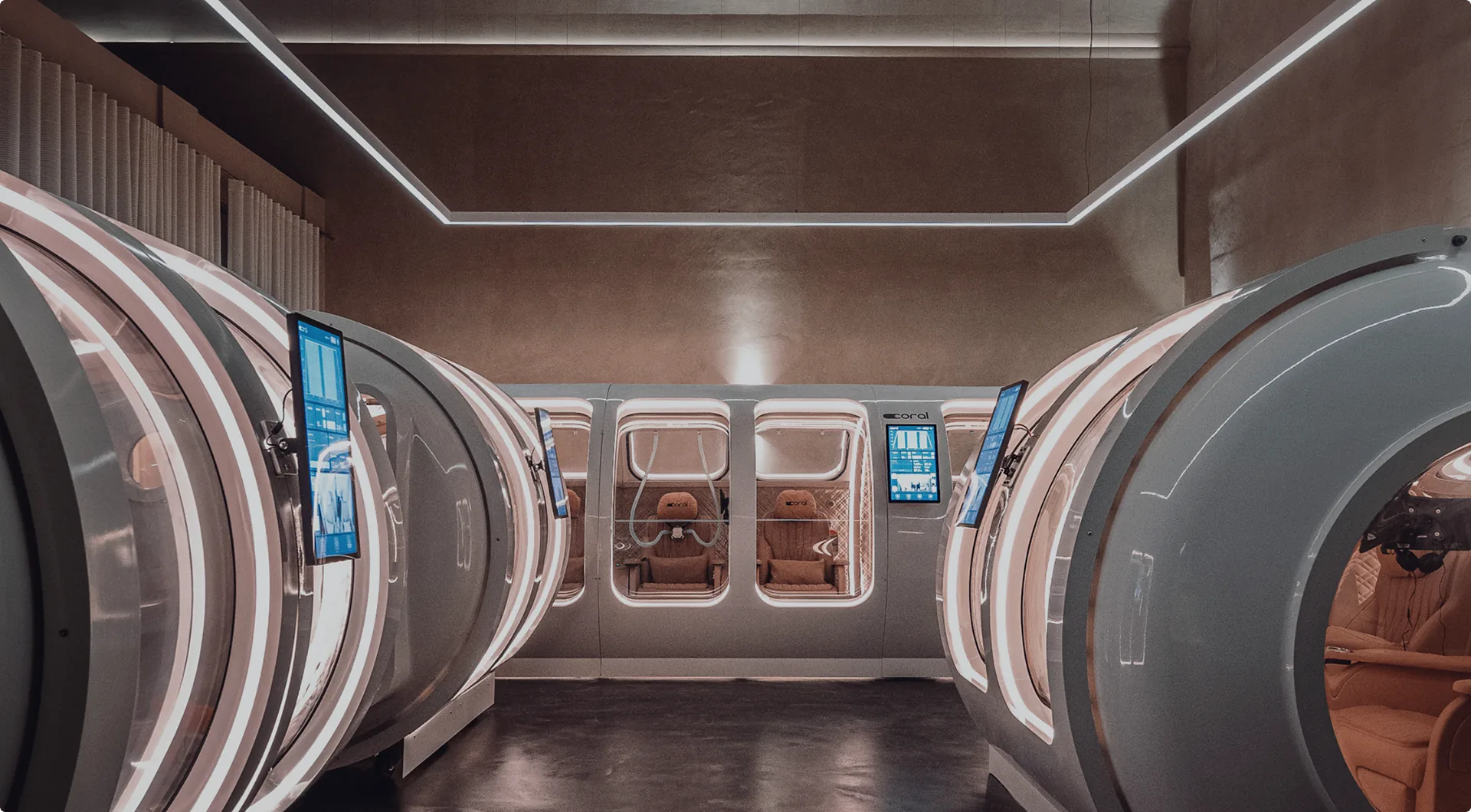
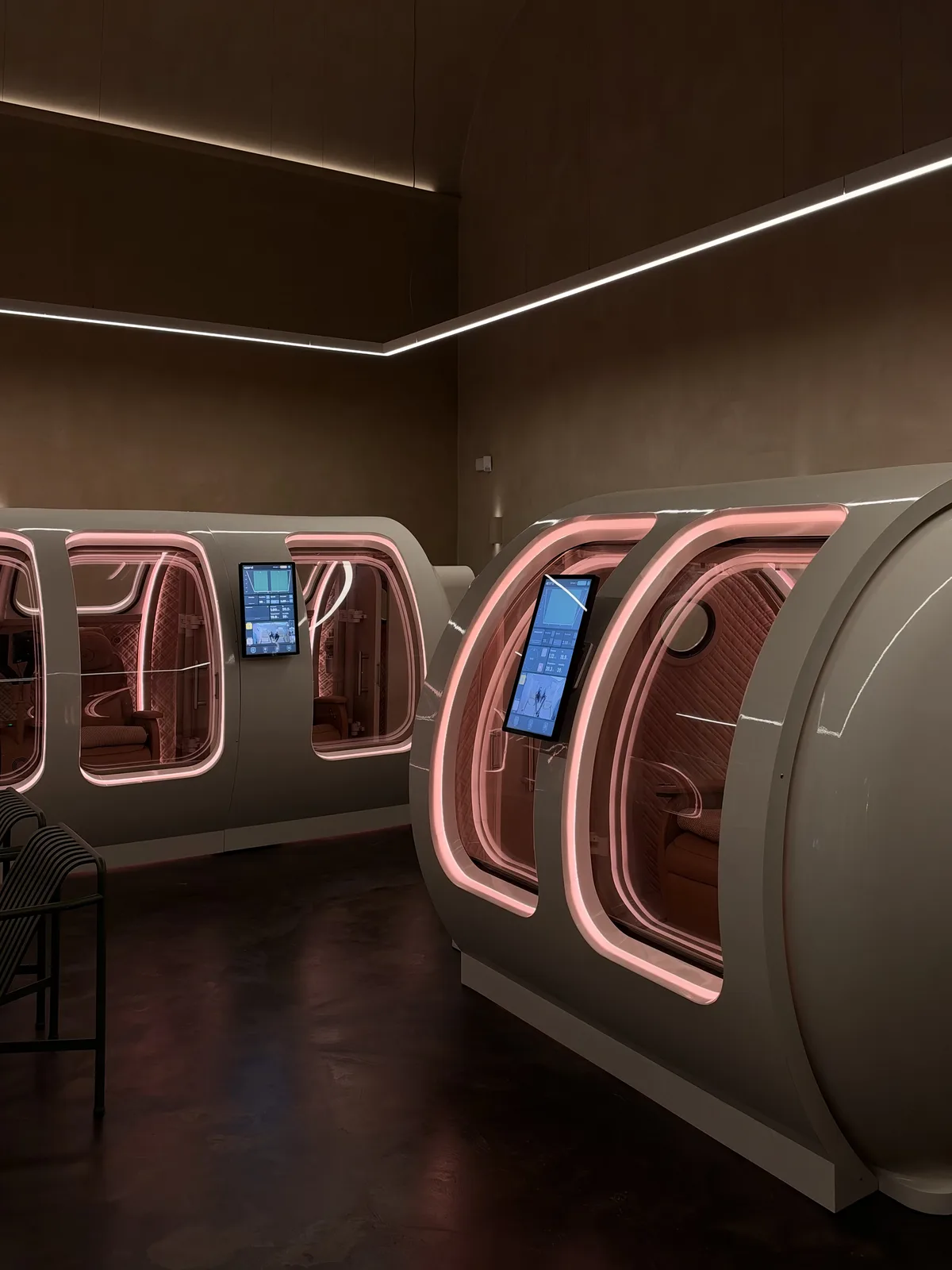
The 395-patient analysis ran at 2.0 ATA in a multiplace chamber with oxygen delivered by mask and scheduled air breaks, which is the architecture we use. Our treatment pressure is 2.0 ATA, oxygen by individual mask at approximately 93%, giving 1.86 ATA inspired, in two CE-marked hard-shell multiplace chambers with seven seats between them.
The difference is duration. That protocol ran 90 minutes at pressure. Our sessions are 65 or 95 minutes door to door, which gives 45 or 75 minutes at pressure once compression and decompression are accounted for.
Course length is set at consultation, not sold as a package. The sleep findings above come from courses of 40 and 60 sessions.
Frequently asked questions
Does hyperbaric oxygen therapy make you tired?
Often, for the first few sessions, and it passes. Mild tiredness afterwards is common enough that it is worth expecting rather than reading as a bad sign. Over a full course the direction reverses. In the post-COVID trial, energy was one of the domains that separated from sham, with a net effect size of 0.52, which was among the larger effects the trial found.
Can a hyperbaric chamber help sleep apnea?
Apnea itself has not been tested, so nothing here is evidence that a chamber treats it. What the research does show is that people with apnea were well represented in the groups that improved. In the brain injury trial, 70% of participants screened at high risk for obstructive sleep apnea before treatment started, and sleep quality scores still moved. The same holds in the larger analysis, where nobody was excluded for it.
How many HBOT sessions before sleep changes?
The studies that found a sleep effect ran 40 or 60 sessions. The one that ran ten found nothing, and in children with cerebral palsy ten produced no change while 20 did. Nobody has published what an interim assessment looks like, so there is no evidence-based answer to how early you would notice.
Is a course safe if I take sleeping tablets?
Nothing in this literature suggests an interaction, and medication use was recorded rather than adjusted in the studies above. Tell whoever plans your course what you take, as with any other medication, and do not change a prescription on the basis of an article.
- Doenyas-Barak K, Elman Shina K, Lang E, Finci S, Elkarif V, Shorer R, Efrati S. The effect of hyperbaric oxygen therapy on sleep quality across diverse patient populations. Frontiers in Neurology, 2026;17:1690633. frontiersin.org
- Walker JM, Mulatya C, Hebert D, Wilson SH, Lindblad AS, Weaver LK. Sleep assessment in a randomized trial of hyperbaric oxygen in US service members with post concussive mild traumatic brain injury compared to normal controls. Sleep Medicine, 2018;51:66-79. PubMed
- Zilberman-Itskovich S, Catalogna M, Sasson E, et al. Hyperbaric oxygen therapy improves neurocognitive functions and symptoms of post-COVID condition: randomized controlled trial. Scientific Reports, 2022;12:11252. nature.com
- Hadanny A, Zilberman-Itskovich S, Catalogna M, et al. Long term outcomes of hyperbaric oxygen therapy in post covid condition: longitudinal follow-up of a randomized controlled trial. Scientific Reports, 2024;14:3604. nature.com
- Kjellberg A, Hassler A, Boström E, et al. Ten sessions of hyperbaric oxygen versus sham treatment in patients with long covid (HOT-LoCO): a randomized, placebo-controlled, double-blind, phase II trial. BMJ Open, 2025;15:e094386. PubMed Central
- Long Y, Tan J, Nie Y, Lu Y, Mei X, Tu C. Hyperbaric oxygen therapy is safe and effective for the treatment of sleep disorders in children with cerebral palsy. Neurological Research, 2017;39:239-247.
- Tan WQ, Liu Q, Cen MJ, et al. Efficacy of hyperbaric oxygen therapy as an adjunct therapy in the treatment of sleep disorders among patients with Parkinson's disease: a meta-analysis. Frontiers in Neurology, 2024;15:1328911. PubMed Central