The short version
Hyperbaric oxygen has its best athletic evidence where blood supply to bone or joint tissue has failed, and its weakest where it has not. A sham-controlled trial, a 37-patient knee series and a 2026 systematic review all point the same way for osteonecrosis and bone marrow edema, and a separate 2026 review found consistent pain reduction after knee surgery and in fibromyalgia.
Ordinary training soreness is the exception: two independent analyses sixteen years apart agree that hyperbaric oxygen does not improve it, which is why this guide covers everything else. The useful question is not whether HBOT helps athletes. It is which tissue you are asking it to help.
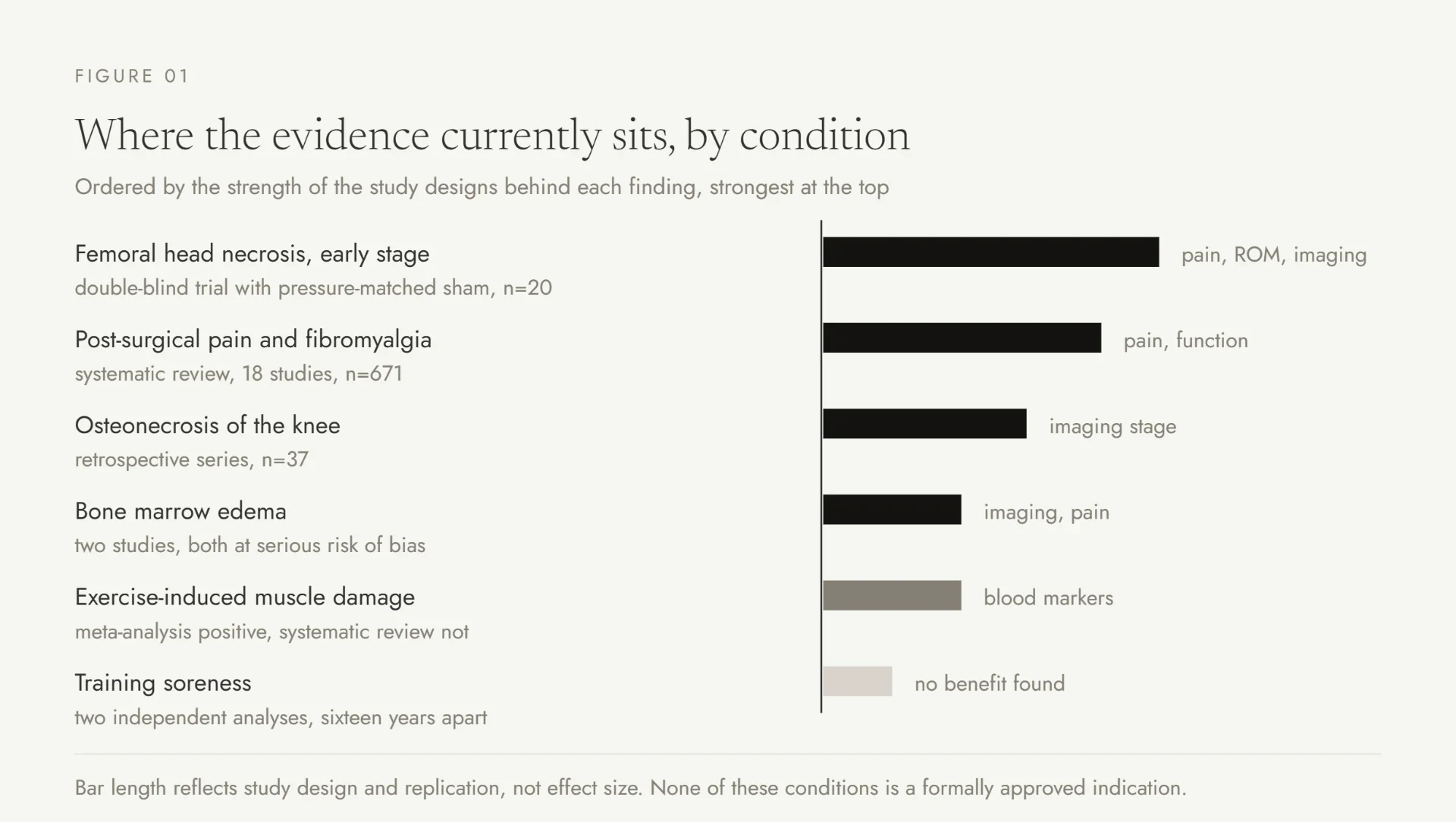
What is established about pressure and tissue, and what is still open
Settled physiology can be relied on. The right hand column is where the field is still arguing.
| Established | Under active research |
|---|---|
| Raising pressure raises dissolved plasma oxygen, which reaches tissue that perfusion alone does not | The size of the effect in osteonecrosis, and which disease stages respond best |
| Bone under a failing blood supply is hypoxic, which is the mechanism hyperbaric oxygen is best matched to | Whether bone marrow edema responds for the same reasons, with both published studies carrying serious risk of bias |
| Repeated hyperoxic exposure drives angiogenesis and modulates osteoblast and osteoclast activity | Whether the post-surgical pain findings reflect healing or analgesia |
| Long protocols outperform short ones across the bone studies | The minimum effective course length, which no trial has tried to establish |
| Delayed onset muscle soreness is not primarily a hypoxic problem | Why muscle damage markers move in some trials while soreness scores do not |
Thirty sessions against a pressure-matched sham, and seven years without a hip replacement
The strongest single study behind the bone evidence was published in the Journal of Arthroplasty in 2010 by Enrico Camporesi and colleagues. It is a double-blind, randomized, prospective trial in 20 patients with unilateral femoral head necrosis, all at Ficat stage II, meaning the bone was damaged but had not yet collapsed.
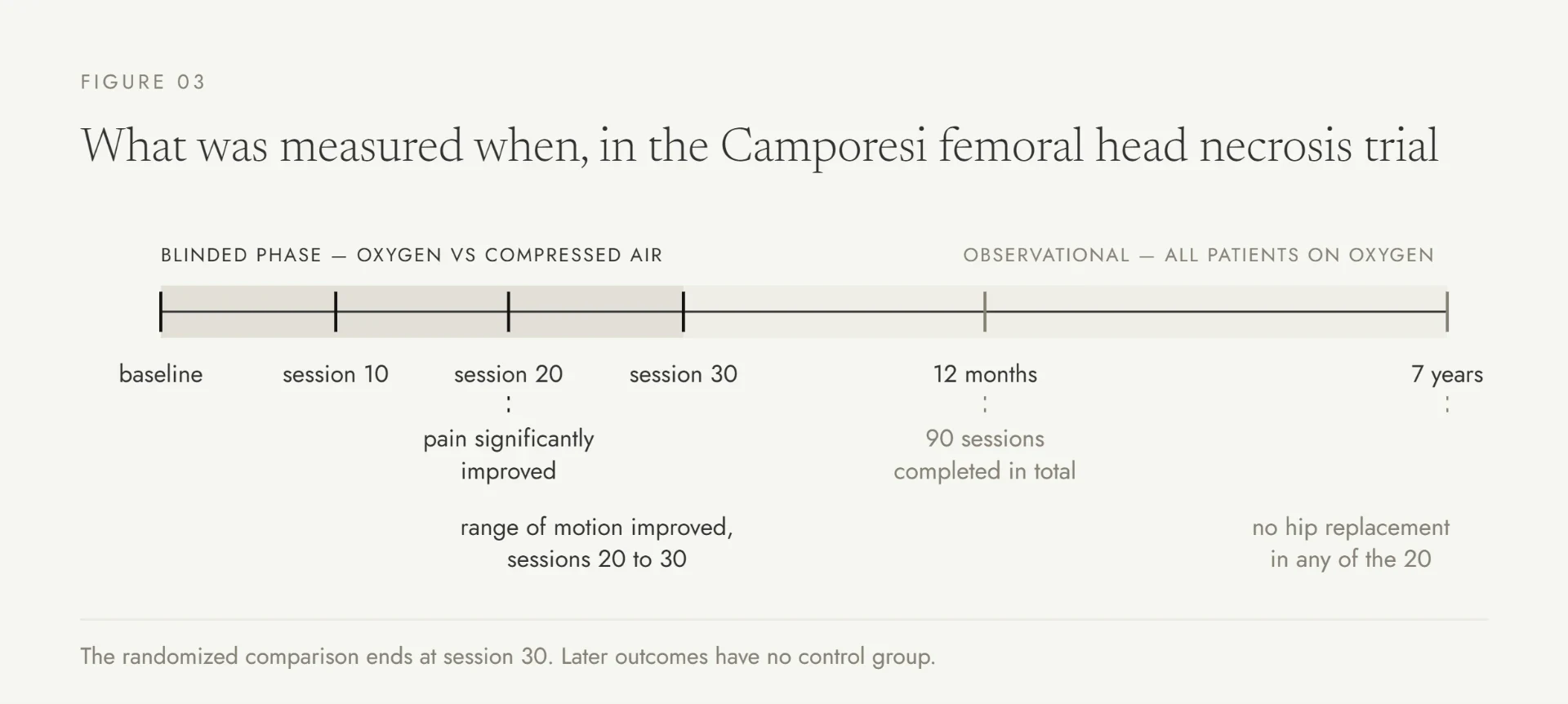
Half received hyperbaric oxygen. Half received compressed air at pressure. Both groups did 30 sessions of 60 minutes over six weeks, and a blinded physician measured range of motion, stabilometry and pain at baseline and after 10, 20 and 30 treatments.
Pain improved significantly in the oxygen group after 20 treatments. Range of motion improved significantly across all measured parameters between treatments 20 and 30. At that point the blind was broken and the air group was offered oxygen, after which all patients went on to a total of 90 sessions across 12 months. Seven years later, every patient remained substantially pain-free and none had required a hip replacement, with substantial radiographic healing of the osteonecrosis in seven of nine hips imaged.
What this study can and cannot tell you
- Twenty patients at a single center. Small enough that the confidence interval around any effect size is wide.
- The randomized, controlled phase lasted six weeks. Everything after the blind was broken, including the seven-year outcome, is observational with no comparison group.
- Because the sham group crossed over to oxygen, no long-term randomized comparison exists and none has been run since.
- Ficat stage II only, idiopathic only, with alcohol-related and traumatic cases excluded. It does not speak to advanced or post-collapse disease.
- Radiographic healing is reported for nine hips, a subset of the cohort.
- Treatment pressure is not stated in the published abstract.
Why the control group matters more here than usual
Hyperbaric research has a structural problem with blinding. There is no inert placebo for a pressurized chamber: put the control group in room air at rest and everyone knows who is being treated, and put them in a lightly pressurized chamber and you have given them a low dose of the thing you are testing.
Camporesi's group used compressed air at treatment pressure, which is the harder and better choice. The control group felt the compression, felt their ears, and sat in the same chamber for the same hour. What separated the arms was the gas. When you read that pain diverged after 20 sessions, you are reading a comparison against people who had the full hyperbaric experience minus the oxygen, and that is a much stronger claim than an unblinded trial can make.
It also matters for how you read everything else here. A trial with no sham, or with a sham at a pressure low enough to be therapeutic in its own right, cannot separate the effect of oxygen from the effect of lying still in a quiet chamber for an hour a day for six weeks. Several of the studies in this area have that limitation, which is one reason a small blinded trial can carry more weight than a larger open one.
In 37 treated knees, osteonecrosis staging fell from 1.7 to 0.3
The hip is the joint the literature knows best, and the knee is the one athletes bring in. Gerardo Bosco and colleagues, working with the same group behind the Camporesi trial, published a retrospective series in Arthroplasty Today in 2018 covering 37 patients with osteonecrosis of the knee, a condition caused by ischemia to subchondral bone and normally treated invasively.
Most of the cohort, 83.7 percent, presented at Aglietti stage I or II, with the remaining 16.3 percent at stage III. Across the whole sample, staging fell from a mean of 1.7 to 0.3, a change the authors reported at p below 0.01. Their framing is that hyperbaric oxygen may offer a non-invasive alternative by improving oxygenation and reperfusion of ischemic bone.
What this study can and cannot tell you
- Retrospective with no control group. Nobody was randomized and nothing was blinded, so the natural course of the disease is not accounted for.
- Mean age 54, which is not an athletic population, though the condition itself occurs across ages.
- Staging is a radiological classification rather than a functional or return-to-activity outcome.
- Single group, and the authors overlap with the hip trial team, so this is not independent replication.
Osteonecrosis became an accepted indication in 2016, and again in 2023
Two decisions change how the rest of this evidence should be read. In April 2016 the European Committee for Hyperbaric Medicine held its tenth consensus conference in Lille and moved femoral head necrosis from no recommendation to a Type 2 recommendation at level 2B, meaning hyperbaric oxygen is suggested for it on acceptable evidence rather than merely tolerated. Then in 2023 the UHMS added avascular necrosis, also called aseptic osteonecrosis, to the 15th edition of its Hyperbaric Medicine Indications Manual, where it stands as the newest indication approved by the society's Oxygen Therapy Committee.
That matters twice over. It means the bone material in this guide is not the off-label extrapolation that most wellness applications of hyperbaric oxygen are, and it means a staging protocol sits behind it. The UHMS manual asks that patients be staged properly and make lifestyle modifications before treatment, and sets out three separate treatment plans according to disease stage, with the rationale given as promotion of angiogenesis and bone regeneration.
The endorsement is not universal, and the disagreement is worth understanding rather than glossing. The American Academy of Orthopaedic Surgeons has not endorsed hyperbaric oxygen for osteonecrosis, and several large US insurers class the indication as outside generally accepted medical practice, on the grounds that the published literature covers small numbers of treated patients, many without an adequate control group, and that the mechanism is not fully defined. Those are the same limitations recorded in the boxes above. Two competent bodies read the same small literature and disagreed about whether it is enough, which is a more useful thing to know than either verdict alone.
Bone is where HBOT for athletic recovery has the most to work with
The mechanism explains the pattern, and it is worth understanding because it tells you which of your own problems is a candidate.
Delayed onset muscle soreness is largely mechanical and inflammatory damage to muscle fibers with intact blood supply. The tissue is not short of oxygen, so adding more has little to correct. Osteonecrosis is the opposite situation: the blood supply to a segment of bone has failed, the marrow is hypoxic and edematous, and pressure inside the bone rises. That is a perfusion problem, and it is the category hyperbaric oxygen was built for.
Dissolved plasma oxygen reaches tissue that red blood cells cannot service, which relieves the hypoxia directly. Repeated exposure then does something more durable: a systematic review and meta-analysis of hyperbaric oxygen in femoral head necrosis describes stimulation of angiogenesis alongside effects on osteoblast and osteoclast function and on multipotent marrow fibroblasts, which is the machinery of bone remodeling rather than symptom relief.
Tendon and ligament tissue sits somewhere between these two cases, and the honest position is that we do not know where. The 2026 review treated tendon and ligament adaptation as its own category alongside muscle and bone, and included work on tendon perfusion, but the study count in that group is small enough that no direction can be claimed from it. Tendons are poorly vascularized, which makes them mechanistically interesting and clinically unproven at the same time.
There is biochemical support for the bone story. A 2018 study by Bosco and colleagues tracked inflammatory markers and reactive oxygen species across 60 sessions in patients with osteonecrosis and found significant reductions in TNF-alpha and interleukin-6 over time, mirroring the observed reductions in bone marrow edema and in patient-reported pain. Marker changes tracking clinical changes is not proof of causation, but it is the kind of coherence that makes a mechanism credible.
A 2026 review of 612 patients points the same way
The most current synthesis is a systematic review published in 2026 covering 19 clinical studies and 612 patients across exercise-induced muscle damage, tendon and ligament adaptation, avascular necrosis and bone marrow edema, with risk of bias assessed using the Cochrane RoB 2 and ROBINS-I tools.
For avascular necrosis and bone marrow edema the reviewers reported "consistent improvements in imaging, pain and functional scores," particularly with prolonged protocols, and concluded that hyperbaric oxygen may delay disease progression in avascular necrosis when applied at early stages, potentially as a non-surgical option.
What this review can and cannot tell you
- Nineteen studies with individual sample sizes from 12 to 73 patients. The evidence base is small in absolute terms.
- Both bone marrow edema studies carried serious risk of bias by the reviewers' own assessment.
- No quantitative meta-analysis was performed, because protocols and outcome measures were too heterogeneous. The synthesis is narrative.
- For exercise-induced muscle damage the reviewers found the evidence limited, with randomized trials showing no significant benefit.
- Avascular necrosis populations are mostly not athletes. Corticosteroid use and other systemic factors are common causes.
Pain syndromes and post-surgical recovery are the other consistent signal
A separate 2026 systematic review looked at 18 studies and 671 participants across musculoskeletal pain syndromes, with protocols spanning 3 to 60 sessions of 60 to 90 minutes at approximately 1.3 to 2.5 ATA. It found consistent reductions in pain and modest functional improvements in fibromyalgia and in postoperative conditions including knee arthroplasty and peripheral nerve repair, with associated gains in quality of life and changes in inflammatory markers.
For an athletic population the post-surgical finding is the interesting one, because the rehabilitation window after a knee procedure is a real problem with real stakes, and it is a setting where perfusion and inflammation are plausibly rate-limiting. The authors were explicit that the evidence remains limited and that standardized protocols and higher-quality trials are needed.
Muscle damage markers move in some trials, and soreness does not
This is the one place where the athletic literature is genuinely contested, and it is worth reading precisely rather than picking a side.
In March 2026, Xiaoqin Luo and colleagues at Beijing Sport University published a systematic review and meta-analysis in Archives of Physical Medicine and Rehabilitation covering 10 randomized trials and 299 participants. Their conclusion was that hyperbaric oxygen was "statistically effective in promoting recovery from exercise-induced muscle injury," and in the same breath that it did not improve exercise-induced muscle soreness. Damage markers moved; the sensation did not. Their subgroup analyses found the injury effect present both above and below 2.0 ATA, and at both 60 and 100 minute session lengths.
Read the pooled estimate carefully before you use it. The effect is reported as a mean difference with a confidence interval from about minus 76 to minus 33, and the published abstract does not state the units. A range of that magnitude is not a pain score or a jump height, which points to a blood marker rather than a performance measure. Faster normalization of a damage marker is a real finding and it is not the same claim as training harder the next day.
Set against that, the 2026 systematic review above found no significant benefit for exercise-induced muscle damage in randomized trials, and on the soreness question the position has been stable for a long time: a Cochrane review pooling nine trials and 219 participants, with searches updated to February 2010, found no evidence of benefit for soreness after unaccustomed exercise. Two independent teams reaching the same conclusion sixteen years apart is why this guide treats bone and joint problems as the interesting question and leaves training soreness to sleep and nutrition.
Where the evidence runs out
- No trial has tested hyperbaric oxygen on athletic performance outcomes. Everything above measures pain, function, imaging or blood markers. Time to return to play, training load tolerance and competitive output have not been endpoints.
- The muscle damage question is genuinely unresolved. A 2026 meta-analysis says yes and a 2026 systematic review of randomized trials says no significant benefit. Anyone quoting only one of them is selecting.
- Bone marrow edema rests on two studies, both at serious risk of bias. The direction is encouraging and the evidence base is thin.
- Approval is not the same as consensus. Avascular necrosis appears on both the UHMS list of approved indications and the European list, while orthopedic bodies and insurers reading the same studies have declined to endorse it. Approval tells you a professional society was persuaded, not that the underlying trials got larger.
- Minimum effective course length is unknown. The bone protocols ran 30 to 90 sessions because that is what those investigators chose, not because anything shorter was tested and failed.
- Bone stress injuries in runners have not been studied. The condition athletes present with most often is adjacent to the studied pathologies rather than one of them, and the extrapolation is untested.
The HBOT protocols behind the athletic recovery evidence
Course length is the parameter that varies most across this literature, and it is the one most often left out when these findings get summarized.
| Study | Design and size | Condition | Pressure | Session length | Course | Result |
|---|---|---|---|---|---|---|
| Camporesi 2010 | Double-blind RCT, 20 patients, sham was compressed air | Femoral head necrosis, Ficat II | Not stated in abstract | 60 min | 30 blinded, then 90 total over 12 months | Pain significant at 20 sessions; no arthroplasty at 7 years |
| Bosco 2018, knee | Retrospective series, 37 patients | Osteonecrosis of the knee | Not stated in abstract | Not stated in abstract | Not stated in abstract | Aglietti staging fell from 1.7 to 0.3 |
| Bosco 2018, markers | Prospective marker study | Osteonecrosis | Not available to us | Not available to us | 60 sessions with a 30-day break | TNF-alpha and IL-6 fell, tracking edema and pain |
| 2026 musculoskeletal review | Systematic review, 19 studies, 612 patients | AVN, BME, muscle, tendon | Varied | Varied | 20 and 40 sessions in the BME studies | Consistent gains in AVN and BME |
| 2026 pain syndromes review | Systematic review, 18 studies, 671 participants | Fibromyalgia, post-op, DOMS, ligament | 1.3 to 2.5 ATA | 60 to 90 min | 3 to 60 sessions | Consistent pain reduction in fibromyalgia and post-op |
| Luo 2026 | Meta-analysis, 10 RCTs, 299 participants | Exercise-induced muscle damage | Subgrouped above and below 2.0 ATA | 60 and 100 min compared | Not stated in abstract | Damage markers improved |
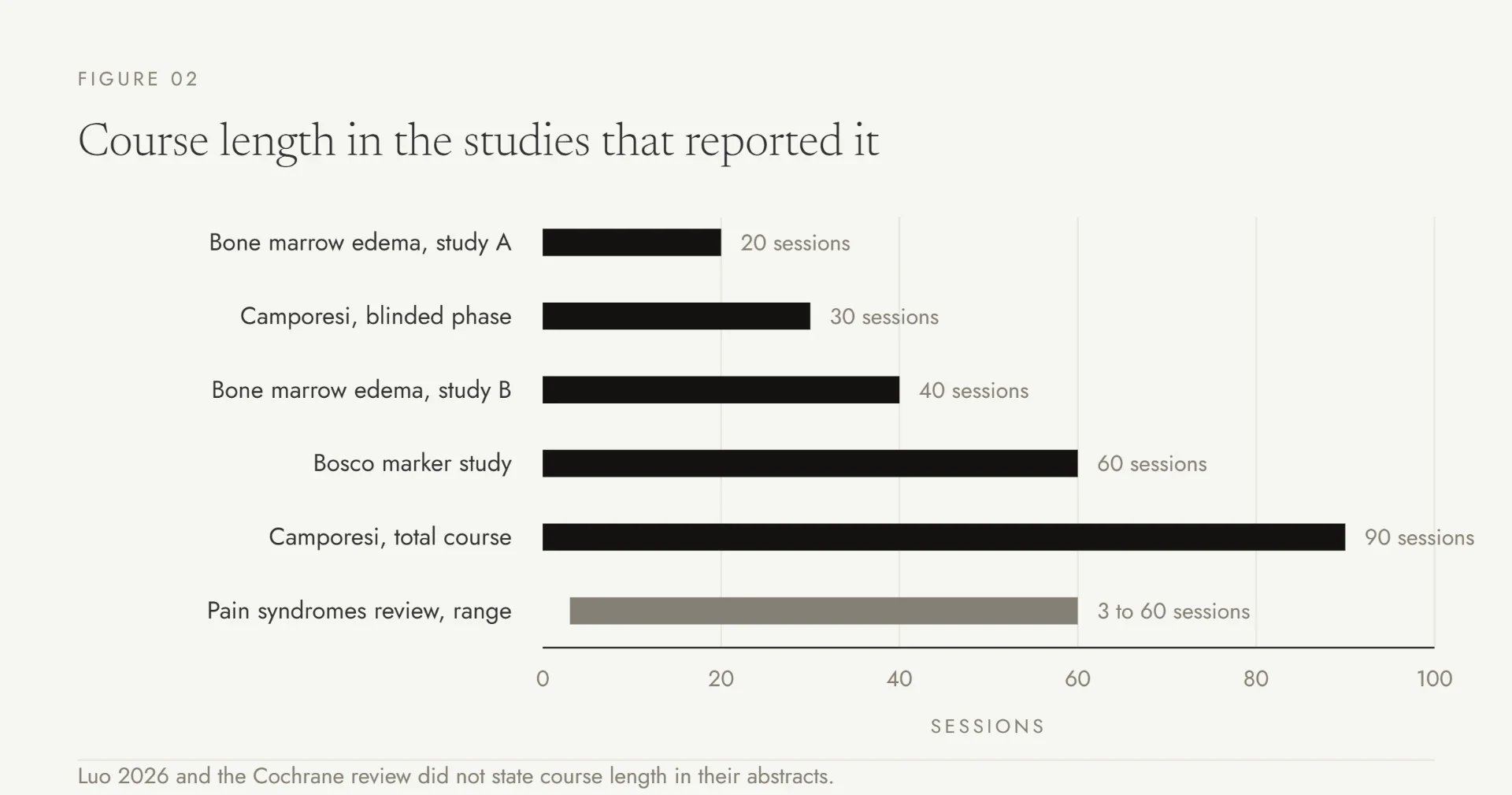
Put those course lengths side by side and a pattern appears that no single study states outright. Every result in the bone column came from a protocol measured in tens of sessions, and the reviews that comment on protocol length say the longer ones did better. Whatever else is uncertain here, the dose is not a single visit, and any offer built around one is not describing this literature.
How our protocol compares with the HBOT for athletic recovery studies
Stated plainly, so you can run the same comparison on anyone else:
- Treatment pressure 2.0 ATA, roughly the pressure at 10 meters of seawater.
- Oxygen delivered by individual mask at approximately 93 percent, giving an inspired oxygen pressure of about 1.86 ATA.
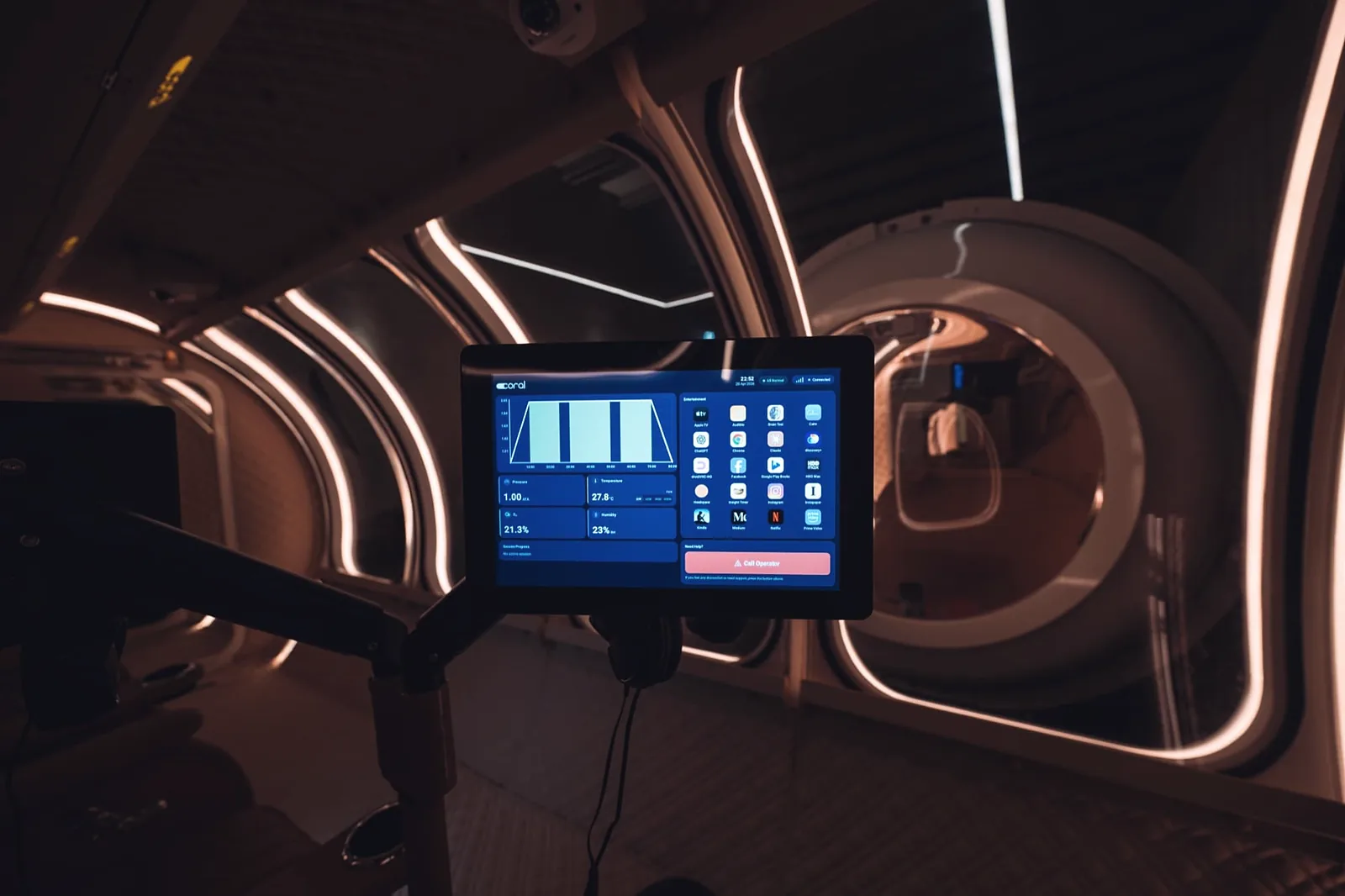
- Sessions of 65 or 95 minutes, with about ten minutes of compression at each end.
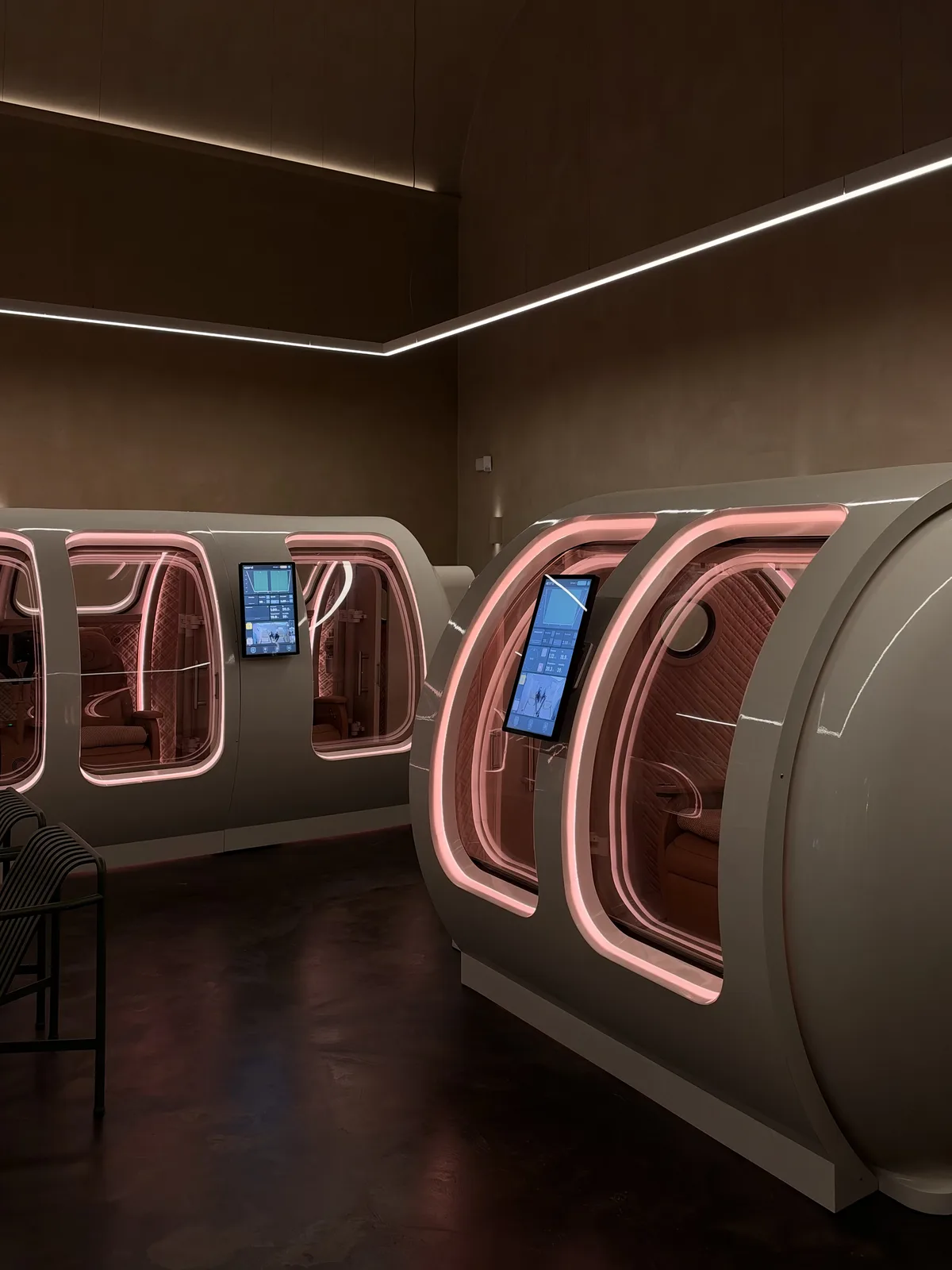
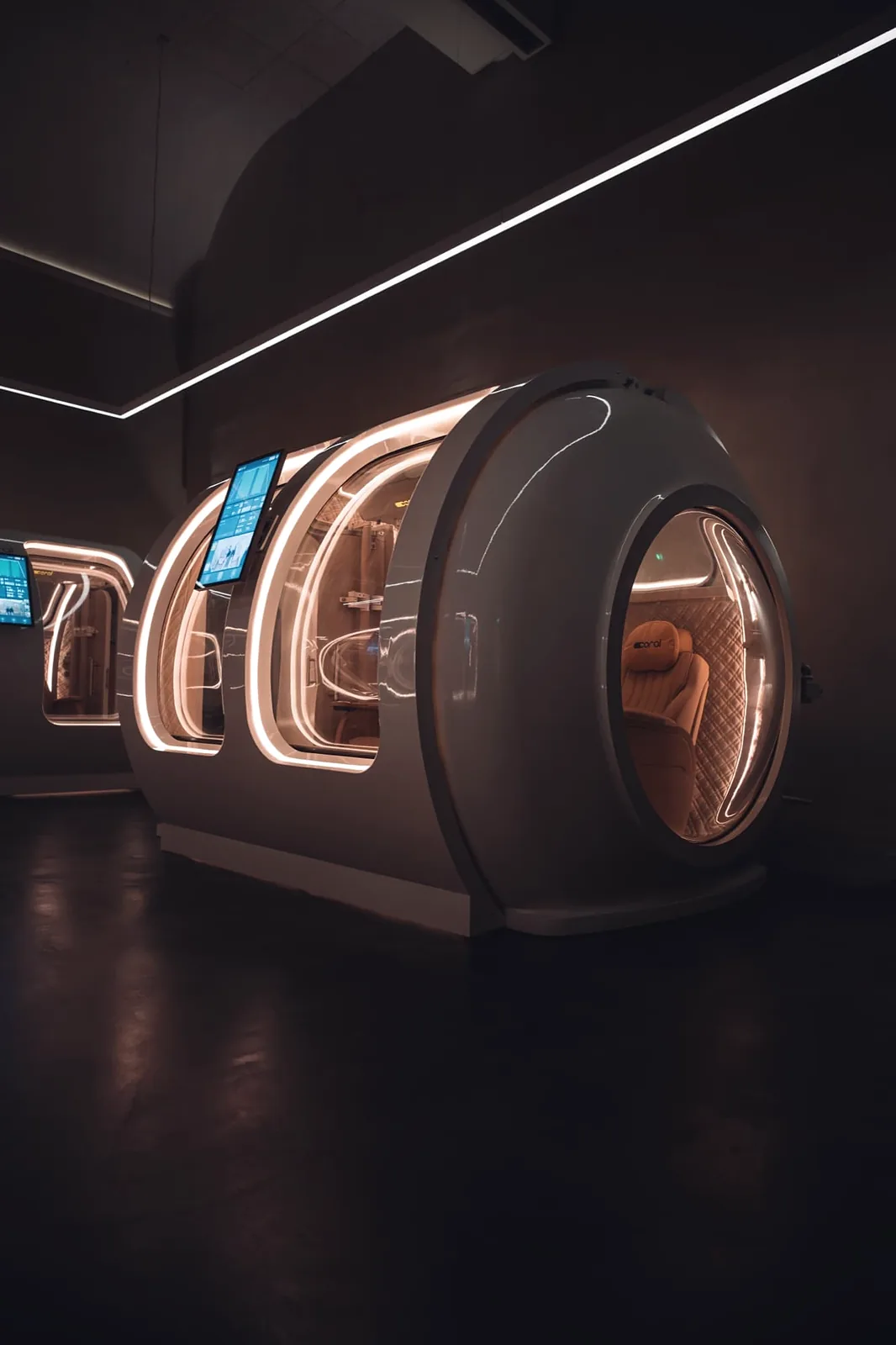
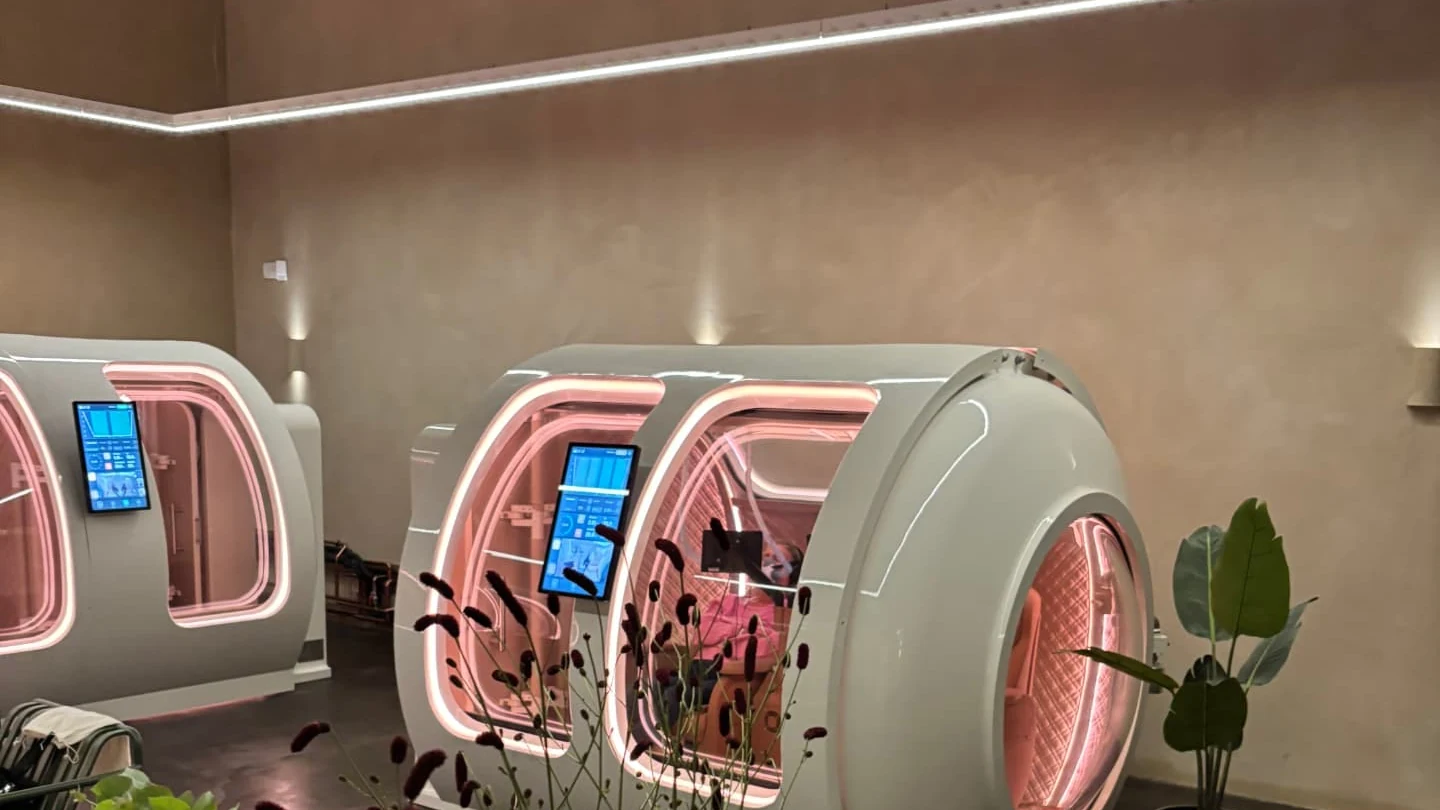
- Two CE-certified hard-shell multiplace chambers, seven seats between them, in seated cabins rather than lie-down tubes, which is worth knowing if you are coming in after a joint procedure and cannot lie flat comfortably.
Our 2.0 ATA falls inside the 1.3 to 2.5 ATA range the pain syndromes review covered, and our 90 minute session sits at the upper end of the 60 to 90 minutes those protocols used. Against the bone literature, the parameter that would need to match is not the pressure but the course length, which ran from 20 to 90 sessions.
A note on screening
Hyperbaric oxygen has a well characterized and largely self-limiting side effect profile, and everyone is screened before a first session. Two points are specific to an athletic population.
Ears do most of the complaining, and the risk factors are ordinary: an active cold or allergic rhinitis makes equalization harder, so a session during a head cold is one to move rather than push through. Anyone training through respiratory symptoms should expect that conversation.
The second is lungs. Any history of pneumothorax, bullous disease, asthma with active bronchospasm or prior chest surgery changes the assessment, because trapped gas expands during decompression. Untreated pneumothorax is the one absolute contraindication in the literature. Contact sports and a history of rib or chest trauma are worth raising before a first session rather than after.
Frequently asked questions
Is HBOT for athletic recovery about training load or injuries?
Injuries, on the current evidence, and specifically ones where blood supply to bone or joint tissue is part of the problem. The studies that produced clear results used HBOT to treat osteonecrosis, bone marrow edema and post-surgical pain, not training load. If your question is about how you feel after a hard session, sleep and nutrition have far better evidence behind them.
Why do professional teams use hyperbaric chambers then?
Mostly for injuries rather than for training load, which is consistent with the evidence. Where teams are treating a bone or joint problem with a perfusion component, or rehabilitating after surgery, they are using hyperbaric oxygen in the areas where the published findings are strongest. Where chambers are used as general recovery equipment, that use has run ahead of the data.
Can HBOT help a stress fracture?
Bone stress injuries specifically have not been studied with hyperbaric oxygen, which is frustrating given how common they are in runners. The closest studied conditions are osteonecrosis and bone marrow edema, which share a hypoxic bone mechanism, and both show encouraging signals. Extrapolating from one to the other is reasonable biology and untested clinically, so it is a conversation with your treating physician rather than a settled answer.
Should I use HBOT before an event rather than after?
There is no evidence either way, because no published trial has tested pre-event hyperbaric oxygen on performance. The physiological argument that circulating oxygen levels normalize within minutes of leaving the chamber is straightforward, so any pre-event rationale would have to rest on something else. Treat claims in this area as untested rather than supported.
How many HBOT sessions would the research suggest?
The bone protocols that produced results ran long: 30 blinded sessions in the Camporesi trial before a 90-session total, 60 in the Bosco marker study, 20 and 40 in the bone marrow edema studies. Reviews consistently note that longer hyperbaric oxygen protocols performed better. Nobody has tested the shortest effective course, so a single visit is not what any of this evidence describes.
- 1.Camporesi EM, Vezzani G, Bosco G, Mangar D, Bernasek TL. Hyperbaric Oxygen Therapy in Femoral Head Necrosis. Journal of Arthroplasty. 2010. Link
- 2.Bosco G, Vezzani G, Enten G, Manelli D, Rao N, Camporesi EM. Femoral condylar necrosis: treatment with hyperbaric oxygen therapy. Arthroplasty Today. 2018. Link
- 3.Effects of hyperbaric oxygen therapy on human musculoskeletal pathologies in clinical studies: a systematic review. 2026. Link
- 4.Effectiveness of Hyperbaric Oxygen Therapy for Musculoskeletal Pain Syndromes: A Systematic Review. 2026. Link
- 5.Evidence-Supported HBO Therapy in Femoral Head Necrosis: A Systematic Review and Meta-Analysis. International Journal of Environmental Research and Public Health. 2021. Link
- 6.Bosco G, Vezzani G, Mrakic-Sposta S, et al. Hyperbaric oxygen therapy ameliorates osteonecrosis in patients by modulating inflammation and oxidative stress. Journal of Enzyme Inhibition and Medicinal Chemistry. 2018. Link
- 7.Luo X, Yu Y, Zhang S, Qi F. Effects of Hyperbaric Oxygen Therapy on Exercise-Induced Muscle Injury and Soreness: A Systematic Review and Meta-analysis. Archives of Physical Medicine and Rehabilitation. 2026. Link
- 8.Bennett M, Best TM, Babul S, Taunton J, Lepawsky M. Hyperbaric oxygen therapy for delayed onset muscle soreness and closed soft tissue injury. Cochrane Database of Systematic Reviews. 2005, CD004713, searches updated to February 2010. Link
- 9.Undersea and Hyperbaric Medical Society. Announcing HBO's Newest Indication: Avascular Necrosis. 2024. Link
- 10.Undersea and Hyperbaric Medical Society. Hyperbaric Medicine Indications Manual, 15th edition, front matter and contents. 2023. Link
- 11.Vezzani G, Zanon V, Manelli D, Camporesi EM, Bosco G. Review on hyperbaric oxygen treatment in femoral head necrosis. Undersea and Hyperbaric Medicine. 2017. Link
- 12.Anthem. Clinical UM Guideline CG-MED-73, Hyperbaric Oxygen Therapy. Link
- 13.Undersea and Hyperbaric Medical Society. Hyperbaric Oxygen Therapy Indications. Link
- 14.Mathieu D, Marroni A, Kot J. Tenth European Consensus Conference on Hyperbaric Medicine: recommendations for accepted and non-accepted clinical indications and practice of hyperbaric oxygen treatment. Diving and Hyperbaric Medicine. 2017. Link