The short version
The rationale is coherent. Red light is thought to unblock an enzyme in the mitochondrial respiratory chain, and hyperbaric oxygen then supplies that enzyme with more of what it uses. Doing light first, while cells are still oxygen-starved, is the version of the sequence that makes most mechanistic sense.
But the enzyme mechanism itself has never been reliably demonstrated in living tissue, the one human study to test light before a physiological challenge found nothing at either interval it tried, and we are not aware of any human outcome data on this sequence. For now it belongs in the category of promising hypothesis rather than validated protocol.
Established physiology versus mechanisms under research
| Reasonably settled | Under active investigation |
|---|---|
| Nitric oxide inhibits cytochrome c oxidase, and the resulting complex is light-labile in isolated systems | Whether that photodissociation happens to a useful degree in living human tissue |
| The response to light is dose-dependent and turns downward past a peak | Where that peak sits for any given tissue, wavelength and device |
| Red light penetrates skin and superficial tissue well, and bone poorly | Whether enough light reaches deeper targets to do anything |
| Hyperbaric oxygen at 2.0 ATA raises dissolved oxygen in plasma several-fold | Whether raising substrate availability changes anything downstream of light exposure |
| Both interventions are thought to involve a reactive oxygen species signal | What the combined signal from stacking them amounts to, in either direction |
Thirteen men, two pre-treatment intervals, and no measurable difference
The sequencing claim has a testable core: light applied before a physiological challenge should change how the body handles that challenge. One study has tested exactly that design in humans, and it is the closest thing this field has to an anchor.
In a randomized crossover trial at São Paulo State University, Yago Dutra's group gave 13 healthy untrained men photobiomodulation across the quadriceps, hamstrings and calves using a 264-diode array, at a dose of 152 J, either 30 minutes or 6 hours before cycling to exhaustion. Each man completed four bouts, so every participant served as his own control against sham irradiation with the device switched off. The researchers measured resting blood flow velocity, plasma nitrite as a marker of nitric oxide availability, time to exhaustion, cardiorespiratory responses, blood acid-base balance, and potassium and lactate during exercise.
Nothing moved at either interval. Not the blood flow velocity, not the nitrite, not the time to exhaustion.
Limitations of this trial
- Thirteen participants. Small enough that a modest real effect could have been missed.
- Healthy untrained men. A population with no deficit to correct, which is where photobiomodulation is theorized to do least.
- The challenge was cycling, not hyperbaric oxygen. Nobody has run the equivalent design with a chamber.
- The dose was fixed at 152 J across a large tissue area, so it tested one point on the dose-response curve, not a range.
- Outcomes were physiological and performance measures, not the mitochondrial markers the mechanism is stated in.
Why they chose six hours, not five minutes
The interval choice was not arbitrary, and it is the detail worth taking from this paper. The authors picked 6 hours because in vitro and animal work had suggested that the peak effect of light on electron transport and on physical performance appears roughly 6 hours after exposure, not immediately. They tested 30 minutes as the short arm because that is closer to what practitioners actually do.
Read the popular protocol against that. An exposure immediately before a chamber session sits an order of magnitude shorter than the interval the animal timing data points to. Separately, a small sham-controlled crossover study using functional near-infrared spectroscopy found that a single session applied to the prefrontal cortex modulated functional connectivity across a five-day window in 12 healthy adults. If effects genuinely persist for days, then the useful question is what happens over those days, not what happens in the minutes before a chamber session.
Why "before" is the interesting half of the claim
Set the timing aside and the ordering argument still deserves a hearing, because it turns on a specific piece of physiology rather than on vibes about priming.
Cytochrome c oxidase is the last enzyme in the mitochondrial respiratory chain, the point at which electrons are handed to oxygen. Nitric oxide can bind to it and inhibit it, competing with oxygen for the same site. Michael Hamblin's 2018 review of photobiomodulation mechanisms sets out the leading hypothesis: a photon of red or near-infrared light dissociates that inhibitory nitric oxide, electron transport resumes, and the displaced nitric oxide goes on to act as a signaling molecule in its own right.
The part that bears on ordering is a corollary Hamblin notes in passing. One explanation offered for why light seems to do more in damaged tissue than healthy tissue is that stressed or hypoxic cells are the ones carrying inhibitory concentrations of nitric oxide in the first place. If that is right, then light has most to work with when a cell is still oxygen-starved, and less to work with once oxygen has been restored. Which gives you a genuine reason to put light first rather than second, and a reason that would predict the reverse order works less well.
The interval this actually concerns is tens of minutes
Our chamber sessions run 65 or 95 minutes at depth, with compression and decompression at 1 m per minute, so roughly ten minutes at each end. The gap between a pre-session light exposure and peak tissue oxygenation is therefore on the order of tens of minutes. That is the interval the sequencing argument actually concerns, and it is not an interval anyone has studied.
Worth noting that our own protocol documents point at hours rather than minutes when they discuss timing light around a stressor: they place a light session two to four hours before training, and describe the window after exertion as most useful within six hours. That is the same order of magnitude as the animal timing data, and a different order of magnitude from the sequence as it is usually described.
The same argument predicts a problem
Take the mechanism seriously in both directions and it generates a warning as well as a rationale. Light is thought to act partly through a brief burst of reactive oxygen species, which functions as a signal at low concentrations and as a toxin at high ones. Hyperbaric oxygen at 2.0 ATA is also understood to work partly through a redox swing. Reviewing the dose-response literature, Ying-Ying Huang and colleagues found that mitochondrial reactive oxygen species follow a triphasic curve with two distinct peaks rather than a simple rise.
Stack two interventions that both push on the same variable, immediately after one another, and the honest position is that nobody knows which part of that curve you land on. We are not aware of any study that has measured it.
Our own protocol documents already apply this reasoning elsewhere. They describe hyperbaric oxygen as a hormetic stimulus comparable to a hard training session, note that too many stressors at once can amount to too much stress, and for that reason advise against hard exercise on a chamber day and against pairing the chamber with cryotherapy at the same time point. The same logic has an obvious application to stacking light immediately beforehand, and it is the reason this guide treats the sequence as an open question rather than a refinement.
Five minutes is a duration, not a dose
This is the practical point, and it applies whatever you make of the mechanism. Light dose is irradiance multiplied by time. Five minutes at 10 mW/cm² delivers 3 J/cm². Five minutes at 100 mW/cm² delivers 30 J/cm². Same instruction, tenfold difference in what arrives.
That would matter less if more were simply better, and it is not. Working with 810 nm light on cells, Huang's group varied delivered fluence across four orders of magnitude while holding illumination time at five minutes, and found a peak response around 0.3 J/cm² with reduced activation at 3 J/cm² and lower still at 30 J/cm². Both of the five-minute exposures above land past the peak on that curve.
Irradiance matters on its own, not only the total
Irradiance also matters independently of the total. In a rat wound-healing model, delivering 5 J/cm² of 670 nm light at 4 mW/cm² over roughly 21 minutes produced a significant effect on tensile strength, while the identical total fluence delivered at a higher power density did not. Same energy, different result, because the rate of delivery changed.
So four numbers determine what a light session actually is: wavelength, irradiance at the skin, distance from the source, and time. If all a provider tells you is the session length, you have been given one of the four. Ask for the other three, and if nobody can produce them, the dose you are receiving is not known to anyone in the building.
One caution about reading absolute values off the curve above. Those figures come from cells in a dish, where essentially all the delivered light reaches the target. In tissue most of it scatters or is absorbed first, which is why clinical protocols routinely use fluences an order of magnitude higher than an in vitro peak and are not thereby overdosing. What transfers from the cell work is the shape of the relationship, not the numbers on the axis.
Our own bed sessions run 10 to 20 minutes, which is a normal clinical range and longer than the sequence is usually described with.
Under 1% of the light arrives, if the target is deep
Attenuation is the other reason a stated exposure and a delivered dose diverge, and it has been measured directly.
A 2025 study in Brain Stimulation tested three commercial near-infrared devices on human skulls that retained skin, subcutaneous tissue, cranial bone and dura, with the light source outside and the sensor inside. Transmittance was 0.71% for an 810 nm LED array, 0.45% at 1070 nm, and 0.31% for a 905 nm pulsed laser, meaning over 99% of the emitted light was absorbed or scattered before arriving.
The authors then took the physiologically relevant step of asking whether that surviving fraction does anything, exposing neuronal cells and nematodes to comparable intensities. Light at 40.2 J/cm² raised mitochondrial activity; 0.75 J/cm² did not. Even at 14 times the highest transmittance they had measured, they saw no mitochondrial response, and concluded the devices were "unable to deliver sufficient light energy through the skull to elicit mitochondrial activity."
Limitations of the transmittance study
- Measurements were taken on formalin-fixed skulls, not living heads, and fixation alters tissue optics.
- Three devices were tested. Other hardware, and higher-powered lasers in particular, may transmit more.
- The biological arm used neuronal cell lines and nematodes, not human brain tissue.
- The authors note they cannot exclude delayed or cumulative effects from repeated sub-threshold exposure.
- The finding concerns transcranial delivery only. It says nothing about light applied to skin.
These figures are for brain targets, not for skin
Read that carefully, because it does not generalize to everything. Those figures are for brain targets through bone. Red light in the 630 to 660 nm range is well suited to skin and superficial tissue, where delivery is far better and the clinical literature is correspondingly stronger.
The honest summary is that the sequencing argument is most defensible for tissue you can shine light directly onto, and least defensible for anything behind the skull. Our own delivery is a full-body bed applied to skin, not a transcranial device, so the figures above are not a measurement of what our sessions deliver. They are the reason we do not make claims about light reaching the brain.
Whelan's own review found the mechanism undemonstrated
Then the part that rarely gets repeated. In 2020, Whelan co-authored a review of the mechanism the whole field rests on, and its conclusion was that no reliable demonstration of the enzyme step had been reported: the supporting studies were either non-reproducible, of questionable relevance, or used wavelengths unlikely to be operative in living tissue. His own earlier experiments, reported in the same review, found no effect on the kinetics of cytochrome c oxidation in isolated enzyme using 670 and 830 nm pre-irradiation, which is precisely the pre-exposure design the stacking protocol assumes.
That review gets cited, sometimes by device sellers, as though it supported the mitochondrial mechanism. It says close to the opposite. It is a fair thing to ask of anyone who builds a protocol on that mechanism.
The protocols behind the evidence
Light parameters are reported inconsistently, which is most of why this literature does not add up. Below are the parameters as published, with cells reading "not reported" where a paper did not specify. If a provider quotes you a protocol, this is what to compare it against.
| Study | Wavelength | Irradiance | Fluence | Timing | What was measured |
|---|---|---|---|---|---|
| Huang 2009, cell culture | 810 nm | Varied to hold time constant | 0.003 to 30 J/cm², peak at 0.3 | 5 min exposure | NF-κB activation at 10 h |
| Gal 2009, rat wounds | 670 nm | 4 mW/cm² versus higher | 5 J/cm² in both arms | ~21 min at the lower irradiance | Wound tensile strength |
| Dutra 2021, human exercise | Red and infrared diodes, per-band detail in the paper | Not reported in the abstract | 152 J total across three muscle groups | 30 min or 6 h before cycling | Blood flow, nitrite, time to exhaustion |
| Brain Stimulation 2025, skull transmittance | 810, 905, 1070 nm | 19 to 173 µW/cm² arriving | 0.75 versus 40.2 J/cm² in the cell arm | Single exposure | Transmittance, mitochondrial activity |
| Prefrontal duration study, humans | Not reported by band | Not reported | Not reported | Single session, followed 5 days | Functional connectivity by fNIRS |
Two things stand out. Only one of these studies reports irradiance in a form you could reproduce, and no study in the table combined light with hyperbaric oxygen.
How this compares with our own protocol
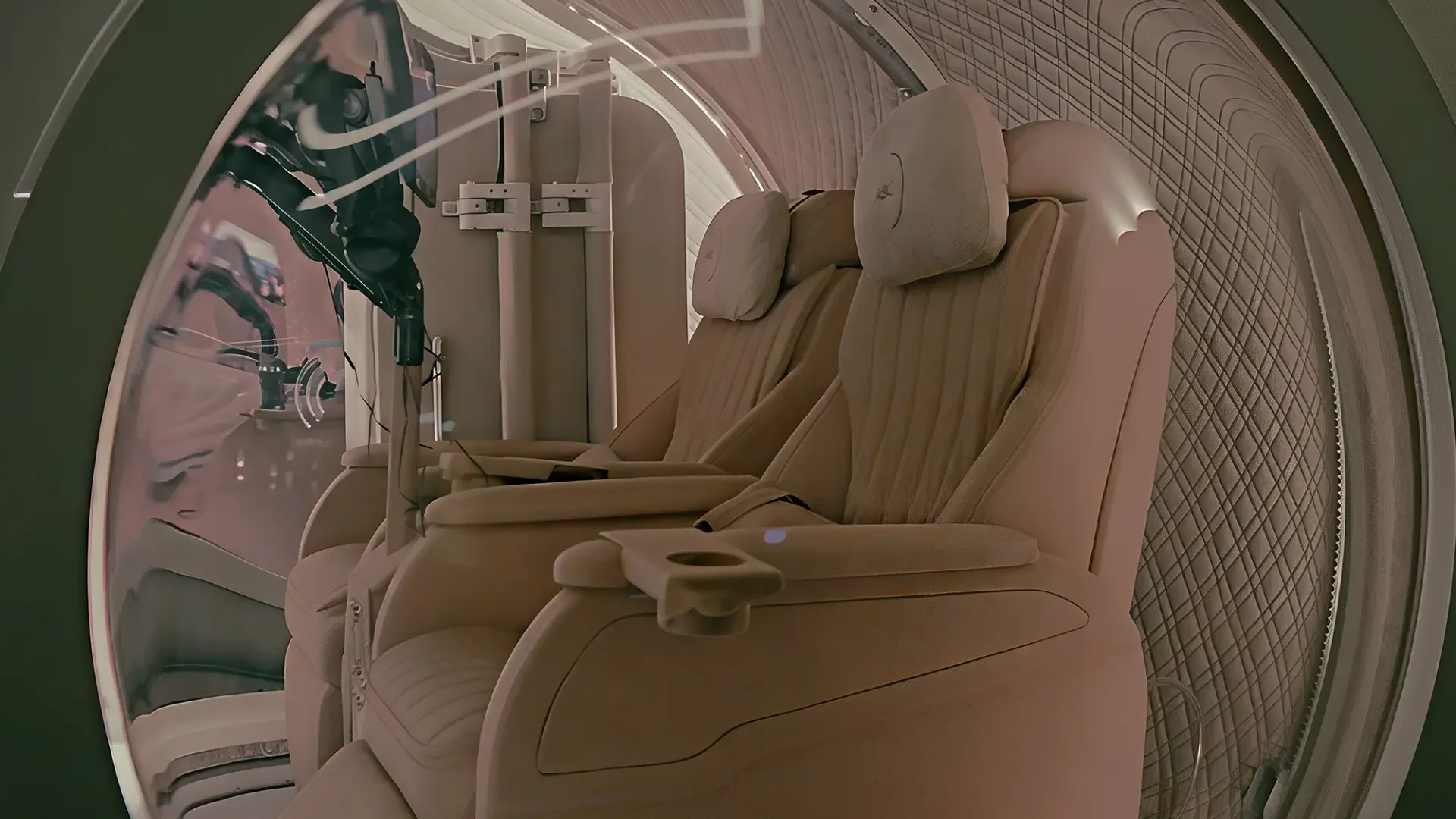
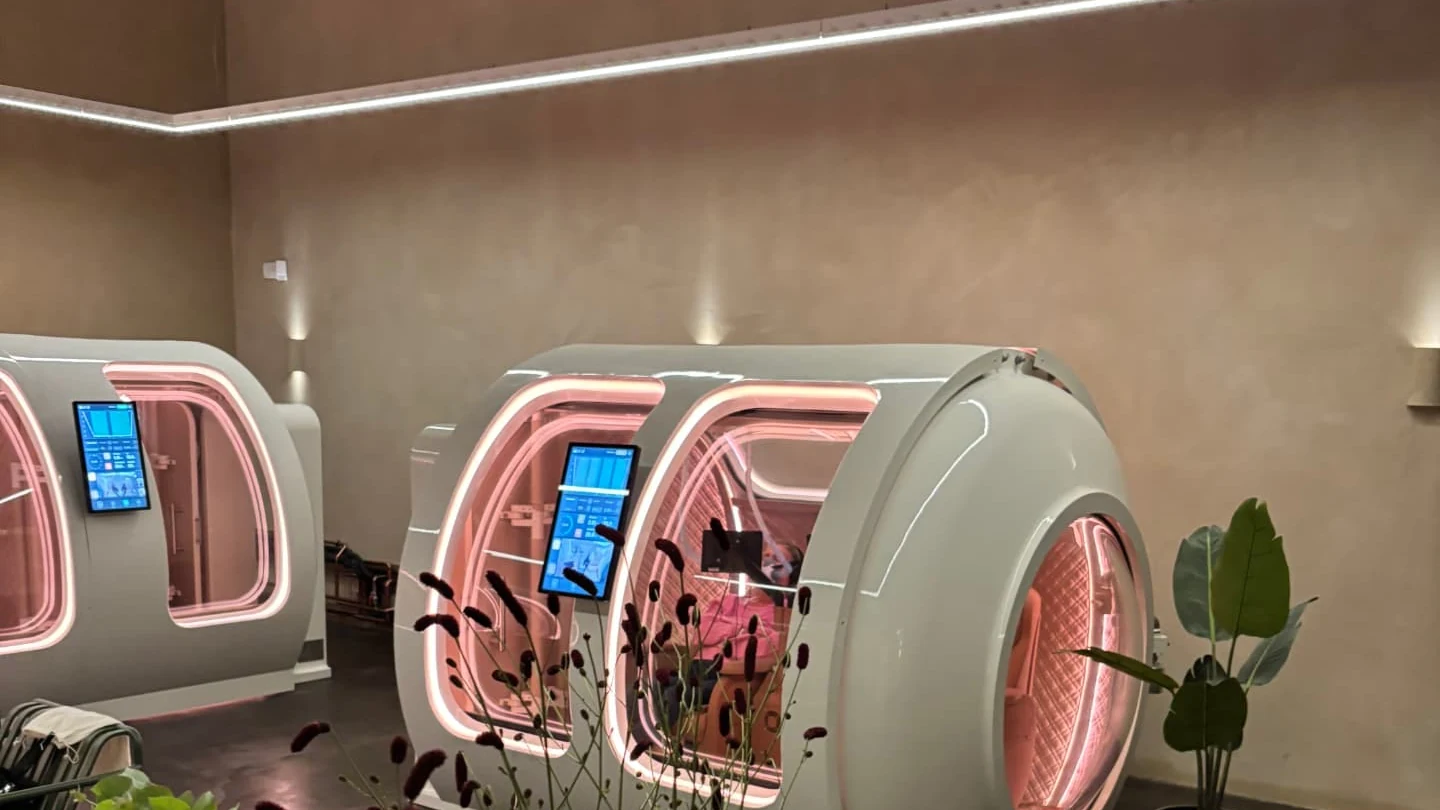
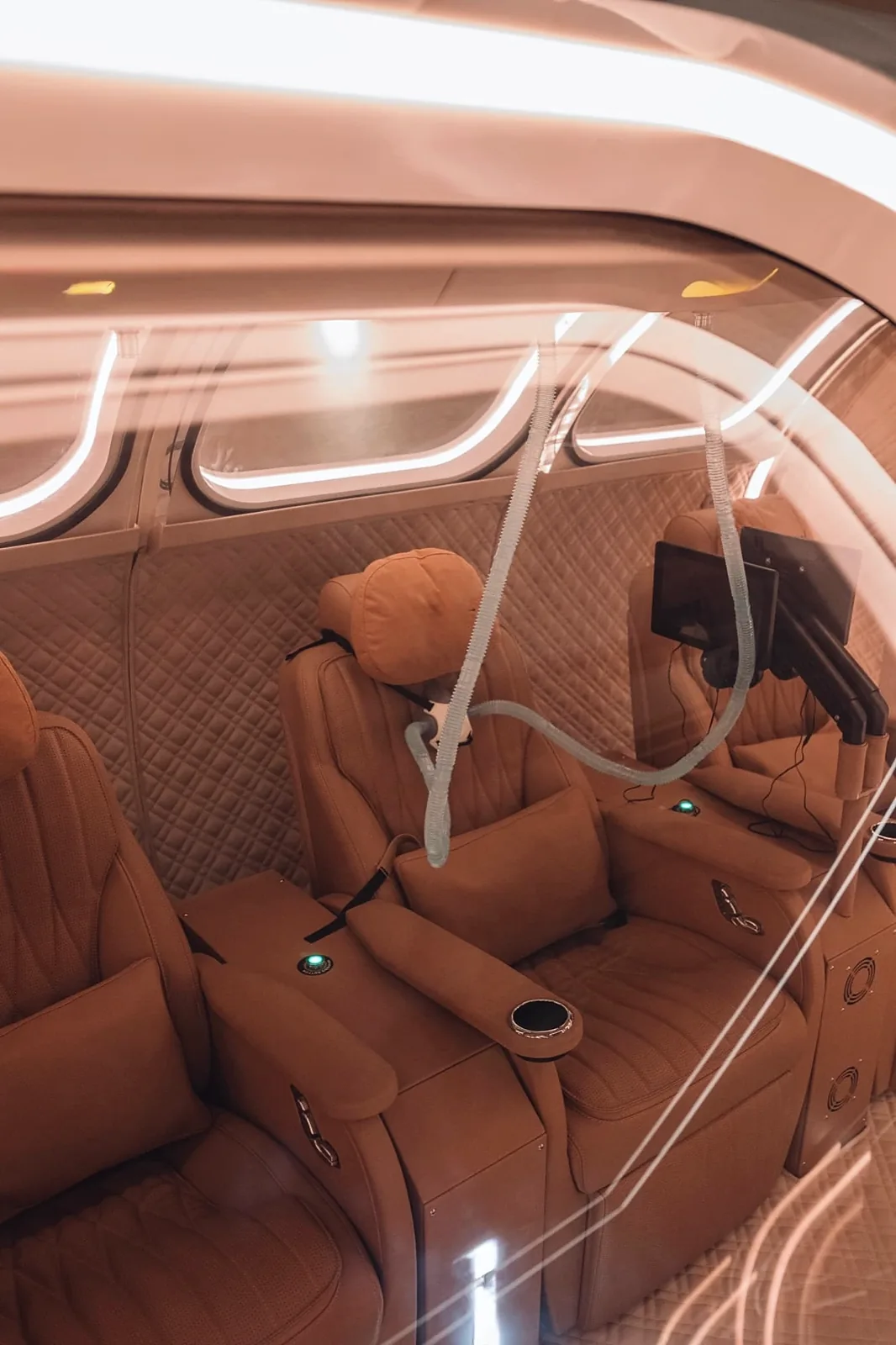
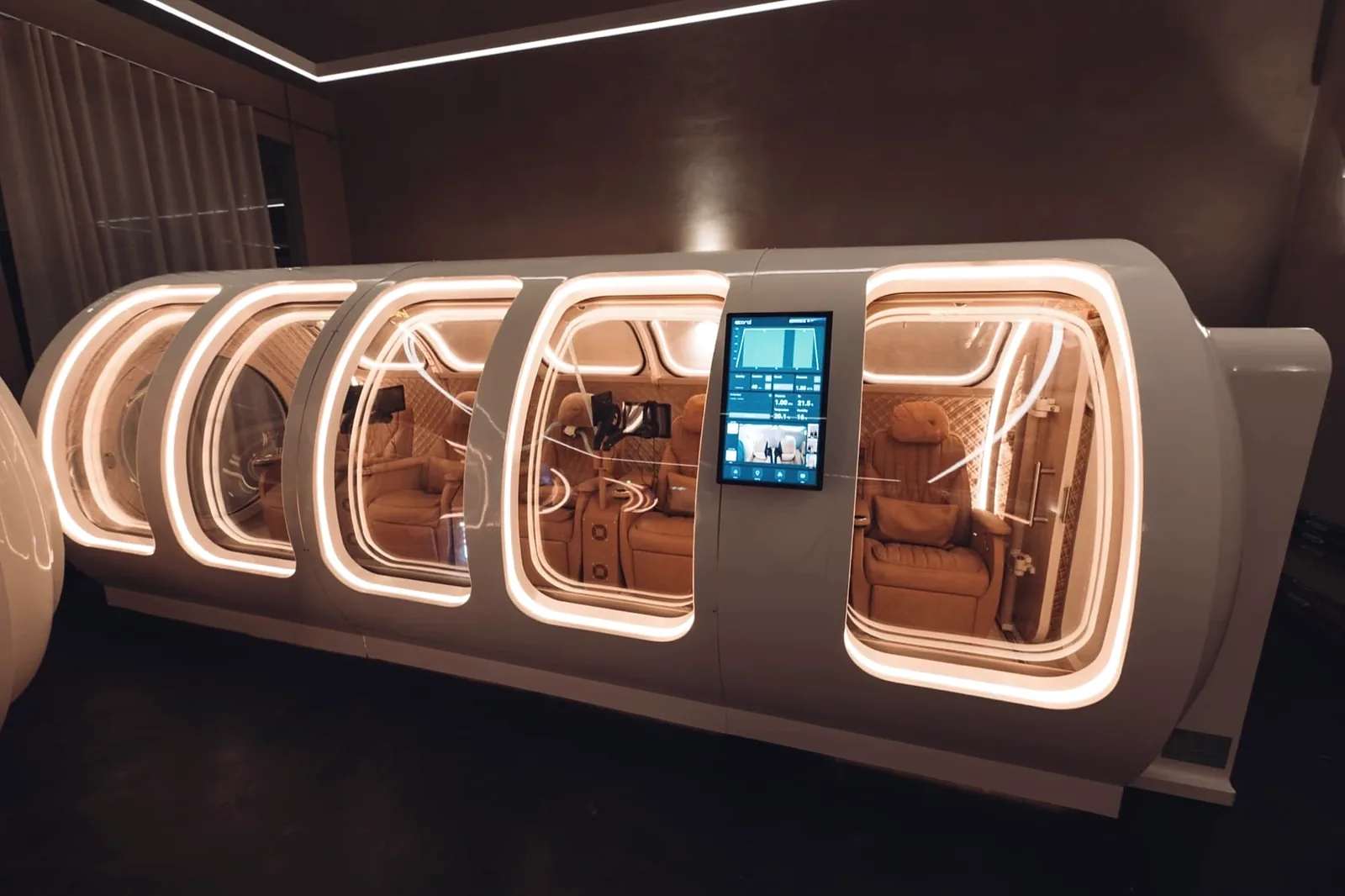
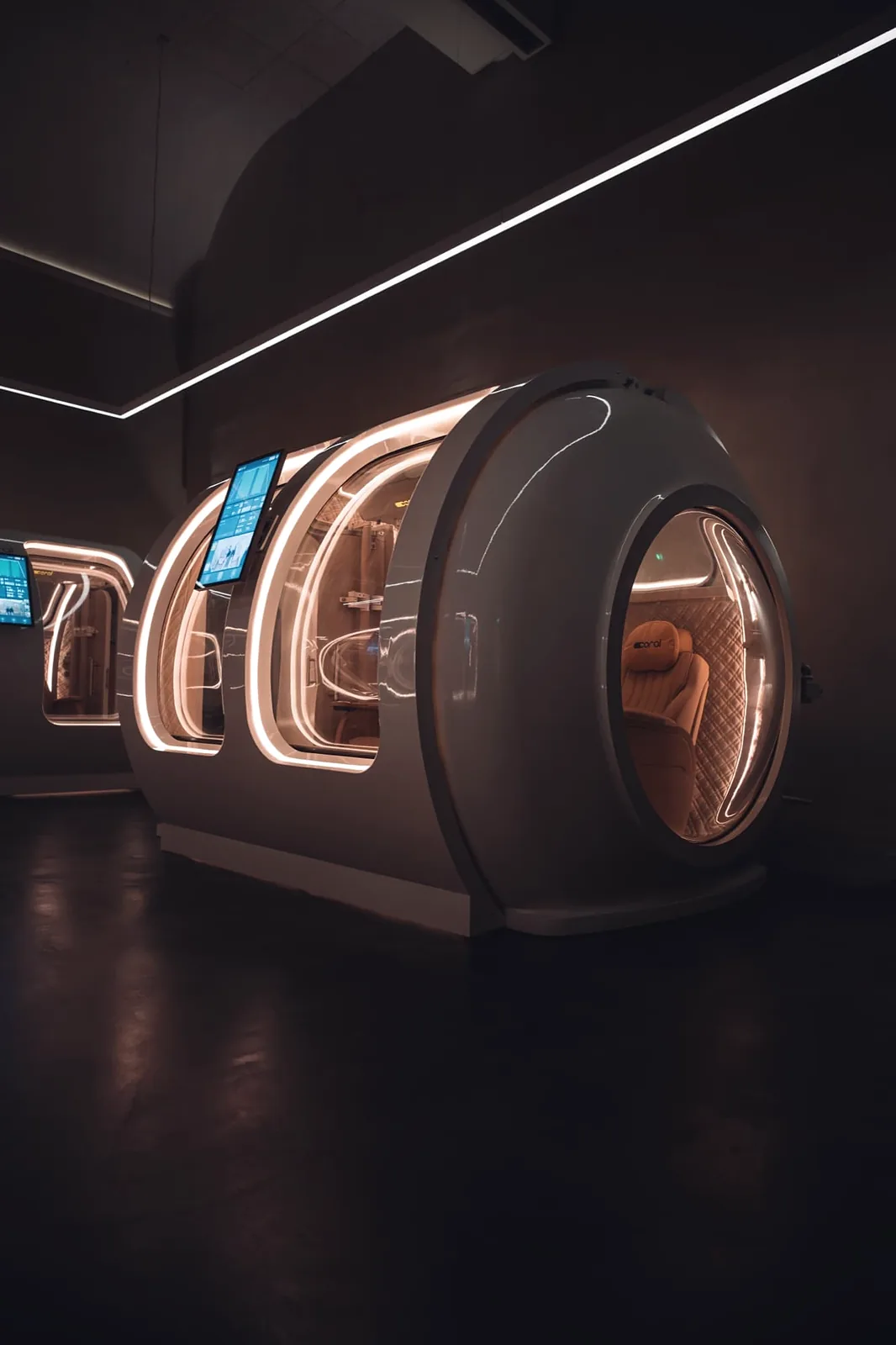
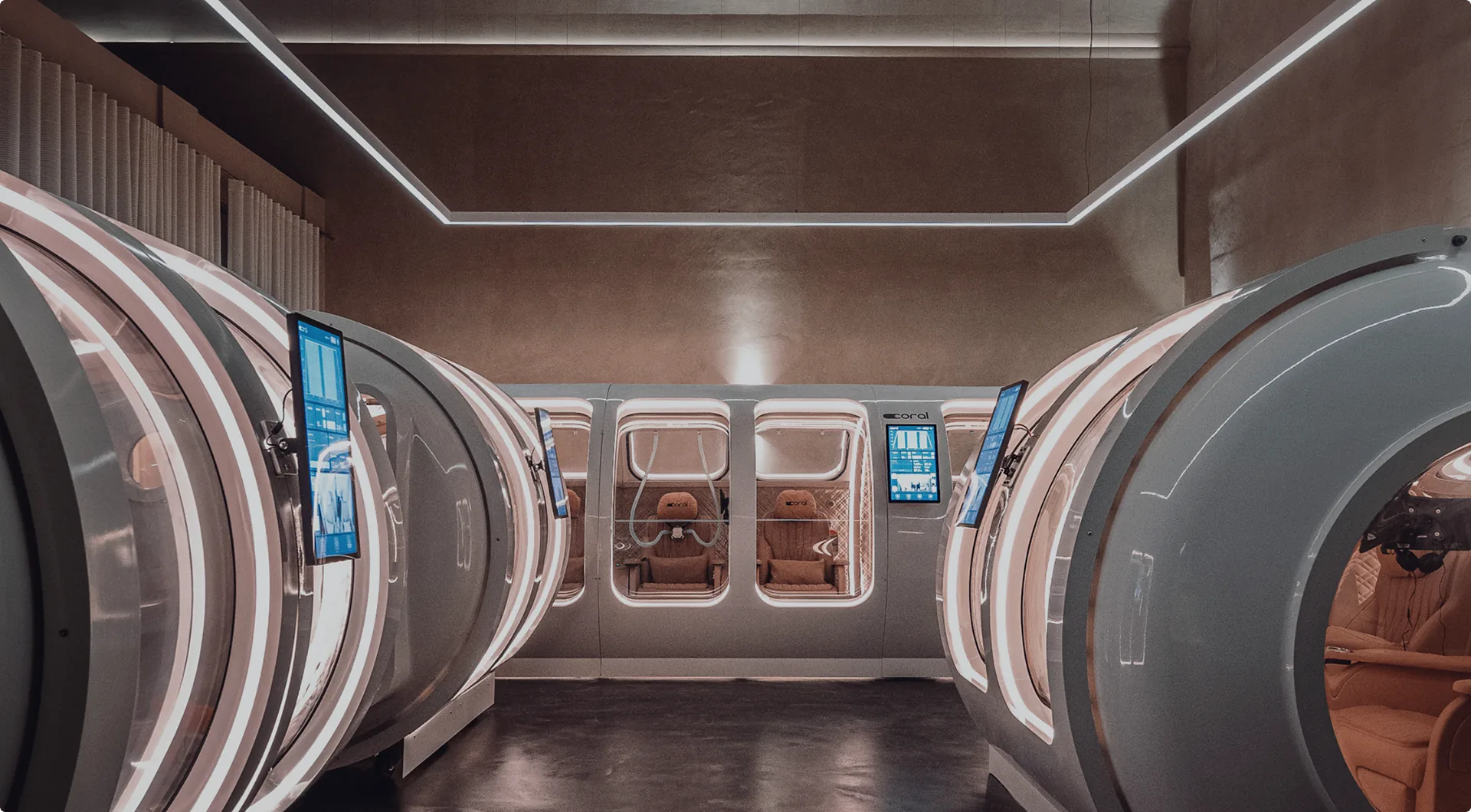
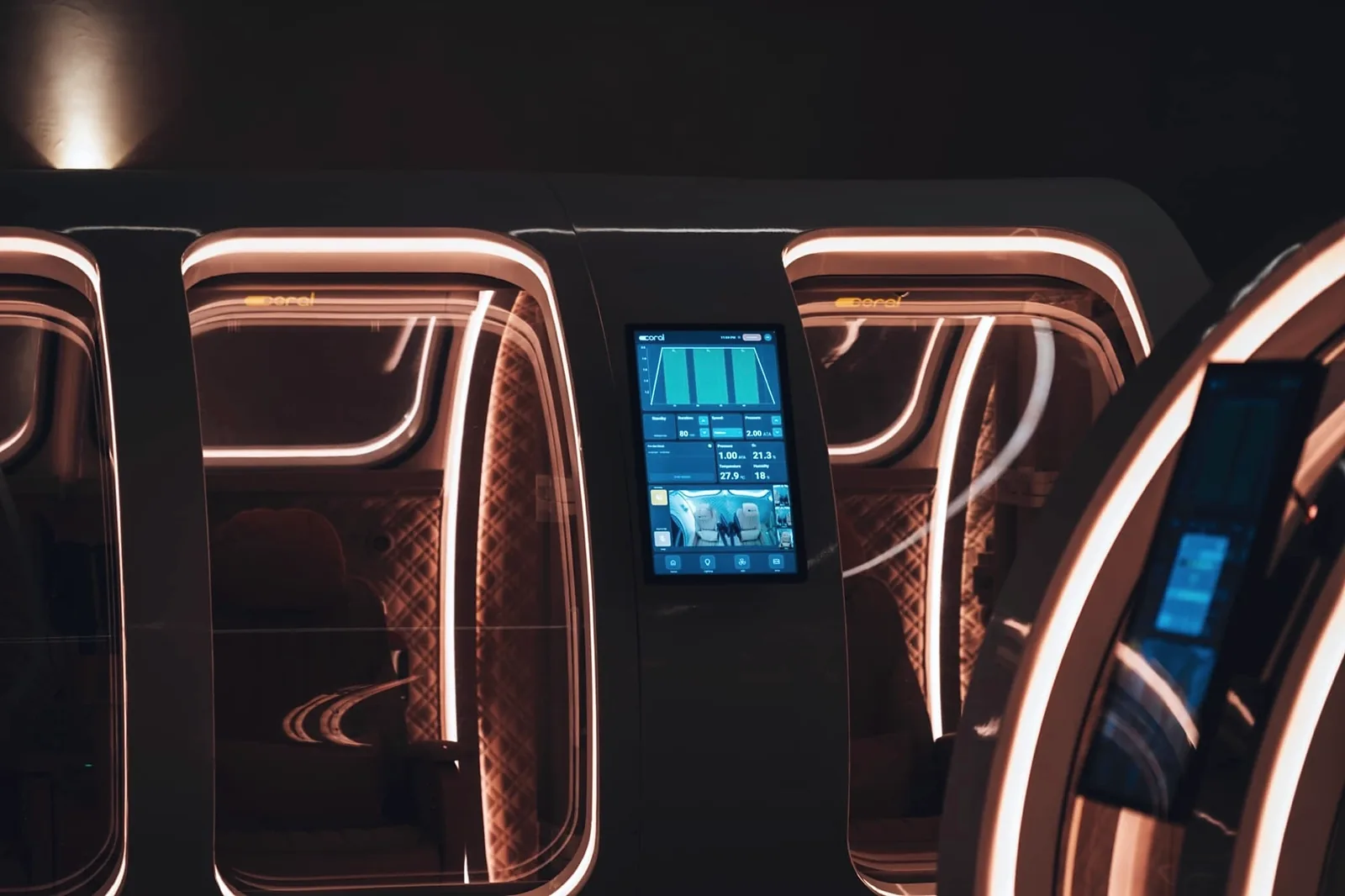
The oxygen half of the stack we can quantify precisely. Treatment pressure is 2.0 ATA in every session, in CE-certified hard-shell multiplace chambers, seven seats across two chambers. Oxygen is delivered by individual mask at approximately 93% (±3%), giving an inspired oxygen pressure of about 1.86 ATA. Sessions run 65 or 95 minutes at depth, 85 or 115 minutes door to door, with compression and decompression at 1 m per minute. Air breaks are five minutes of air every twenty minutes. Oxygen, pressure, temperature and humidity are logged continuously, with automatic switchover between oxygen and air if a reading leaves range.
Those air breaks are worth pausing on, because they are the same schedule used in the sham-controlled 2.0 ATA trials in the protocol table above, and under the fluctuation model they are the part of a chamber session doing the signaling rather than the steady state.
The light half is a full-body bed delivering 630 to 670 nm red and 810 to 850 nm near-infrared, for 10 to 20 minutes, three to five times a week, with goggles worn throughout. Distance is fixed by the geometry of the bed. Irradiance at the skin is the number we do not currently document, which means the fluence a given session delivers is not something we can state, and by the standard this guide has just set out that is the number that matters most. We would rather say that than supply an estimate. It is being measured.
A note on screening
Photobiomodulation has a clean adverse event record. Across the clinical literature the reported effects are mild and transient: local warmth, transient redness, occasional headache. It is not a therapy with a serious harm profile at therapeutic doses, and the screening list below is short for that reason.
Three items are specific enough to matter.
Eye exposure is the first. Do not look into the emitters, and use the eye protection provided, since near-infrared light at 850 nm is invisible and gives you no reflex warning that you are being exposed. Goggles are issued for every bed session here and are not optional.
Photosensitizing medication is the second. Amiodarone, tetracycline antibiotics and psoralens are the commonly cited examples, which is a reason to tell whoever runs the session what you take.
Active malignancy in the area being treated is the third, and the most consistently listed contraindication in the field.
One risk belongs to the sequence, not to either therapy
One item belongs to the sequence rather than to either therapy. A hyperbaric chamber is an oxygen-enriched environment, which changes the fire risk profile of anything you carry into it. If a light session has involved any topical product, that is a question to raise before you walk from one to the other rather than after. Our own chambers monitor and log the oxygen concentration continuously, which is the mechanism by which an enriched atmosphere is kept inside a known range, and it is a reasonable thing to ask any facility about.
The hyperbaric side has its own screening list, and it is longer: untreated pneumothorax as an absolute contraindication, uncontrolled seizure disorder, insulin-dependent diabetes, significant lung disease, pregnancy, and whether you can equalize middle ear pressure at all. Middle ear barotrauma is the most common adverse event in hyperbaric medicine, affecting around 9% of patients across one series of 62,614 sessions, and it clusters in the first few sessions of a course.
Both lists are short, and both are covered in a few minutes at intake. That is the practical case for doing either therapy somewhere that asks.
Frequently asked questions
What is red light good evidence for?
Superficial targets, where the light reaches tissue directly. Preventing oral mucositis during cancer treatment is the strongest case, and skin and wound applications are reasonable. That evidence is about light applied to the surface, which is exactly what a full-body bed does. So the surface case is the one worth relying on, and it stands on its own.
Why does the dose matter so much if the light is low-level?
Because the response rises to a peak and then falls rather than flattening out, which means there is a right amount and it is worth knowing whether you are getting it. Dose is irradiance multiplied by time, and distance changes irradiance. Ask for those three alongside the session length and you can work out what you are receiving.
Is the NASA Redlight Therapy worth adding if I am already booked for the hyperbaric chamber?
Yes, on its own merits, for the surface applications above. That case holds whether or not you use the chamber the same day, which is the cleanest way to decide: book the bed for what the bed does, and treat any additional benefit from the ordering as an open question rather than part of the purchase.
- 1.Hamblin MR. Mechanisms and mitochondrial redox signaling in photobiomodulation. Photochemistry and Photobiology, 2018;94:199-212. Link
- 2.Quirk BJ, Whelan HT. What lies at the heart of photobiomodulation: light, cytochrome c oxidase, and nitric oxide, review of the evidence. Photobiomodulation, Photomedicine, and Laser Surgery, 2020;38(9):527-530. Link
- 3.Dutra YM, Claus GM, Malta ES, et al. Photobiomodulation 30 min or 6 h prior to cycling does not alter resting blood flow velocity, exercise-induced physiological responses or time to exhaustion in healthy men. Frontiers in Physiology, 2021;11:607302. Link
- 4.Huang YY, Chen ACH, Carroll JD, Hamblin MR. Biphasic dose response in low level light therapy. Dose-Response, 2009;7(4):358-383. Link
- 5.Huang YY, Sharma SK, Carroll JD, Hamblin MR. Biphasic dose response in low level light therapy, an update. Dose-Response, 2011;9(4):602-618. Link
- 6.Insufficient low-level near infrared light penetration challenges the efficacy of transcranial photobiomodulation. Brain Stimulation, 2025. Link
- 7.Salehpour F, Cassano P, Rouhi N, Hamblin MR, et al. Penetration profiles of visible and near-infrared lasers and light-emitting diode light through the head tissues in animal and human species: a review of literature. Photobiomodulation, Photomedicine, and Laser Surgery, 2019. Link
- 8.Photobiomodulation mechanisms: duration of action in the human prefrontal cortex. Link
- 9.NASA Spinoff. LED device illuminates new path to healing. Link
- 10.Hadanny A, Efrati S. The hyperoxic-hypoxic paradox. Biomolecules, 2020;10(6):958. Link
- 11.Low-level laser therapy (photobiomodulation) versus hyperbaric oxygen therapy on healing of chronic diabetic foot ulcers: a controlled randomized trial. Physiotherapy Theory and Practice, 2021. Link
- 12.EyeWiki, American Academy of Ophthalmology. Photobiomodulation in retina diseases. Link
- 13.Hadanny A, Meir O, Bechor Y, et al. The safety of hyperbaric oxygen treatment: retrospective analysis in 2,334 patients. Undersea and Hyperbaric Medicine, 2016;43(2):113-22. Link