The short version
Pressure and oxygen fraction multiply. A chamber at 1.3 ATA filled with air delivers roughly 0.27 ATA of inspired oxygen, about a third more than you are breathing right now. A chamber at 2.0 ATA with 93% oxygen by mask delivers 1.86 ATA, close to seven times as much. That gap is why the professional societies draw their definitional line between the two, and why evidence generated at 2.0 ATA and above does not transfer downward by default.
Low-pressure exposures are not inert, and in chronic brain symptoms specifically there is a real and unresolved argument that they do something. For wound healing, stem cell mobilization and the aging markers, the evidence sits at 2.0 ATA and higher.
What is settled and what is still being argued
The left column is physics and physiology that no one in the field disputes. The right column is where the arguments in this guide live.
| Established physiology | Under active research |
|---|---|
| Dissolved plasma oxygen rises in direct proportion to inspired oxygen pressure (Henry's law) | The pressure at which each downstream signaling pathway switches on |
| Hemoglobin is already almost fully saturated at sea level, so extra oxygen has to travel dissolved | Whether a higher oxygen fraction can substitute for lower pressure |
| Tissue oxygen tension measured during treatment is roughly twice as high at 2.0 ATA as at 1.4 ATA | Whether sub-1.5 ATA exposures produce clinically meaningful effects of their own |
| Approved indications and payer coverage rest on studies run at 2.0 to 3.0 ATA | Whether 1.2 to 1.3 ATA air is a valid placebo in trial design |
| Oxygen toxicity risk rises with inspired oxygen pressure, which sets the ceiling | Optimal pressure for longevity and cognitive endpoints, where no dose-response curve exists |
At the wound, 2.0 ATA measured twice the oxygen of 1.4 ATA
Most comparisons between chamber pressures are done on paper. In 2024, a team at the Rambam Health Care Campus in Haifa did it with electrodes. Ram Sack and colleagues placed transcutaneous oxygen sensors near the ulcers of patients with chronic wounds and recorded tissue oxygen tension while those patients breathed 100% oxygen, comparing readings taken at 1.4 ATA with readings taken at 2.0 ATA, publishing the result in Undersea and Hyperbaric Medicine.
After ten minutes of oxygen breathing, the average reading at 1.4 ATA was 161 mmHg. At 2.0 ATA it was 333 mmHg, a difference the authors reported at p less than 0.001, and each electrode site tested reached significance at both five and ten minutes. Their conclusion was blunt: they found no evidence that 1.4 ATA treatment "can benefit a chronic ulcer patient."
What makes this study useful for your purposes is what it holds constant. Both conditions used 100% oxygen. The only variable was pressure, and doubling the depth roughly doubled the oxygen arriving at damaged tissue. Note also where the comparison starts. This was 1.4 ATA on pure oxygen, which is already far above what a fabric chamber can do, and the gap to 2.0 ATA was still that wide.
What this study does and does not show
- Small single-center study, published in the field's own specialist journal rather than a general medical one.
- The outcome is tissue oxygen tension, a surrogate. Nobody measured whether the wounds healed.
- The spread was very wide, from 1 to 601 mmHg at 1.4 ATA and 1 to 914 mmHg at 2.0 ATA, which reflects how badly perfused some of these wounds were. Averages hide a lot here.
- Both conditions used 100% oxygen, so this isolates pressure cleanly, but it tells you nothing about a chamber running on 40% oxygen.
2.0 ATA vs 1.3 ATA comes down to pressure times oxygen fraction
Chamber pressure on its own tells you very little, because the gas you breathe inside matters just as much. Dalton's law lets you collapse both into a single figure: the partial pressure of oxygen you inhale equals the chamber pressure multiplied by the oxygen fraction of your breathing gas. That number, and not the headline pressure, is what drives dissolved oxygen in plasma, and it is the figure you should ask any provider for.
Work through the options and the spread becomes obvious.
| Setup | Chamber pressure | Oxygen fraction | Inspired oxygen | Equivalent depth |
|---|---|---|---|---|
| Sitting here, sea level | 1.0 ATA | 21% | 0.21 ATA | 0 m |
| Fabric chamber as cleared | 1.3 ATA | 21% (air) | 0.27 ATA | 3 m |
| Fabric chamber with concentrator | 1.3 ATA | ~40% | 0.52 ATA | 3 m |
| Low-threshold clinical | 1.5 ATA | 100% | 1.50 ATA | 5 m |
| Most research protocols | 2.0 ATA | 100% | 2.00 ATA | 10 m |
| Upper clinical range | 2.4 ATA | 100% | 2.40 ATA | 14 m |
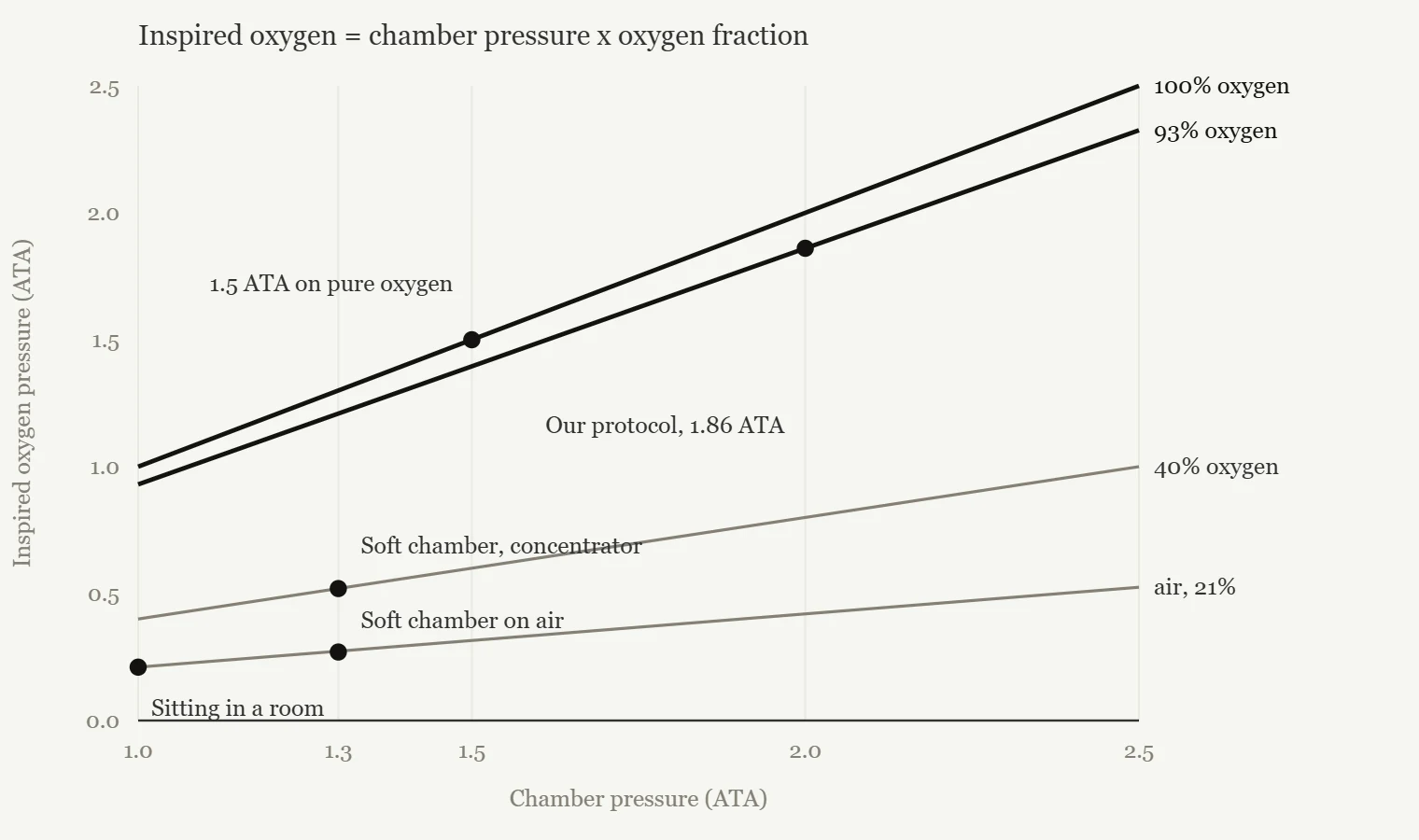
Two things fall out of that table. The first is that our own sessions sit at 1.86 ATA of inspired oxygen, which is 93% of the dose used in the studies discussed below, because the oxygen supplied to the masks is approximately 93%. You can run the same multiplication on any clinic that will tell you both of its numbers, and you should be suspicious of any that will not.
The second is that pressure is doing most of the work. Raising the oxygen fraction inside a 1.3 ATA chamber from 21% to 40% roughly doubles the inspired oxygen, but it still lands at about a quarter of what a 2.0 ATA session delivers. Even an implausibly generous 90% inside that chamber would reach 1.17 ATA. Oxygen enrichment alone does not close a gap created by depth.
1.5 ATA is where the definitions sit, not where the biology changes
Three bodies define hyperbaric oxygen therapy and they do not use identical wording, which is worth knowing before a salesperson quotes one of them at you.
The Undersea and Hyperbaric Medical Society defines the treatment as breathing near-100% oxygen inside a chamber at 1.4 ATA or above. That is the floor of the definition, not the floor of practice: the same document states that every currently approved indication requires a minimum of 2.0 ATA with near-100% oxygen. The European Committee for Hyperbaric Medicine sets its requirement on the gas rather than the vessel, holding that inspired oxygen must exceed 1.5 ATA for the treatment to be therapeutic, which forces chamber pressure above 1.5 ATA. The Australian and New Zealand group defines it loosely and then treats at 2.0 to 3.0 ATA in practice.
A 2026 narrative review in Medical Sciences by Mark Morningstar and Megan Strauchman pulled these together and proposed 1.5 ATA as a working classification threshold. They were careful about what that number is. It marks the lower boundary of the protocols the clinical evidence was built on, and they state plainly that it is a regulatory and clinical tool rather than a point where any particular biological process switches on. Some oxygen-sensitive processes start below it. Many become far more pronounced above it.
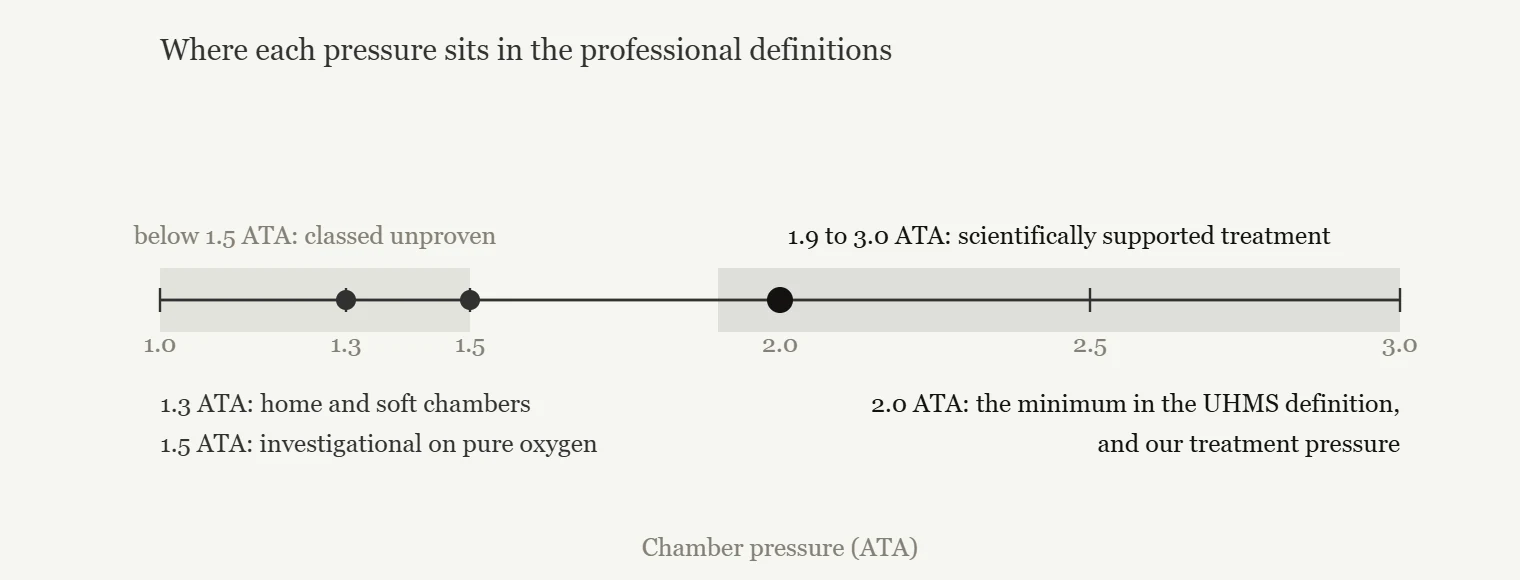
So when you see 1.5 ATA quoted, read it as an administrative boundary with real evidentiary weight behind it, not as a cliff edge. The practical consequence is that a 1.5 ATA offer is a genuinely different proposition from a 1.3 ATA one, even though the numbers look close, because at 1.5 ATA the chamber is hard-sided and the gas is oxygen.
What a 1.3 ATA fabric chamber is cleared to do
Soft-sided chambers operate between roughly 1.1 and 1.4 ATA, which at the top of that range is about 5.9 psi above ambient. They hold one FDA clearance, for acute mountain sickness, and they are designed to be compressed with air. The FDA prohibits their use with supplemental oxygen, a detail that most marketing omits, and adding a concentrator is therefore off-label rather than an upgrade.
The UHMS position is uncomfortably direct. Using one of these chambers with air as designed delivers "no more oxygen to the body than breathing oxygen by mask" at sea-level pressure. The society says it is not aware of reliable clinical evidence that compression below 1.4 ATA has any therapeutic effect, and recommends against the practice for any purpose other than altitude sickness.
Regulators outside the United States have gone further on safety rather than efficacy. Health Canada classes soft-shelled chambers sold directly to consumers as unlicensed medical devices and lists fire, cross-contamination between users, and barotrauma to the ears, sinuses, lungs and teeth among the risks. It notes specifically that fire risk increases significantly when the chamber is combined with an oxygen concentration device, which is precisely the modification being marketed as a way to reach clinical doses.
None of this means a fabric chamber does nothing, and the section below sets out the evidence that it may do something. It means that what it does has not been established, and that the studies used to sell it were not run in it.
The 2.0 ATA studies that the rest of the field quotes
Two papers do most of the work in any conversation about hyperbaric oxygen and healthy physiology, and both were run at 2.0 ATA.
A single two-hour exposure doubled circulating stem cells
The first is Stephen Thom's 2006 study at the University of Pennsylvania, published in American Journal of Physiology-Heart and Circulatory Physiology. Circulating CD34+ stem cells doubled after a single two-hour exposure at 2.0 ATA, and rose roughly eightfold over a course of twenty treatments, without a matching rise in overall white cell count. Thom's group traced the mechanism to nitric oxide signaling in bone marrow.
Buried in the same paper is a detail that bears directly on your question. Three chamber attendants were pressurized to 2.0 ATA alongside the patients for the full two hours, breathing chamber air rather than oxygen. They served as a control for pressure against hyperoxia. Their stem cell counts did not move. That is three unblinded people, which is not enough to build a principle on, but it is the clearest available hint that the pressure term matters because of what it does to the oxygen you are breathing, not on its own.
The telomere trial is not the randomized trial it is usually called
The second is the telomere work from Shai Efrati's group at the Sagol Center in Israel, published in Aging in 2020. Thirty-five healthy adults aged 64 and over completed 60 daily sessions of 90 minutes on 100% oxygen at 2 ATA, with three air breaks inside each session. Telomere length in four lymphocyte subsets increased by more than 20%, and senescent cell populations fell.
That study is worth getting right, because popular coverage routinely calls it a randomized controlled trial. It was not. It was a single-arm prospective trial with no control group, which matters when the outcome is a laboratory measurement in an aging population. The finding is real and it is preliminary.
One detail of the setup is worth borrowing, because it answers a question people ask about our own chambers. The Sagol protocol pressurized a multiplace chamber and delivered oxygen to each participant by individual mask. That is the standard research arrangement rather than a compromise on one, and it is the same architecture we use.
What these two studies do and do not show
- Both report biological markers, not clinical outcomes. Nobody has shown that longer telomeres in blood cells translate into a longer or healthier life.
- Hachmo and colleagues had no control arm and 35 participants, all aged 64 or over.
- Thom's attendant comparison involved three people who knew which gas they were breathing.
- Neither study tested a lower pressure, so neither can tell you what 1.3 or 1.5 ATA would have produced. That comparison has not been run for either endpoint.
The case for lower pressure, stated by the people who make it
There is one clinical area where the argument genuinely runs the other way, and a guide that left it out would be selling you something.
In 2022, Paul Harch published a systematic review and dosage analysis in Frontiers in Neurology covering adult mild traumatic brain injury with persistent post-concussion syndrome. Analyzing eleven studies by oxygen dose, pressure dose and the two combined, he found that 40 sessions at 1.5 ATA and 30 sessions at 1.3 ATA on air both produced "statistically significant symptomatic or cognitive improvement," with conflicting results at 1.2 ATA and negative results at 2.4 ATA oxygen. He argues these meet Level I criteria for that indication.
Why the military trials are read two ways
The reason this debate exists at all is that the low-pressure arms in the major trials were supposed to be placebos.
In the Air Force trial run by George Wolf, 50 service members received 30 sessions of either 2.4 ATA oxygen or a sham of room air at 1.3 ATA. Neither group beat the other. Both improved significantly on post-concussion and post-traumatic stress scores, which the authors reported as evidence that 2.4 ATA does nothing for these symptoms. David Cifu's Pensacola trial went further and compressed all 60 participants to 2.0 ATA, then gave them 10.5%, 75% or 100% oxygen to produce exposures equivalent to surface air, 1.5 ATA oxygen and 2.0 ATA oxygen. Again there was no separation between groups. Robert Miller's multicenter trial added a group that received no chamber sessions at all, and found that both chamber groups improved relative to it while remaining indistinguishable from each other.
Read one way, that is a clean negative result and the improvement is a placebo response to ritual, attention and time. Read the other way, as Xavier Figueroa and colleagues have argued, mildly pressurized air is biologically active and was therefore never a placebo, which would mean these trials compared two active doses and found both worked. Morningstar and Strauchman, reviewing the same literature in 2026, accept that sub-1.5 ATA exposures are not physiologically inert and conclude that this makes them problematic as placebos.
Where that argument stops
The same review makes the counter-argument worth holding onto. If pressure changes that small had large effects on brain recovery, you would expect to see recovery rates vary with altitude, and that has not been demonstrated. Non-specific effects of trial participation, spontaneous recovery and regression to the mean remain the simpler explanation for why every arm improved.
It also matters that this dispute is confined to chronic brain symptoms, where the outcome measures are subjective questionnaires and the natural history is recovery. It does not extend to wound healing, radiation injury or stem cell mobilization, where the mechanism is physical oxygen delivery into hypoxic tissue and the dose-response has been measured directly. The Sack data at the top of this guide is what that looks like.
Where the evidence runs out
- No study has compared 2.0 ATA with 1.3 ATA on stem cell mobilization, telomere length or any other longevity endpoint. The nearest dose comparison in the literature, by Marvin Heyboer and colleagues, ran 2.0 against 2.5 ATA and found more mobilization at the higher pressure. Nobody has run it downward.
- The 1.4 to 1.5 ATA band is thinly studied compared with what sits either side of it, so the definitional boundary is better supported as policy than as biology.
- Whether a higher oxygen fraction can substitute for lower pressure is untested. The arithmetic says no, and the arithmetic has not been checked against a clinical endpoint.
- The placebo question in post-concussion research is unresolved and will stay unresolved until a trial uses a genuinely inert control, which is difficult when the intervention involves an audible pressure change.
- The 2.0 ATA figure used in aging and cognitive research was inherited from clinical practice. It was never derived from a dose-response curve for those endpoints, so it is a reasonable choice rather than an optimized one.
- Surrogate markers dominate the longevity literature. Telomere length and circulating progenitor counts are plausible proxies, not outcomes.
The protocols behind the evidence
Pull the parameters from the methods sections and every offer becomes comparable. Where a study did not report a parameter, the cell says so rather than guessing.
| Study | Pressure | Gas | Session | Course | Population |
|---|---|---|---|---|---|
| Thom 2006, stem cells | 2.0 ATA | 100% O2 | 120 min | 1 and 20 sessions | 18 men and 8 women on clinical HBOT |
| Hachmo 2020, telomeres | 2.0 ATA | 100% O2, 3 air breaks | 90 min | 60 daily sessions | 35 healthy adults, 64+ |
| Sack 2024, tissue oxygen | 1.4 and 2.0 ATA | 100% O2 | 5 and 10 min readings | Single measurement session | Chronic ulcer patients |
| Wolf 2012, post-concussion | 2.4 ATA vs 1.3 ATA sham | 100% O2 vs room air | Not stated in abstract | 30 sessions over 8 weeks | 50 service members |
| Cifu 2014, post-concussion | 2.0 ATA, all arms | 10.5%, 75% or 100% O2 | 60 min | 40 sessions over 10 weeks | 60 service members |
| Weaver 2018 (BIMA) | 1.5 ATA vs 1.2 ATA sham | >99% O2 vs room air | 60 min | 40 sessions over 12 weeks | 71 service members |
| UHMS approved indications | Not less than 2.0 ATA | Near 100% O2 | 90 to 120 min | Varies by indication | Clinical |
How this compares with our own protocol
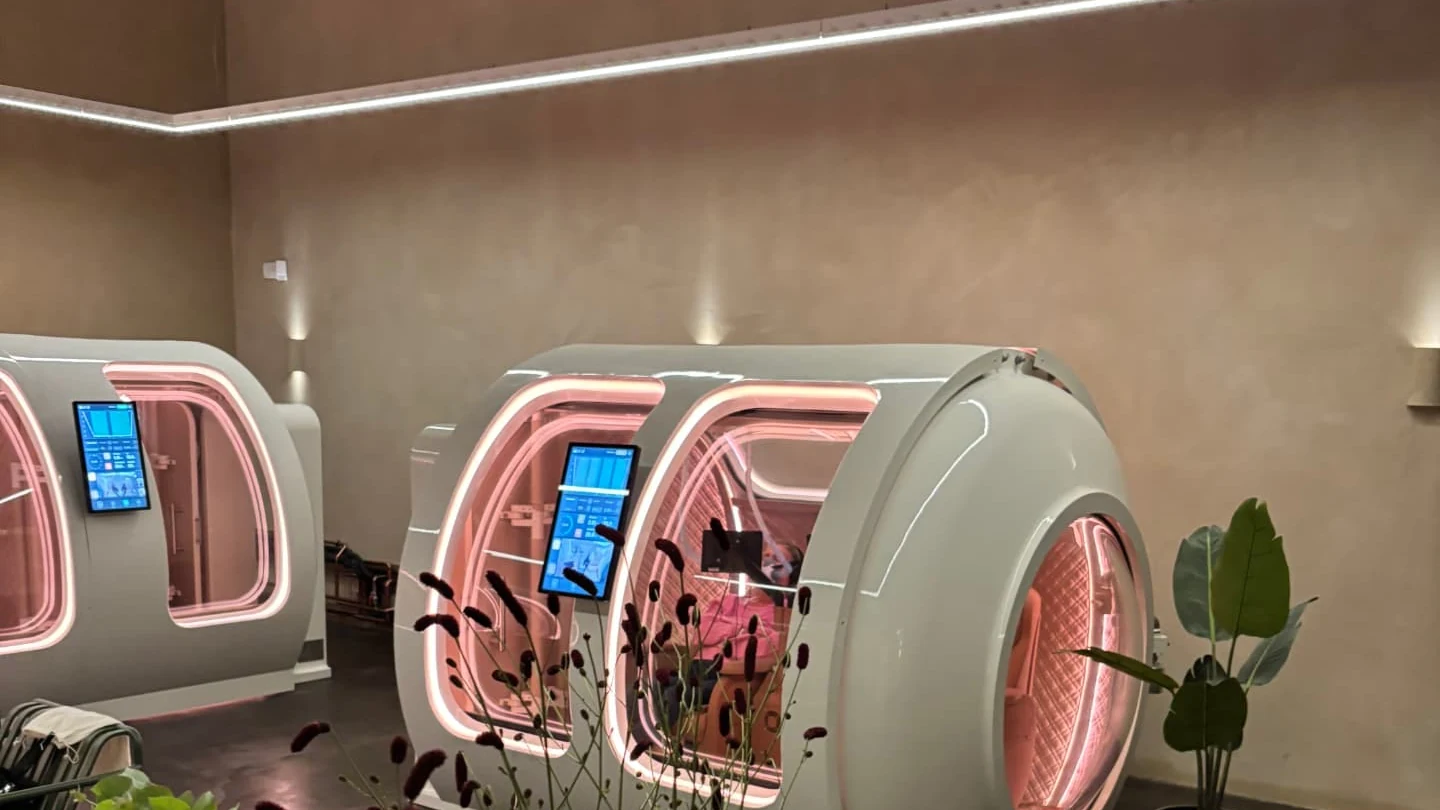
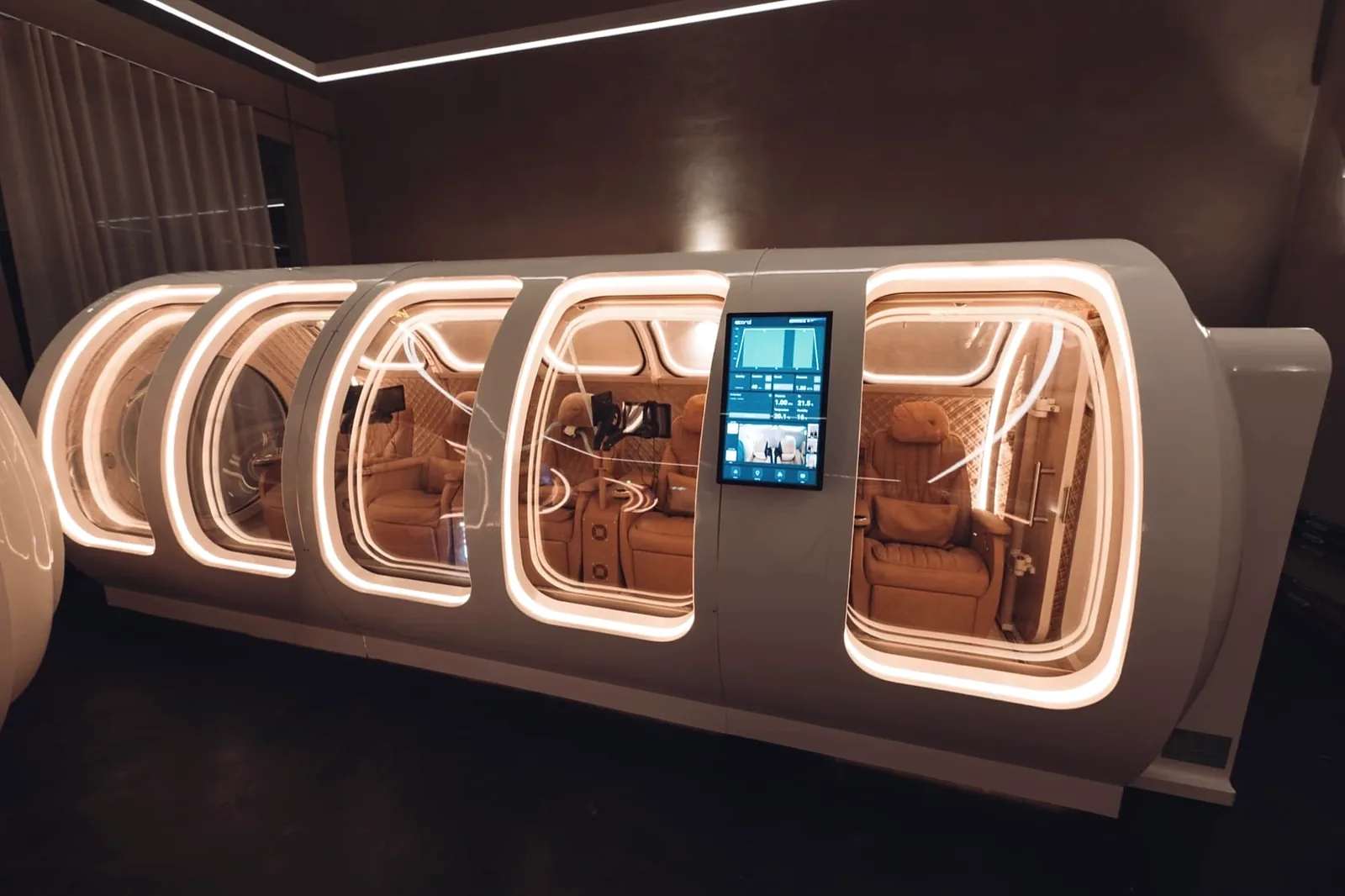
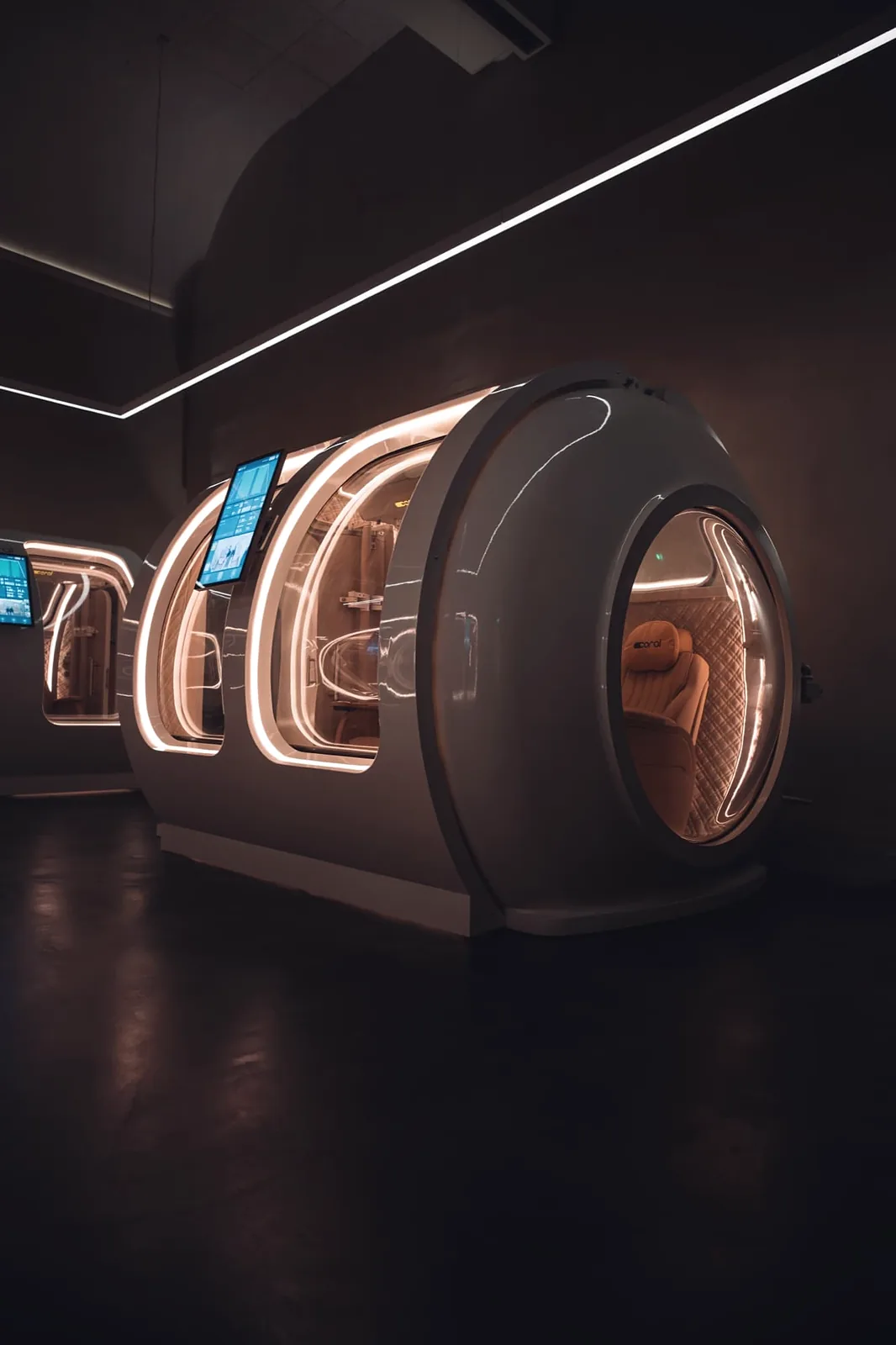
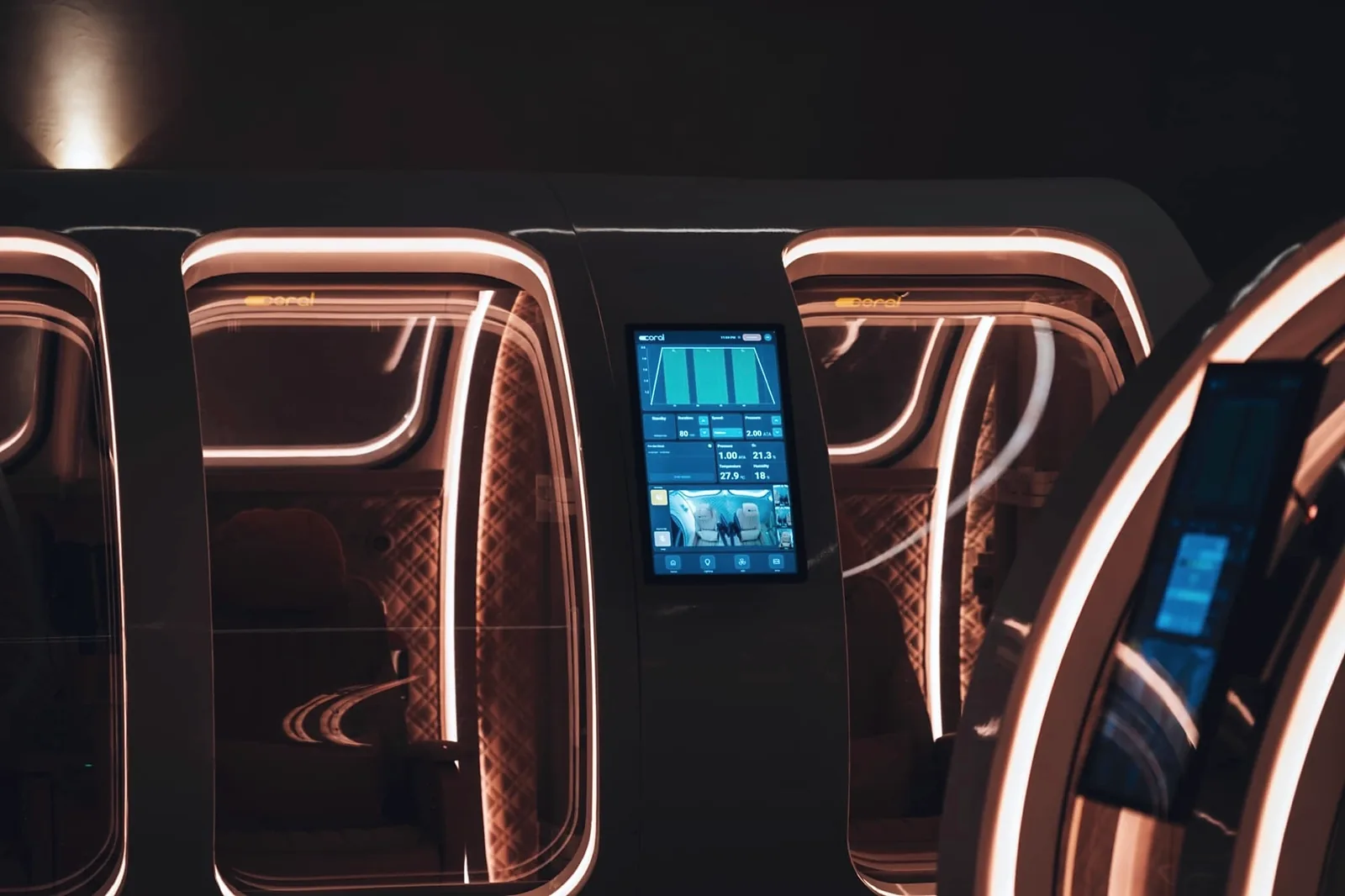
Our chambers run at 2.0 ATA with oxygen supplied by individual mask at approximately 93%, giving 1.86 ATA of inspired oxygen, or 93% of the dose used in the studies above. Compression and decompression take about ten minutes at each end, so a 65-minute session gives roughly 45 minutes at pressure and a 90-minute session matches the Hachmo protocol. Both chambers are CE-certified hard-shell multiplace vessels, seven seats between them, with oxygen, pressure, temperature and humidity logged continuously and automatic switchover to air if a reading leaves range.
Those are the numbers to run the multiplication on. Ask any other provider for the same two figures, pressure and oxygen fraction, and you can place them on the table above yourself.
A note on screening
Hyperbaric oxygen at clinical pressures has a long safety record in supervised facilities, and the common problems are minor and mechanical. Ear and sinus barotrauma during compression is the usual one, which is why compression is slow and why you are taught to equalize before the first session. Temporary myopic shift can appear over a long course and generally resolves.
The risk that scales with the numbers in this guide is central nervous system oxygen toxicity, which is why inspired oxygen is capped at or below 2.8 ATA across the field even when chambers go deeper. It is rare at 2.0 ATA and air breaks exist to keep it that way. Screening before a first session covers untreated pneumothorax, recent ear surgery, poorly controlled seizure disorder, certain chemotherapy agents and pregnancy, and we ask about all of these before anyone is booked.
Frequently asked questions
Is a 1.3 ATA chamber just a gentler version of the same treatment?
Not in the sense the marketing implies. At 1.3 ATA on air you inhale about 0.27 ATA of oxygen against 1.86 ATA in one of our sessions, so it is not a smaller dose of the same thing so much as a different exposure. It may have effects of its own, which is an open research question, but the evidence quoted to sell it was generated at higher pressures.
Would adding an oxygen concentrator fix that?
It narrows the gap without closing it. A 40% mixture at 1.3 ATA gives roughly 0.52 ATA of inspired oxygen, about a quarter of a clinical session. The FDA also prohibits using fabric chambers with supplemental oxygen, and Health Canada flags a significantly raised fire risk when the two are combined.
Is 1.5 ATA real hyperbaric oxygen therapy?
By the letter of the UHMS and ECHM definitions, yes, provided the gas is near-100% oxygen in a hard-sided chamber. But no UHMS-approved indication is treated there. It sits at the boundary rather than in the middle of the evidence, and most of the research supporting it is in post-concussion symptoms.
If the fake treatment arms improved, does pressure by itself do something?
That is the live argument. Several trials used 1.2 to 1.3 ATA air as a placebo and those participants got better, which some researchers read as proof that mild pressure is active and others read as the ordinary improvement seen in any trial with attention, routine and time. Both readings are defensible on the current data.
Why treat at 2.0 rather than 2.4 or higher?
The approved range runs to 3.0 ATA, and higher pressures do mobilize more stem cells in at least one comparison. They also raise oxygen toxicity risk, and 2.0 ATA is where the stem cell, telomere and cognitive research in healthy adults was actually conducted. Treating at the pressure the evidence was generated at is a deliberate choice.
- 1.Sack RA, Pikkel YY, Leitner Shemy O, Ramon Y, Ullmann Y, Zeltzer AA. Transcutaneous oximetry values in chronic ulcer patients during hyperbaric treatment at 1.4 ATA compared to 2 ATA. Undersea and Hyperbaric Medicine, 2024;51(1):1-5. Link
- 2.Bird N, UHMS Safety Committee and Oxygen Therapy Committee. UHMS Position Statement: Low-Pressure Fabric Hyperbaric Chambers. Undersea and Hyperbaric Medical Society, revised 2018. Link
- 3.Morningstar M, Strauchman M. Hyperbaric Oxygen Therapy and Mild Hyperbaric Oxygen Therapy Are Not Synonymous: A Narrative Review. Medical Sciences, 2026;14(3):360. Link
- 4.Thom SR, Bhopale VM, Velazquez OC, Goldstein LJ, Thom LH, Buerk DG. Stem cell mobilization by hyperbaric oxygen. American Journal of Physiology-Heart and Circulatory Physiology, 2006;290(4):H1378-86. Link
- 5.Hachmo Y, Hadanny A, Abu Hamed R, et al. Hyperbaric oxygen therapy increases telomere length and decreases immunosenescence in isolated blood cells: a prospective trial. Aging, 2020;12(22):22445-56. Link
- 6.Harch PG. Systematic Review and Dosage Analysis: Hyperbaric Oxygen Therapy Efficacy in Mild Traumatic Brain Injury Persistent Postconcussion Syndrome. Frontiers in Neurology, 2022;13:815056. Link
- 7.Wolf G, Cifu D, Baugh L, Carne W, Profenna L. The effect of hyperbaric oxygen on symptoms after mild traumatic brain injury. Journal of Neurotrauma, 2012;29(17):2606-12. Link
- 8.Cifu DX, Hart BB, West SL, Walker W, Carne W. The effect of hyperbaric oxygen on persistent postconcussion symptoms. Journal of Head Trauma Rehabilitation, 2014;29(1):11-20. Link
- 9.Weaver LK, Wilson SH, Lindblad AS, et al. Hyperbaric oxygen for post-concussive symptoms in United States military service members: a randomized clinical trial. Undersea and Hyperbaric Medicine, 2018;45(2):129-56. Link
- 10.Health Canada. Unlicensed soft-shelled hyperbaric chambers may pose serious health risks. Advisory RA-74275, 2020. Link
- 11.U.S. Food and Drug Administration. Hyperbaric Oxygen Therapy: Get the Facts. Consumer Update, 2021. Link
- 12.Heyboer M 3rd, Milovanova TN, Wojcik S, et al. CD34+/CD45-dim stem cell mobilization by hyperbaric oxygen: changes with oxygen dosage. Stem Cell Research, 2014;12(3):638-45. Link
- 13.Cooper JS, Hanson KR. Hyperbaric Physics. StatPearls, updated 2023. Link