The short version
One double-blind trial has compared two course lengths, and it favored the longer one. Everything else in the literature holds the session count fixed and varies something else, so the honest position is that nobody has established a minimum effective course, and the group with the largest series in the field says so in print. Against the case for repeated exposure sit four US Department of Defense trials that found no advantage over sham chambers, with gains fading inside a year. In Europe, brain injury remains an optional indication that professional consensus places inside research protocols.
The only trial to compare 40 sessions with 80 favored 80
In February 2025, Lindell Weaver's group at Intermountain Health in Utah published the trial that comes closest to answering the dose question directly. They recruited adults with persistent symptoms at least six months after a brain injury, mostly traumatic, and randomized them to 40 hyperbaric sessions or 40 sham sessions over twelve weeks. Three months later they offered everyone a further 40 open-label sessions. The original active group therefore accumulated up to 80, and the original sham group up to 40.
Forty-seven participants were analyzed. On the Neurobehavioral Symptom Inventory, a 22-item self-report scale, the active group improved by 10.6 points at thirteen weeks against 3.6 in the sham group, a between-group difference of 7.0 points (95% CI 1.7 to 12.3, p = 0.01). The active group also improved across all three subdomains, cognitive, affective and somatic, while the sham group moved only on the affective one.
Then came the part that matters here. After the second course, the group that had received 80 sessions reported further improvement at twelve months, both against the sham group's 40 and against their own scores after their first 40. The authors concluded that 80 sessions "may be superior to 40 sessions" for long-term brain injury outcomes. That phrasing is deliberately cautious, and it should be.
Limitations of this trial
- Phase II exploratory design. Enrollment reached 49 of an intended 150, so everything after the thirteen-week primary outcome was likely underpowered.
- The second course of 40 was open-label. Neither participants nor the effect of expectation was controlled at that point.
- Only 15 original sham participants completed the second course, which the authors say limits any conclusion drawn from that arm.
- The primary outcome is a self-report questionnaire, not an objective measure of brain function.
- Recruitment ran through the COVID-19 pandemic, interrupting the schedule for 17 participants.
- Delivered at 1.5 ATA, at a site 1,500 m above sea level where ambient pressure is around 0.85 ATA, so the relative pressure change differed from a sea-level clinic.
- Attrition was not random: everyone in the active group who dropped out had a mild TBI and was employed.
The sham group improved too, and then lost it
Read only the headline and you would miss the most informative finding. The sham group's 3.6-point improvement was statistically significant in its own right (p = 0.02). Sitting in a chamber for an hour a day, five days a week, with staff attention and a reason to leave the house, does something measurable. The investigators say as much, and note that research supports the value of quiet, structure and socialization after brain injury.
What separated the arms was durability. By six months, only the active group's improvement had held; the sham group's gains had substantially faded. If you are trying to work out what a course of hyperbaric oxygen adds beyond the ritual of attending one, that contrast is more useful than the thirteen-week difference. It is also a single small trial, and it has not been replicated.
Why most of the sham group never finished their own course
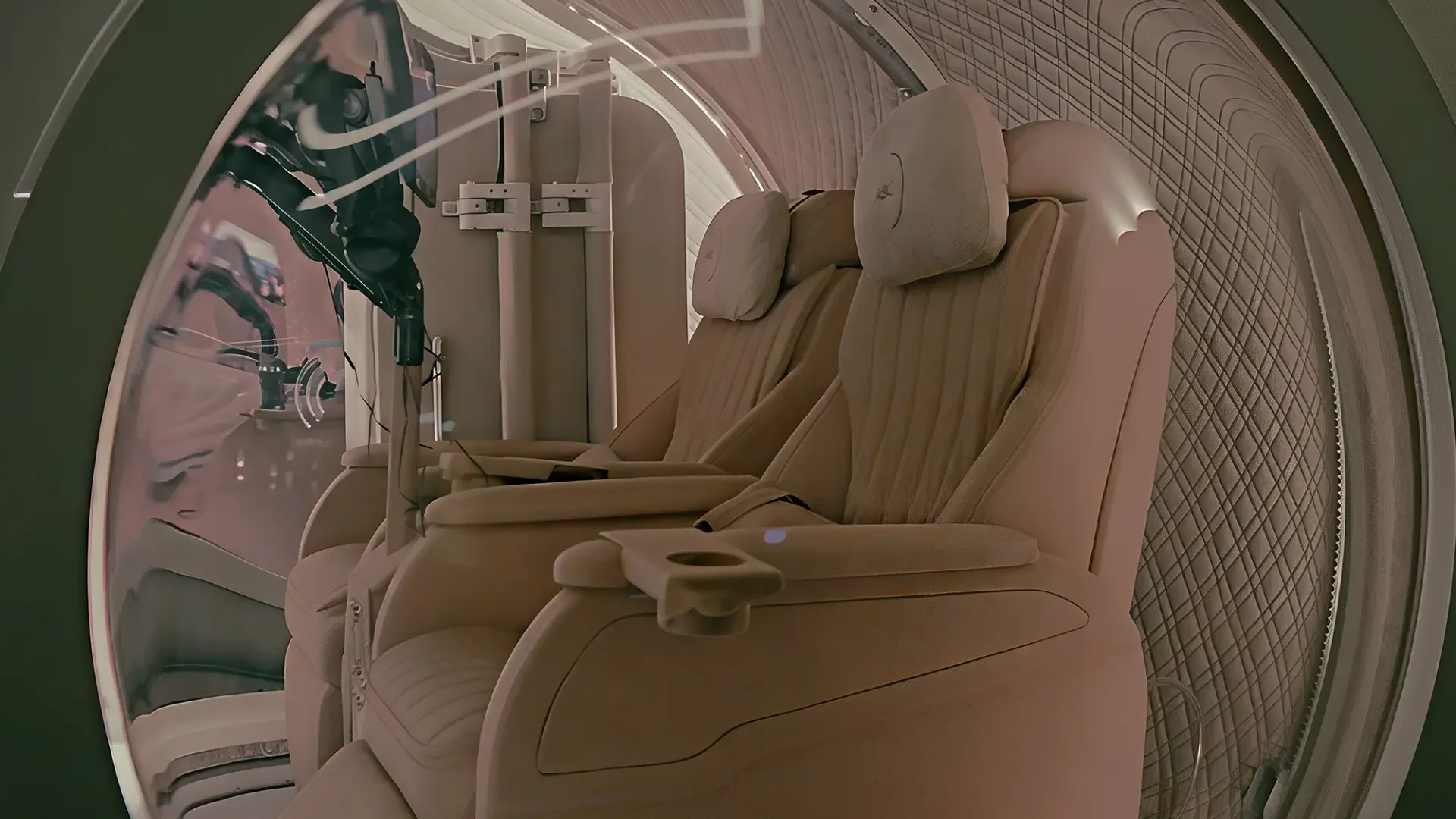
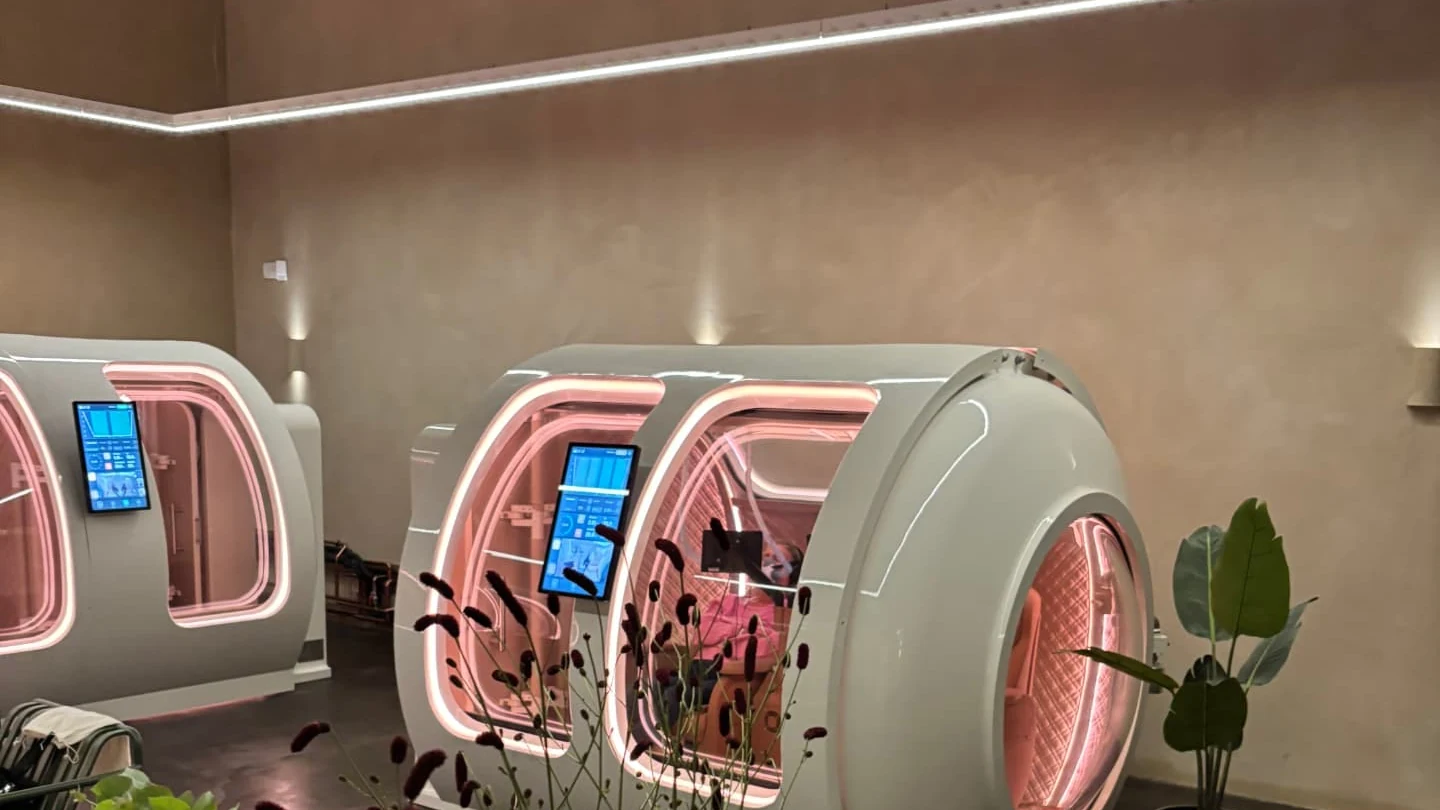
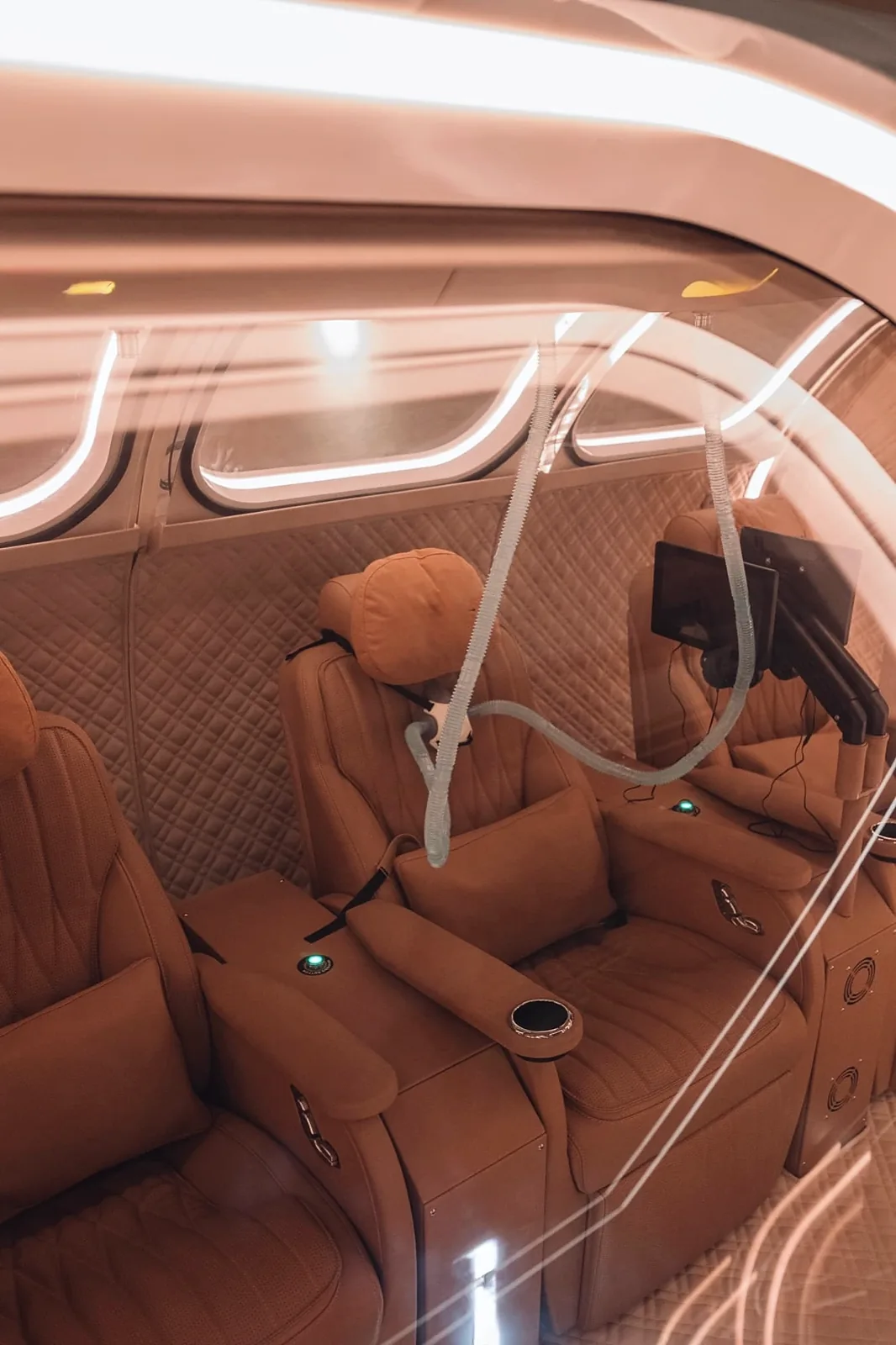
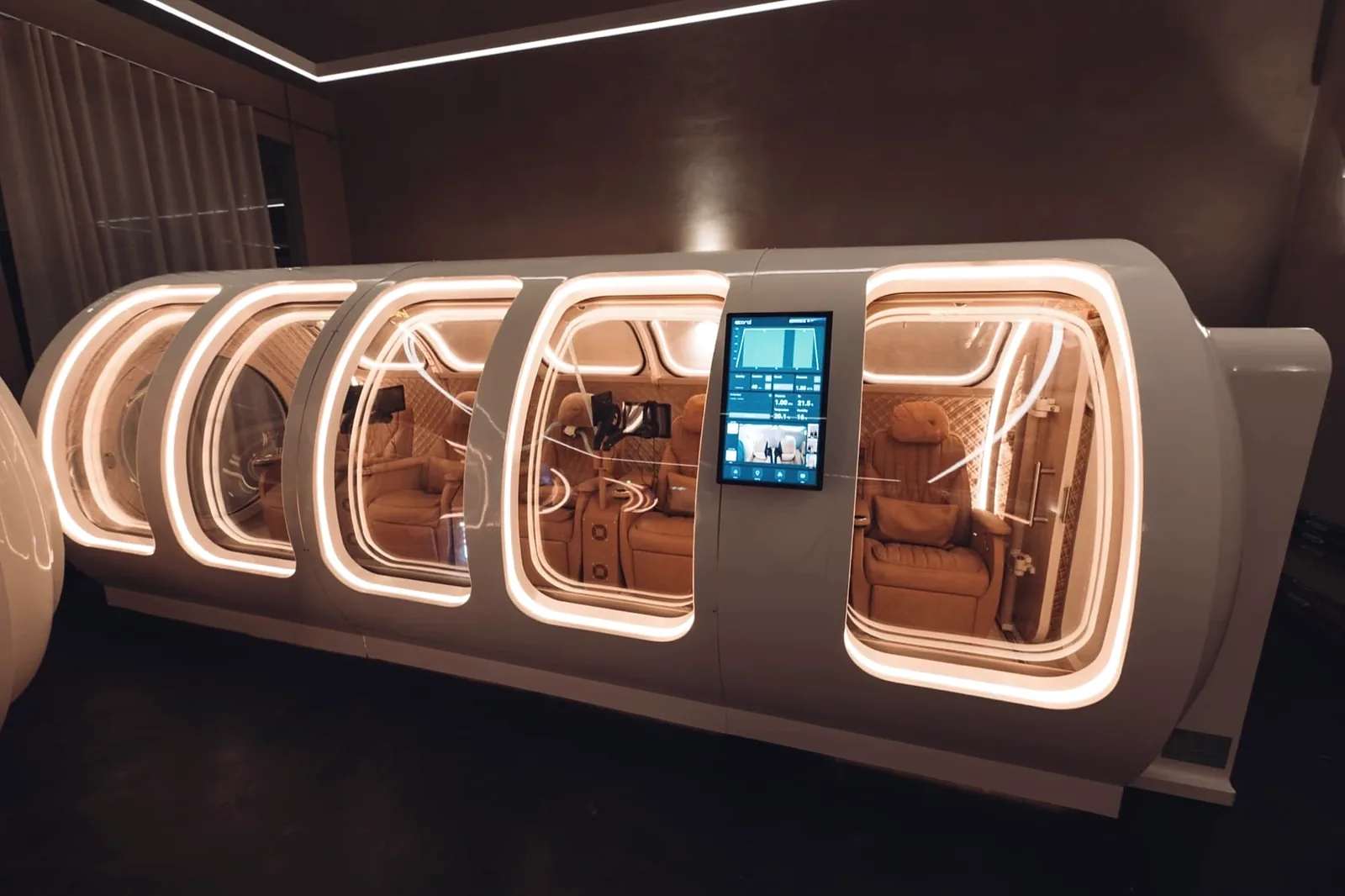
One detail in the discussion is worth more than it looks. The open-label course was delivered in a multiplace chamber at a fixed time, 11:30 each weekday, and the investigators identify that fixed slot as the most likely reason only a minority of the sham group completed their 40 sessions. The dose question is therefore not purely biological. A course is 40 or more weekday appointments over two to three months, and multiplace chambers run on shared schedules by design. Ours are multiplace too, seven seats across two chambers, so the same constraint applies here: whether someone can complete a course is partly a question of whether their working week accommodates it.
One session doubles your circulating stem cells. Twenty raises them eightfold
The reason a course exists at all comes from a 2006 experiment by Stephen Thom's group at the University of Pennsylvania. They measured CD34+ cells, bone-marrow-derived progenitors that circulate and migrate toward injured tissue, in people undergoing hyperbaric oxygen. After a single two-hour exposure at 2.0 ATA, the count roughly doubled. Across a course of twenty treatments it rose about eightfold, with no comparable rise in overall white cell count. Working in mice, they traced the effect to nitric oxide synthase in bone marrow stroma: knockout animals lacking the gene did not mobilize cells at all.
Notice what that does and does not establish. It establishes that the response compounds across sessions rather than saturating after the first, which is the physiological basis for prescribing a course. It does not establish that mobilized progenitor cells repair a brain. Those are two different claims, and the second has not been demonstrated in humans.
The measured range is narrower than the prescribed one. We know CD34+ counts rise about twofold after one session and about eightfold after twenty, but nobody has measured the curve beyond twenty. The clinical protocols sit at 40, 60 and 80 sessions, well past the measured range.
The signal may be the transition, not the oxygen
The second strand of the argument is stranger, and it explains why the sessions are spaced rather than continuous. Amir Hadanny and Shai Efrati named it the hyperoxic-hypoxic paradox: cells appear to respond to changes in free oxygen concentration rather than to the absolute level, so a sharp fall from hyperoxia back toward normal is read at the cellular level as though oxygen had become scarce. That triggers the hypoxia-inducible factor pathway, and with it the genes governing angiogenesis and mitochondrial biogenesis, without any actual hypoxia.
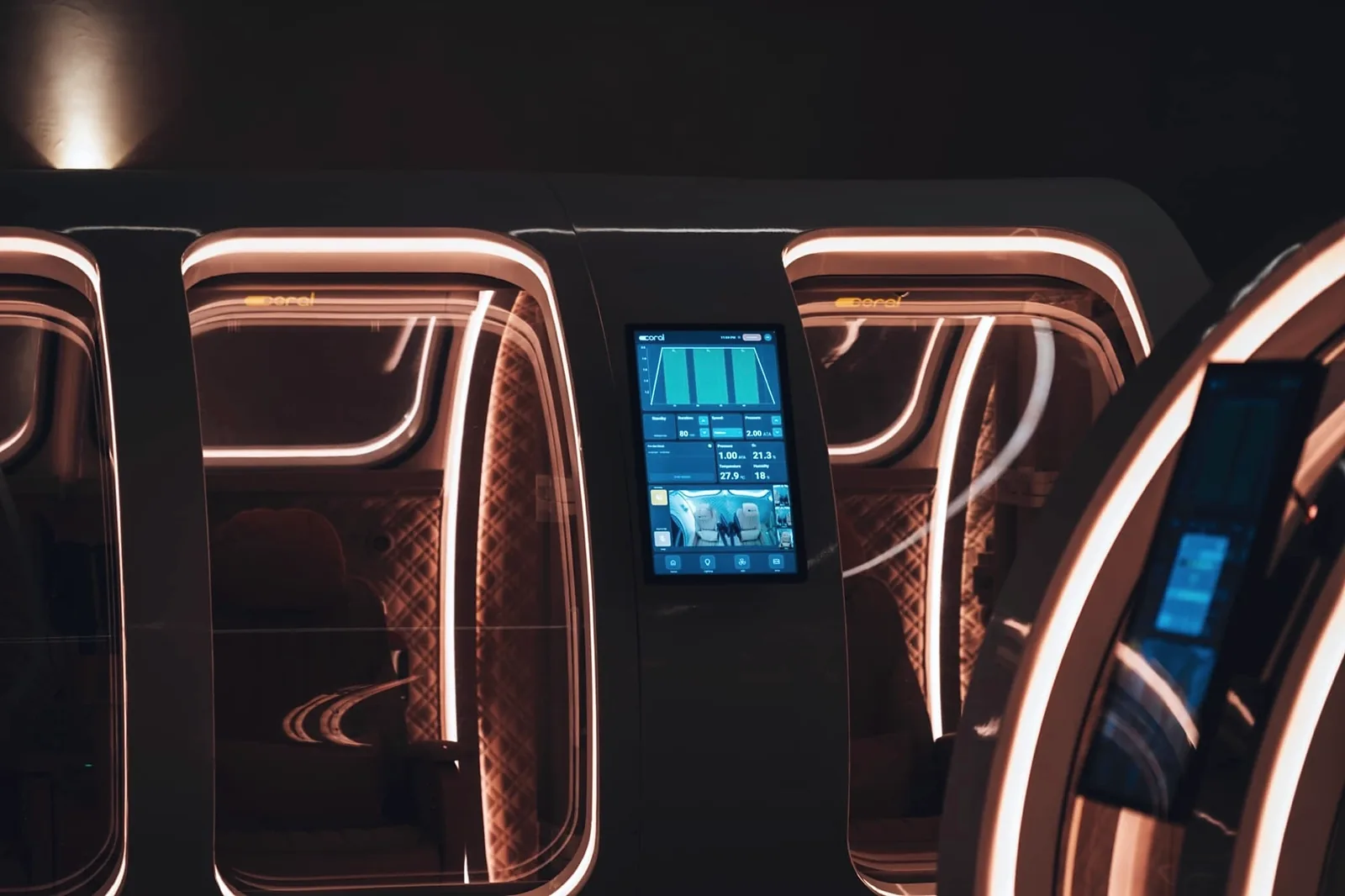
If that model is right, the therapeutic signal is not the oxygen. It is the transition. This is why the Israeli protocols schedule five-minute mask-off air breaks every twenty minutes: each one manufactures an additional swing. Whether a chamber can produce those transitions reliably is an equipment question rather than a clinical one, and it is worth asking any provider. In our chambers, oxygen, pressure, temperature and humidity are logged continuously, with automatic switchover between oxygen and air if a reading leaves range. The paradox itself remains a well-supported hypothesis rather than a demonstrated mechanism of clinical benefit, and any clinic presenting it as settled physiology is overreaching.
Accepted indications are already dosed in courses, not sessions
There is a useful sanity check available here, and it does not depend on the contested brain-injury literature at all. Look at what European hyperbaric medicine says about the indications where the evidence is strongest.
At the Tenth European Consensus Conference in Lille, the European Committee for Hyperbaric Medicine set out its accepted indications and the practice standards attached to them. For refractory chronic osteomyelitis, the committee's recommendation is that treatment should run at least eleven to twelve weeks, roughly 60 sessions, before any significant clinical effect should be expected. For early-stage femoral head necrosis, they suggest daily sessions of at least 60 minutes, five to six days a week, in cycles of four to five weeks at 243 to 253 kPa. Our own sessions run 65 or 95 minutes, which sits above that floor rather than at it.
So the idea that hyperbaric oxygen is dosed in multi-week courses is not something the longevity sector invented to sell packages. It is standard practice in the indications with the best evidence, endorsed by the relevant European professional body, for reasons that predate any interest in cognition. Where clinics do overreach is in importing that dose logic into brain injury and implying the transfer has been proven. It has not.
Where the case for repeated exposure runs into the military trials
Anyone selling you a course should be able to tell you why four large trials found nothing. Here is the strongest version of that case, stated as its authors state it.
Both chamber arms beat routine care, and neither beat the other
Between 2011 and 2018 the US Department of Defense funded five randomized studies of hyperbaric oxygen for persistent post-concussion symptoms in service members. Four used sham chambers, and four found no advantage over sham. The largest, R. Scott Miller's HOPPS trial in JAMA Internal Medicine, randomized 72 service members to routine care, routine care plus 40 hyperbaric sessions, or routine care plus 40 sham sessions. Both chamber arms improved relative to routine care alone, and neither beat the other. The authors concluded the improvements were not oxygen-mediated.
The BIMA trial reported a similar pattern with a crucial extra detail: gains present immediately after 40 sessions had regressed by six months and twelve months, and follow-up out to 36 months found no significant symptom benefit. In 2018 the Office of the Assistant Secretary of Defense for Health Affairs concluded hyperbaric oxygen should not be prescribed for persistent post-concussion symptoms, and the 2021 VA/DoD clinical practice guideline recommends against it. As of March 2025, the Defense Health Agency's own Traumatic Brain Injury Center of Excellence information paper states that the evidence "does not support using hyperbaric oxygen therapy to manage TBI."
Three replies, and what the Defense Health Agency says back
Three counter-arguments are made in response, and you should weigh them rather than accept ours. First, most of those sham arms were pressurized to 1.2 ATA on room air, which is itself above ambient, so the comparison may have been active treatment against weaker active treatment. Paul Harch's 2022 systematic review reanalyzed the trials by oxygen and pressure dose and reported significant symptomatic and cognitive gains at 40 sessions of 1.5 ATA across four randomized trials once dose was treated as the variable. Second, military cohorts carry high rates of PTSD and blast exposure and may not generalize to a civilian with one concussion. Third, the newer trials use genuinely normoxic shams rather than 1.2 ATA air.
The same Defense Health Agency paper answers back, and its answer is worth reading before you accept any of the three. It notes that most recent studies reporting benefit have small samples, cohort or retrospective designs, no adequate control group, or declared financial conflicts of interest. Where studies used both a sham arm and a no-chamber arm, it reports no significant differences across the three groups.
The honest summary is that trials disagree, and the disagreement is about study design as much as about biology. The European consensus phrasing draws the distinction that gets lost in both directions: absence of evidence for a benefit is not the same thing as evidence that there is no benefit.
Does higher pressure substitute for more sessions?
If the dose has two components, oxygen and pressure, could you shorten the course by pushing the pressure up? The one piece of human evidence that speaks to this cuts against our own choice of 2.0 ATA, so here it is.
Why the pressure comparison does not settle the session question
Marvin Heyboer's group sampled blood from twenty consecutive patients before and after their 1st, 10th and 20th treatments at two centers running different pressures. Post-session CD34+ counts were consistently double pre-session values on both protocols. But patients treated at 2.5 ATA showed values 1.9 to 3-fold higher than those treated at 2.0 ATA around the 10th and 20th treatments. On that marker, more pressure did more.
Two things stop this from answering the question. Circulating progenitor count is a surrogate, several steps removed from whether anyone thinks more clearly. And the sham-controlled cognitive trials have not been run at 2.5 ATA, so no study has varied pressure while holding session count fixed, or the reverse.
The two sham-controlled trials at 2.0 ATA ran 40 sessions and 60
Both came from the Sagol Center in Israel. Shani Zilberman-Itskovich's team randomized 73 patients with post-COVID cognitive symptoms to 40 sessions at 2.0 ATA for 90 minutes or a sham of 21% oxygen at 1.03 ATA, and reported group-by-time effects on global cognition, attention and executive function. Keren Doenyas-Barak's group used 60 sessions at the same pressure and session length in veterans with combat-associated PTSD, against a sham of 21% oxygen at 1.02 ATA, and reported symptom and brain connectivity improvements.
Limitations of the 2.0 ATA cognitive trials
- Effect sizes in the post-COVID trial were modest, around 0.46 to 0.50, with p values between 0.038 and 0.05, so they sit at the significance threshold rather than comfortably past it.
- Neither population is traumatic brain injury. One is post-COVID condition, the other treatment-resistant PTSD.
- Both come from a single center, which the Defense Health Agency identifies as a general weakness in this literature.
- Senior authors on both trials declare financial interests in a company commercializing the protocol.
- The one-year follow-up showing gains held covered 31 patients from the post-COVID cohort and was not a controlled comparison.
The group that has run most of these trials is candid about what remains unknown. Reviewing their own field in 2023, Doenyas-Barak and colleagues noted that session counts across studies ranged from 30 to 80, and that "the exact minimal effective dosage has not been determined."
Where the evidence runs out
- No head-to-head dose trial exists. Nobody has randomized patients to 20, 40 and 60 sessions with pressure, session length and population held constant.
- Almost all post-concussion data comes from 1.5 ATA; almost all cognitive data at 2.0 ATA comes from other conditions. Pooling them is an assumption, not a finding.
- The mechanism is measured in surrogates. Progenitor counts, cerebral blood flow and imaging connectivity are plausible intermediates. None is the outcome you care about.
- Almost no outcome data on repeat courses. Whether a second course a year later restores or extends a benefit is, as far as we are aware, untested outside the open-label arm of one small trial.
- Regulatory status is unambiguous. ECHM classes brain injury, acute and chronic, as a Type 3 indication for highly selected patients with demonstrable metabolic dysfunction, and adds that it recommends its use in TBI "only in the context of an investigational study protocol" approved by an ethics committee. The US FDA has not cleared hyperbaric chambers for brain injury either.
The protocols behind the evidence
If someone quotes you a session count, this table lets you locate it. Parameters are taken from the published methods sections rather than the abstracts, and cells read "not reported" where a paper did not specify.
| Study | Pressure | Gas and delivery | Session length | Air breaks | Course | Control |
|---|---|---|---|---|---|---|
| Boussi-Gross 2013, mild TBI | 1.5 ATA | 100% oxygen | 60 min | Not reported | 40 sessions, 5 days/week, 2 months | Crossover, no-treatment period |
| Miller 2015 (HOPPS), post-concussion | 1.5 ATA | 100% oxygen | 60 min | Not reported | 40 sessions over 10 weeks | Sham at 1.2 ATA room air; plus routine care alone |
| Weaver 2018 (BIMA), post-concussion | 1.5 ATA | >99% oxygen | 60 min | Not reported | 40 sessions over 12 weeks | Sham at 1.2 ATA room air |
| Harch 2020, post-concussion | ~1.5 ATA (150 kPa) | 100% oxygen | 60 min | Not reported | 40 sessions, 5 days/week, 8 weeks | Crossover, no-treatment period |
| Zilberman-Itskovich 2022, post-COVID | 2.0 ATA | 100% oxygen by mask | 90 min | 5 min every 20 min | 40 sessions, 5 days/week, 2 months | Sham: 21% oxygen at 1.03 ATA |
| Doenyas-Barak 2024, combat PTSD | 2.0 ATA | 100% oxygen by mask | 90 min | 5 min every 20 min | 60 daily sessions | Sham: 21% oxygen at 1.02 ATA |
| Weaver 2025 (HYBOBI2), brain injury | 1.5 ATA | >99% oxygen | ~50 min at pressure, 60 min door to door | 10 min on mask, then chamber atmosphere | 40 blinded, then 40 open-label, up to 80 | Sham at 1.2 ATA room air |
Two patterns are worth extracting. The trials at 1.5 ATA run 60-minute sessions without scheduled air breaks, while the trials at 2.0 ATA run 90 minutes with breaks every 20 minutes. And the only course longer than 40 sessions in a sham-controlled design is the 60-session PTSD protocol.
How this compares with our own protocol
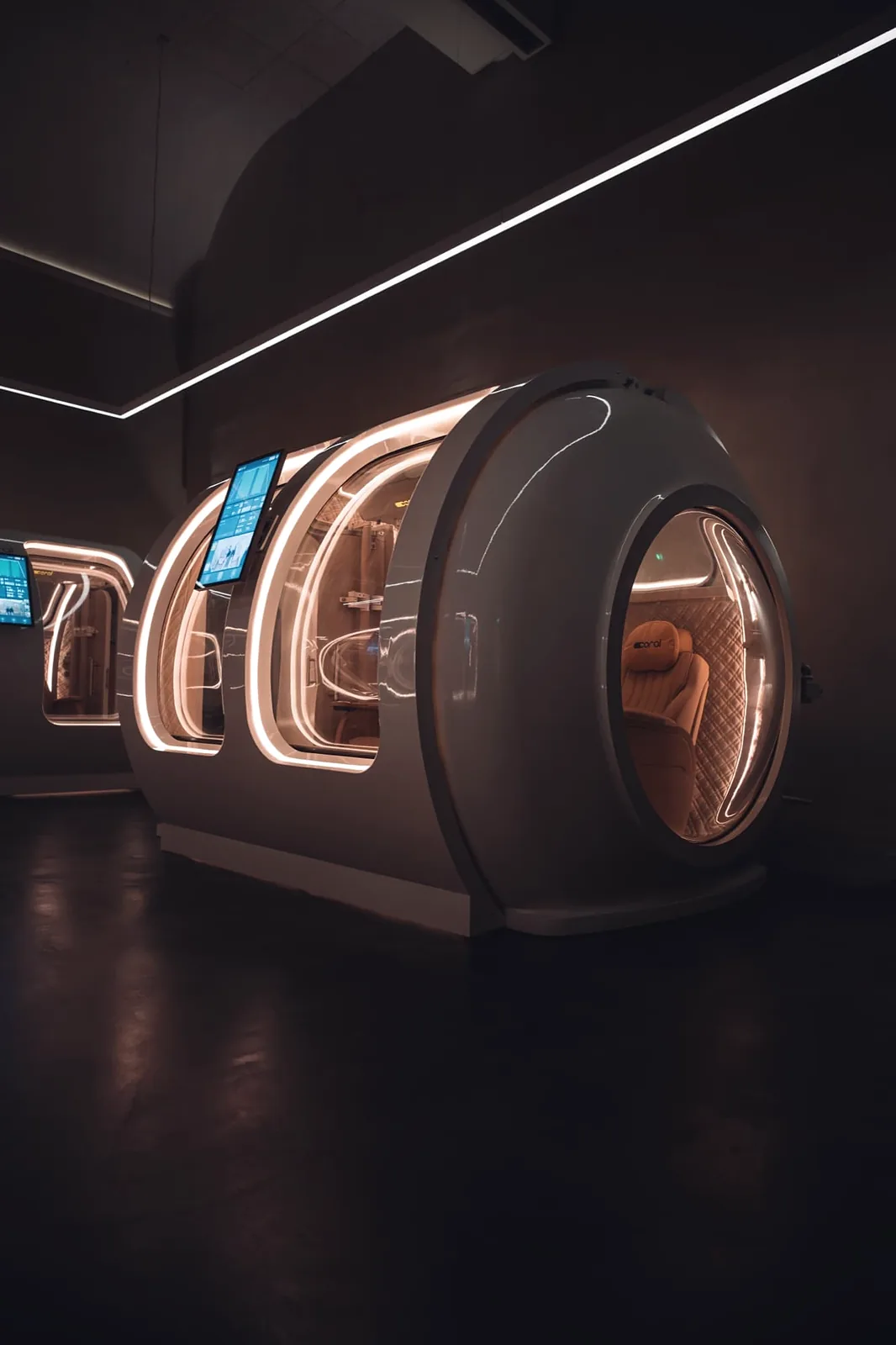
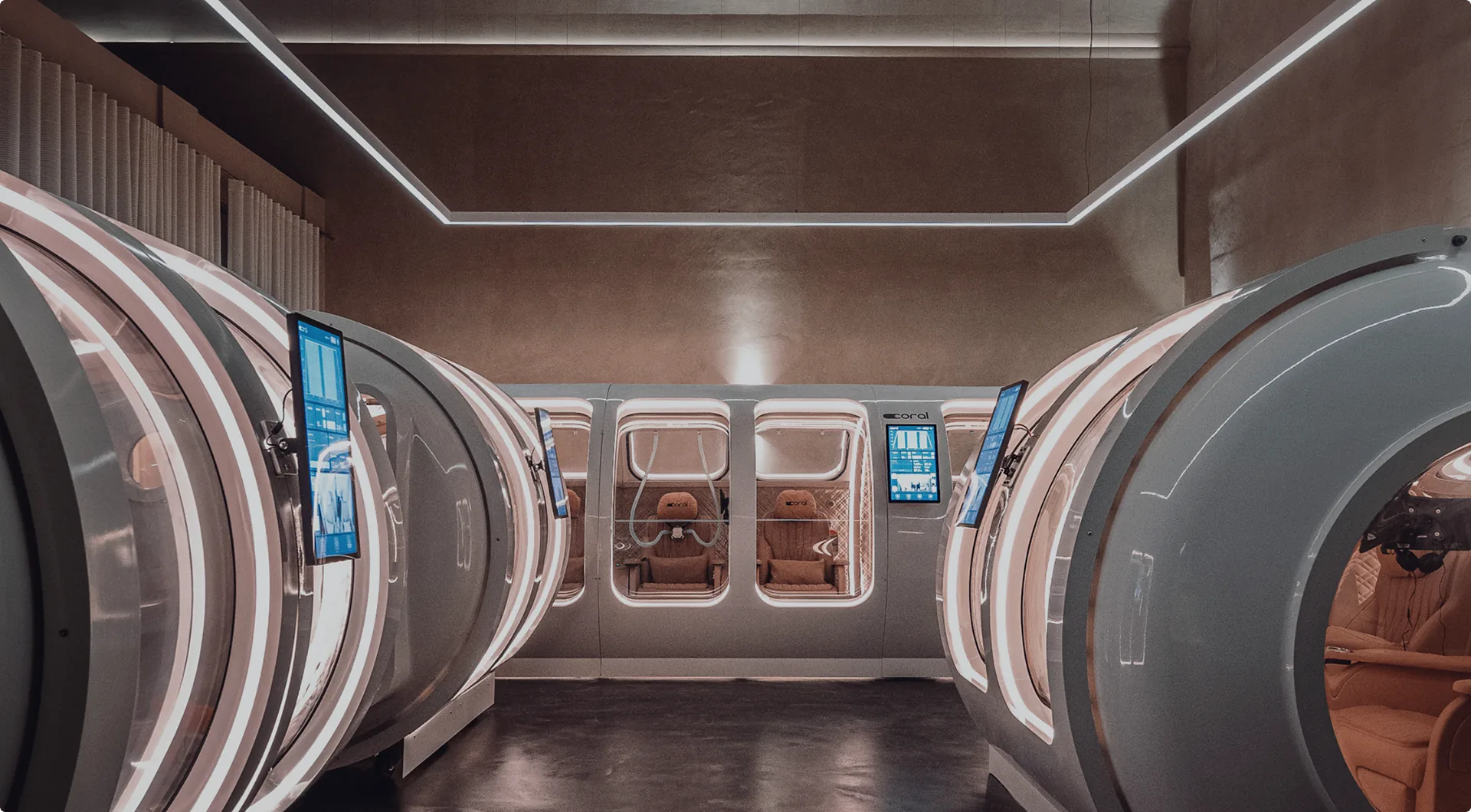
Our parameters, so you can place us on the same table. Treatment pressure is 2.0 ATA in every session, delivered in CE-certified hard-shell multiplace chambers, seven seats across two chambers. Oxygen is supplied by individual mask at approximately 93% (±3%), which gives an inspired oxygen pressure of about 1.86 ATA. Sessions are 65 or 95 minutes, with roughly ten minutes of compression at each end.
Against the trials at 2.0 ATA, which used 100% oxygen by mask for an inspired pressure of about 2.0 ATA, we sit at 1.86. Against the 1.5 ATA protocols that generated most of the post-concussion literature, we sit above them. Run the same arithmetic on anyone else: multiply the chamber pressure by the delivered oxygen fraction, and then ask what the sham arm in their cited evidence breathed.
A note on screening
Across 62,614 sessions in 2,334 patients at the Sagol Center, the overall per-session rate of adverse events was 0.72%. Middle ear barotrauma was the most common, affecting 9.2% of patients but only 0.04% of sessions. Hypoglycemia, oxygen toxicity, dizziness, anxiety, breathlessness and chest pain each occurred in 0.5 to 1.5% of patients. In the 2025 Weaver trial, 39% of participants reported a chamber-related adverse event and none was serious.
For a guide about cumulative dose, the interesting question is which of these risks scale with the number of sessions. Two answers, and they run in opposite directions.
The dose-dependent side effects have opposite shapes. Ear barotrauma rises steeply, reaching 67 percent of events by session 5 and 84 percent by session 10, then flattens. Myopic refractive shift rises steadily, with its largest change occurring by session 30. The two dose-dependent side effects have opposite shapes, so the risk profile across a long course is not the same as the risk profile at the start.
Ear barotrauma is front-loaded, not cumulative
In that same Sagol series, 67% of barotrauma events occurred within the first five sessions and 84% within the first ten. If you clear your ears well early, the risk does not keep accruing across a course. It is also the item most amenable to technique and to how the chamber is run, since the rate of compression is the operator's decision rather than yours. Ours takes about ten minutes at each end of a session, which is a deliberately unhurried descent.
Refractive change is the opposite: it accumulates
In a prospective Austrian cohort of 29 patients across 40 sessions, nearly 90% developed a myopic shift, with the largest change occurring between the start and the 30th session. Almost all such shifts reverse within weeks to months after a course ends. Lens changes are a separate matter: in that same cohort they progressed steadily and had not begun reversing by the end of the study, and irreversible cataract change, though rare, is generally reported only after more than 100 sessions. Delivery method matters too, and oxygen by mask has been associated with smaller refractive shifts than hood systems, which expose the cornea directly.
What a facility asks before a first session
Drawn from the eligibility criteria of the trials above: any untreated pneumothorax, which is an absolute contraindication; an uncontrolled seizure disorder; insulin-dependent diabetes, because of hypoglycemia risk under pressure; significant lung disease; implanted devices; pregnancy; claustrophobia; thyroid function and hematocrit; recent chemotherapy; and whether you can equalize middle ear pressure at all. Current medications matter as well, since some interact with hyperbaric oxygen.
The plainest argument for supervision is that list. A course is 40 or more exposures over two to three months, the ocular effects only become visible if someone measures visual acuity weekly, and the contraindications are the kind you can hold without knowing it.
Frequently asked questions
Is 20 sessions enough to know whether it is working?
There is no evidence-based answer, which is itself the answer. The trials assessed outcomes after 40, not 20, so nobody has published what a 20-session interim looks like. One registered trial, HOT-POCS, is testing 20 sessions at 2.0 ATA against a genuinely normoxic placebo gas at the same pressure. Its results will be worth reading closely.
Does the evidence apply if my concussion was twenty years ago?
Probably not directly. Boussi-Gross recruited patients one to five years after injury, and the 2025 Weaver trial required an injury between six months and ten years old. Nobody has studied a cohort further out than that, so if your injury is decades old you are outside the recruited range of every study cited here.
If more sessions are better, why not 200?
Because the risk profile changes and the benefit curve is unmapped. Irreversible lens changes are reported mainly above 100 sessions, and no trial has looked above 80. The European recommendation of roughly 60 sessions for osteomyelitis is a threshold for expecting an effect, not a ceiling with safety evidence behind it.
Can I do this at home with a soft chamber?
Not at these parameters. Soft-shell chambers typically reach 1.3 ATA or less, which is below the 1.4 ATA threshold the Undersea and Hyperbaric Medical Society uses to define clinical hyperbaric oxygen, and well below any protocol in the table above. Unsupervised use also removes the screening and the weekly visual checks.
Does any of this apply if my cognitive fog has no diagnosed cause?
Not directly. Every trial cited here recruited people with a documented brain injury or a confirmed post-COVID condition. Nobody has run a controlled trial in undifferentiated fatigue or fog with no identified cause, so if that describes you, you sit outside the recruited population of this entire evidence base.
- 1.Weaver LK, Ziemnik R, Deru K, et al. A double-blind randomized trial of hyperbaric oxygen for persistent symptoms after brain injury. Scientific Reports, 2025;15:6885. Link
- 2.Boussi-Gross R, Golan H, Fishlev G, et al. Hyperbaric oxygen therapy can improve post concussion syndrome years after mild traumatic brain injury: randomized prospective trial. PLOS ONE, 2013;8:e79995. Link
- 3.Miller RS, Weaver LK, Bahraini N, et al. Effects of hyperbaric oxygen on symptoms and quality of life among service members with persistent postconcussion symptoms: a randomized clinical trial. JAMA Internal Medicine, 2015;175:43-52. Link
- 4.Traumatic Brain Injury Center of Excellence, Defense Health Agency. Information Paper on Hyperbaric Oxygen Therapy and Traumatic Brain Injury, March 2025. Link
- 5.Harch PG. Systematic review and dosage analysis: hyperbaric oxygen therapy efficacy in mild traumatic brain injury persistent postconcussion syndrome. Frontiers in Neurology, 2022;13:815056. Link
- 6.Mathieu D, Marroni A, Kot J. Tenth European Consensus Conference on Hyperbaric Medicine: recommendations for accepted and non-accepted clinical indications and practice of hyperbaric oxygen treatment. Diving and Hyperbaric Medicine, 2017;47(1):24-32. Link
- 7.Thom SR, Bhopale VM, Velazquez OC, et al. Stem cell mobilization by hyperbaric oxygen. American Journal of Physiology: Heart and Circulatory Physiology, 2006;290:H1378-86. Link
- 8.Heyboer M, Milovanova TN, Wojcik S, et al. CD34+/CD45-dim stem cell mobilization by hyperbaric oxygen: changes with oxygen dosage. Stem Cell Research, 2014;12(3):638-45. Link
- 9.Hadanny A, Efrati S. The hyperoxic-hypoxic paradox. Biomolecules, 2020;10(6):958. Link
- 10.Zilberman-Itskovich S, Catalogna M, Sasson E, et al. Hyperbaric oxygen therapy improves neurocognitive functions and symptoms of post-COVID condition: randomized controlled trial. Scientific Reports, 2022;12:11252. Link
- 11.Hadanny A, Zilberman-Itskovich S, Catalogna M, et al. Long term outcomes of hyperbaric oxygen therapy in post covid condition: longitudinal follow-up of a randomized controlled trial. Scientific Reports, 2024;14:3604. Link
- 12.Doenyas-Barak K, Kutz I, Merzbach R, et al. The use of hyperbaric oxygen for veterans with PTSD: basic physiology and current available clinical data. Frontiers in Neuroscience, 2023. Link
- 13.Doenyas-Barak K, Kutz I, Lang E, et al. Hyperbaric oxygen therapy for veterans with combat-associated posttraumatic stress disorder: a randomized, sham-controlled clinical trial. Journal of Clinical Psychiatry, 2024;85(4):24m15464. Link
- 14.Hadanny A, Meir O, Bechor Y, et al. The safety of hyperbaric oxygen treatment: retrospective analysis in 2,334 patients. Undersea and Hyperbaric Medicine, 2016;43(2):113-22. Link
- 15.Riedl P, Nussdorfer P, Hofmann V, et al. Myopic shift and lens turbidity following hyperbaric oxygen therapy: a prospective, longitudinal, observational cohort study. Acta Ophthalmologica, 2019. Link
- 16.StatPearls. Hyperbaric oxygen therapy and associated cataracts. NCBI Bookshelf. Link
- 17.Wright B, Guilliod R, Thakur B, et al. Hyperbaric oxygen therapy versus placebo for post-concussion syndrome (HOT-POCS): a randomized, double-blinded controlled pilot study. Contemporary Clinical Trials Communications, 2023;34:101176. Link
- 18.US Food and Drug Administration. Hyperbaric oxygen therapy: get the facts. Consumer Updates. Link