What is settled, and what is still being argued
| Settled physiology | Under active research |
|---|---|
| A single exposure at 2.0 ATA measurably mobilizes CD34+ stem and progenitor cells into the circulation | How closely that mobilization tracks the clinical result a patient actually wants |
| Repeated exposures raise the same marker further, so the response accumulates across a course | Where the accumulation curve flattens, and whether 60 sessions beats 40 |
| Mobilization is driven by nitric oxide synthesis in bone marrow, demonstrated by knockout experiments | Whether the mobilized cells home to the tissue that needs them in any given condition |
| Cycling between hyperoxia and air is the stimulus, which is why sessions include scheduled air breaks | Whether the same total exposure spread over four months works as well as over two |
| Reported gains have persisted at one year in follow-up cohorts | Whether maintenance or top-up sessions add anything after a completed course |
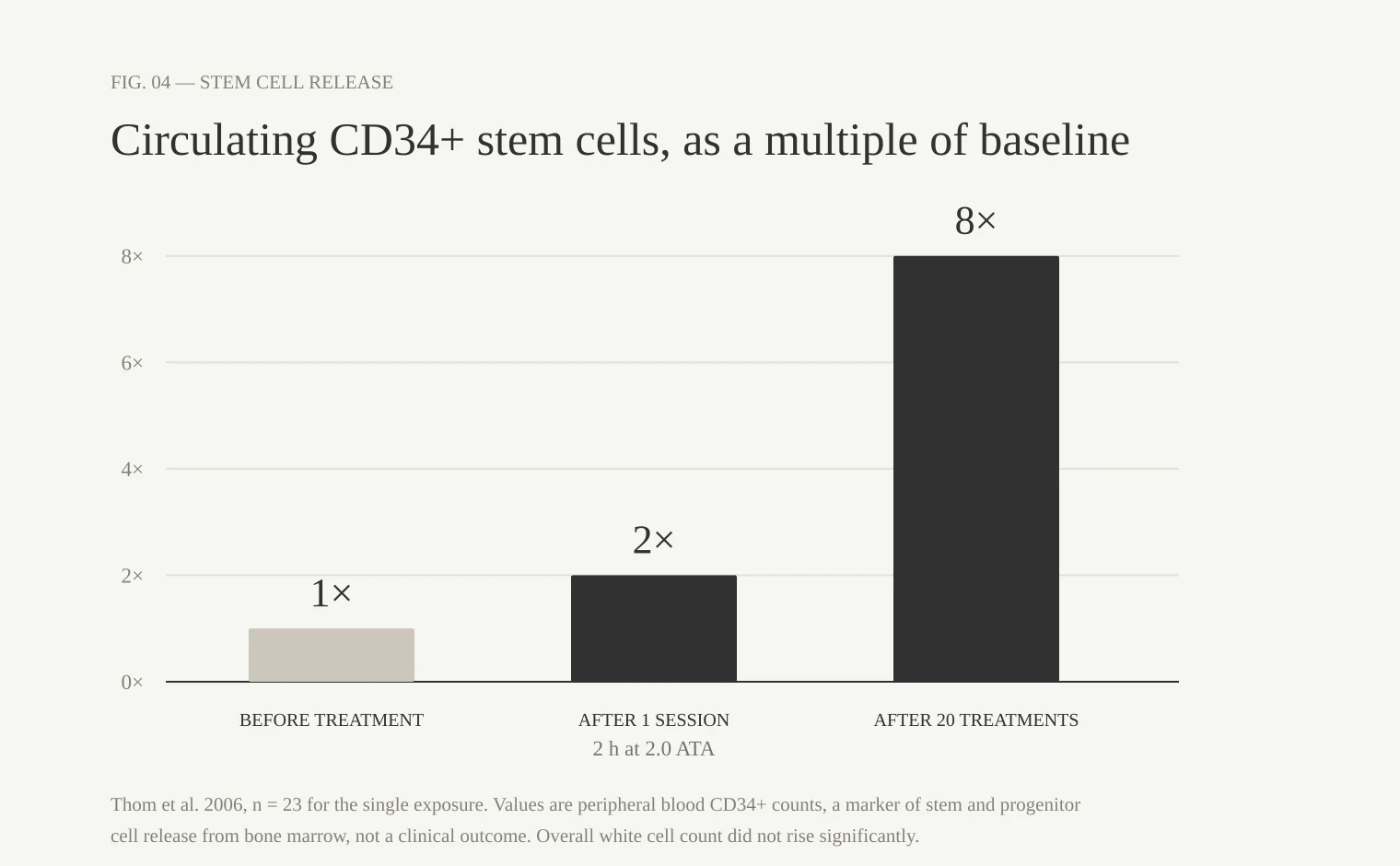
One session at 2.0 ATA doubled circulating stem cells. Twenty raised them eightfold
The clearest picture of what accumulates across a course comes from work published in the American Journal of Physiology: Heart and Circulatory Physiology in 2006 by Stephen Thom and colleagues at the University of Pennsylvania. It is nearly twenty years old and it remains the reference point, because it did something later studies mostly have not: it measured the same marker after one treatment and again across a full course.
In 23 people, the population of CD34+ cells in peripheral blood doubled in response to a single exposure to 2.0 ATA oxygen for two hours. Over a course of twenty treatments, circulating CD34+ cells rose eightfold. Colony-forming cells increased from 16 ± 2 to 26 ± 3 per 100,000 monocytes plated, and the increase was entirely attributable to the CD34+ subpopulation.
CD34+ cells are stem and progenitor cells released from bone marrow, and a high proportion of their progeny carry receptors for vascular endothelial growth factor-2 and stromal-derived growth factor, the machinery of building new blood vessels. That is the proposed link between a number in a blood sample and the thing you came in for.
Thom's group then established the mechanism rather than leaving it as correlation. In mice, hyperbaric oxygen raised circulating stem cell factor by 50% and bone marrow nitric oxide by 1,008 ± 255 nM. In knockout mice lacking the gene for endothelial nitric oxide synthase, mobilization did not happen at all, and a nitric oxide synthase inhibitor prevented it in normal mice. The effect runs through nitric oxide, and blocking that pathway abolishes it.
The growth effect appeared only in blood drawn immediately after treatment
One detail from the same paper tells you something practical. The increase in colony-forming cell growth appeared only in samples taken immediately post-treatment, and overall white cell count did not rise significantly at any point. What the study captures is a pulse generated by each session, not a level that climbs and stays up between visits.
That is the argument for daily scheduling in one observation. If the response is a pulse, the course is a series of them, and spacing them widely is not obviously the same intervention.
Study limitations
- The primary human measure is a surrogate marker. Circulating CD34+ cells are a plausible mediator of repair, not a symptom, a function or an outcome.
- Twenty-three human participants for the single-exposure result, and the course data come from a clinical population receiving hyperbaric oxygen for approved indications rather than from a randomized comparison.
- No sham arm. The design tested mechanism, not efficacy.
- Published in 2006. The mechanistic work has been extended since, but the core human dose figures have not been replicated in a randomized design.
- The link from mobilized cells to clinical benefit is proposed rather than demonstrated in this paper.
Does 2.5 ATA mobilize more? Yes, and the picture is more interesting than that
A later study put the question directly. Marvin Heyboer and colleagues, working with Thom across two clinical centers, sampled blood from twenty consecutive patients before and after the first, tenth and twentieth treatments under protocols at different pressures. Post-treatment CD34+ CD45-dim counts were always around twice pre-treatment values under both protocols. Patients treated at 2.5 ATA reached significantly higher values than those at 2.0 ATA, by factors of 1.9 to 3-fold after the tenth treatment and around the twentieth.
Read only that far and the conclusion looks like an argument for treating higher. The second half of the same result points the other way. Intracellular content of hypoxia-inducible factors 1, 2 and 3, thioredoxin-1 and poly-ADP-ribose polymerase, measured inside the mobilized CD34+ cells, was twice as high after treatment as before under both protocols, with no significant difference between 2.0 and 2.5 ATA.
So more pressure mobilized more cells, and the cells carried the same signaling payload either way. Which of those two measures matters more for a clinical result is not settled, and anyone telling you it is has read half the abstract.
This is the reasoning behind treating at 2.0 rather than climbing higher. The trials that measured outcomes people actually care about, cognition, fatigue, symptom scores and quality of life, were run at 2.0 ATA and below. The evidence for 2.5 is that it moves a marker further, and a marker is not an outcome. Higher pressure also raises the rate of ear barotrauma and shortens the safe exposure window before oxygen toxicity becomes limiting. Treating at the pressure the outcome data were collected at is the conservative reading of both findings.
Something happens in the first session that you can actually feel
Mechanism is reassuring, but people want to know what the first visit is like. One trial has tested that under blinded conditions.
Kazuyoshi Yagishita's group at Science Tokyo Hospital published a single-blind crossover randomized trial in Frontiers in Sports and Active Living in November 2025. They induced fatigue in participants with 60 minutes of ergometer cycling at 75% of maximum heart rate, then gave either one hyperbaric session at 2.5 ATA for 60 minutes or mild hyperbaric air at 1.2 ATA as the control, crossing participants over a week later.
Perceived whole-body fatigue on a visual analog scale fell from a mean of 48.4 to 28.7 in the oxygen condition, a reduction of roughly 40%, with p < 0.001. In the air condition the improvement did not reach significance.
The honest framing matters here, and it is still a good result. Nine male university students took part, blood markers did not move to support the subjective finding, and the authors state plainly that their study "could not determine the efficacy of HBO on exercise-induced fatigue". What it does show is that a single session produced a measurable subjective change under conditions where participants could not reliably tell which arm they were in. That is a stronger claim than it sounds, because perceived fatigue is exactly the kind of outcome a placebo would be expected to move, and the placebo condition here did not move it significantly.
We hear much the same thing from our own patients. People often mention something within the first week or two: sleeping more easily, a clearer head in the afternoon, less of the heaviness they walked in with. That is an observation across a lot of visits rather than a measurement, with no control group and no blinding behind it, so it is not evidence of effect and we would not offer it as any. It sits alongside the Tokyo result rather than in place of it.
What neither settles is whether noticing something early tells you anything about how you will do across a full course. Nobody has tested it. So if your first few sessions feel uneventful, that is not information about the thirty-odd that follow.
What happens from the moment you sit down
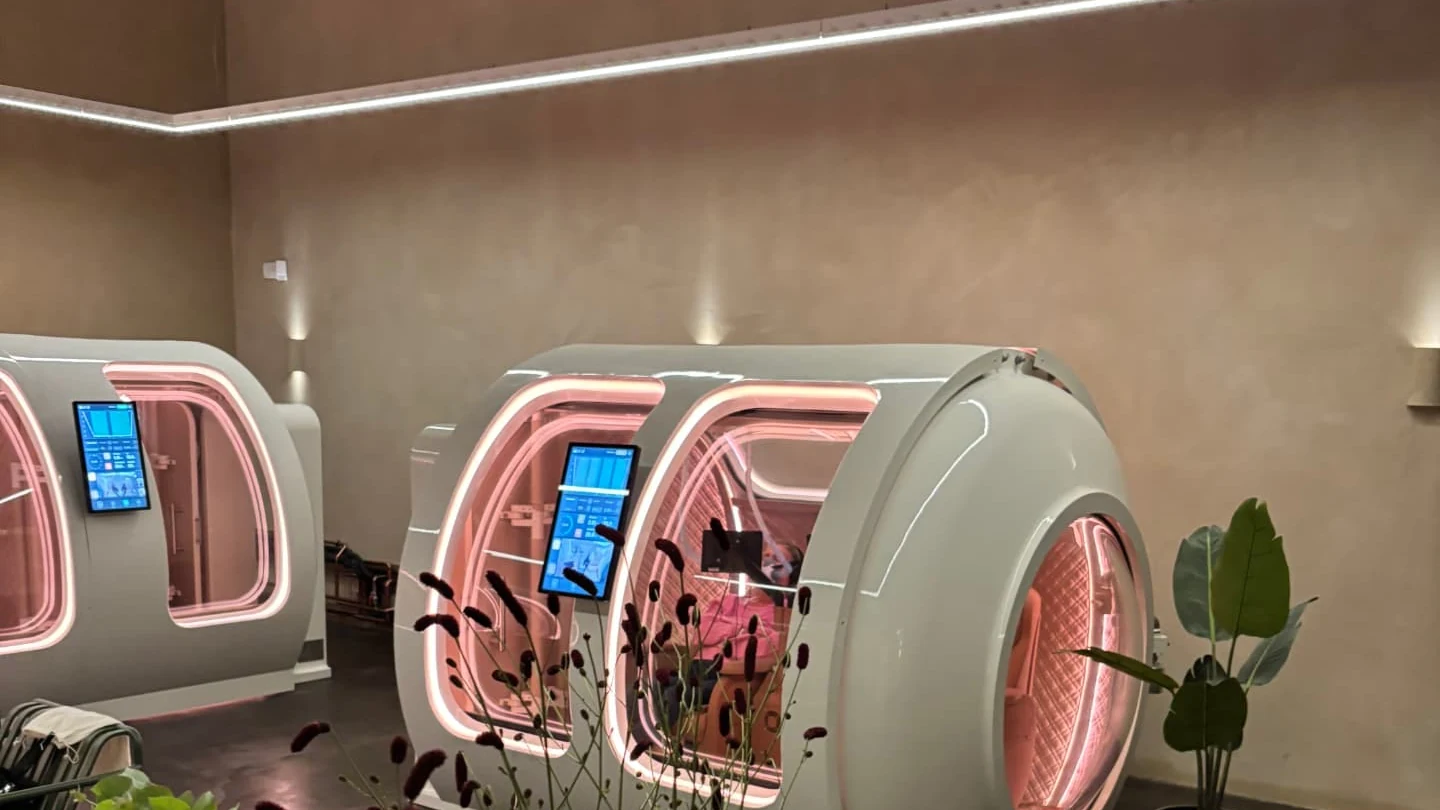
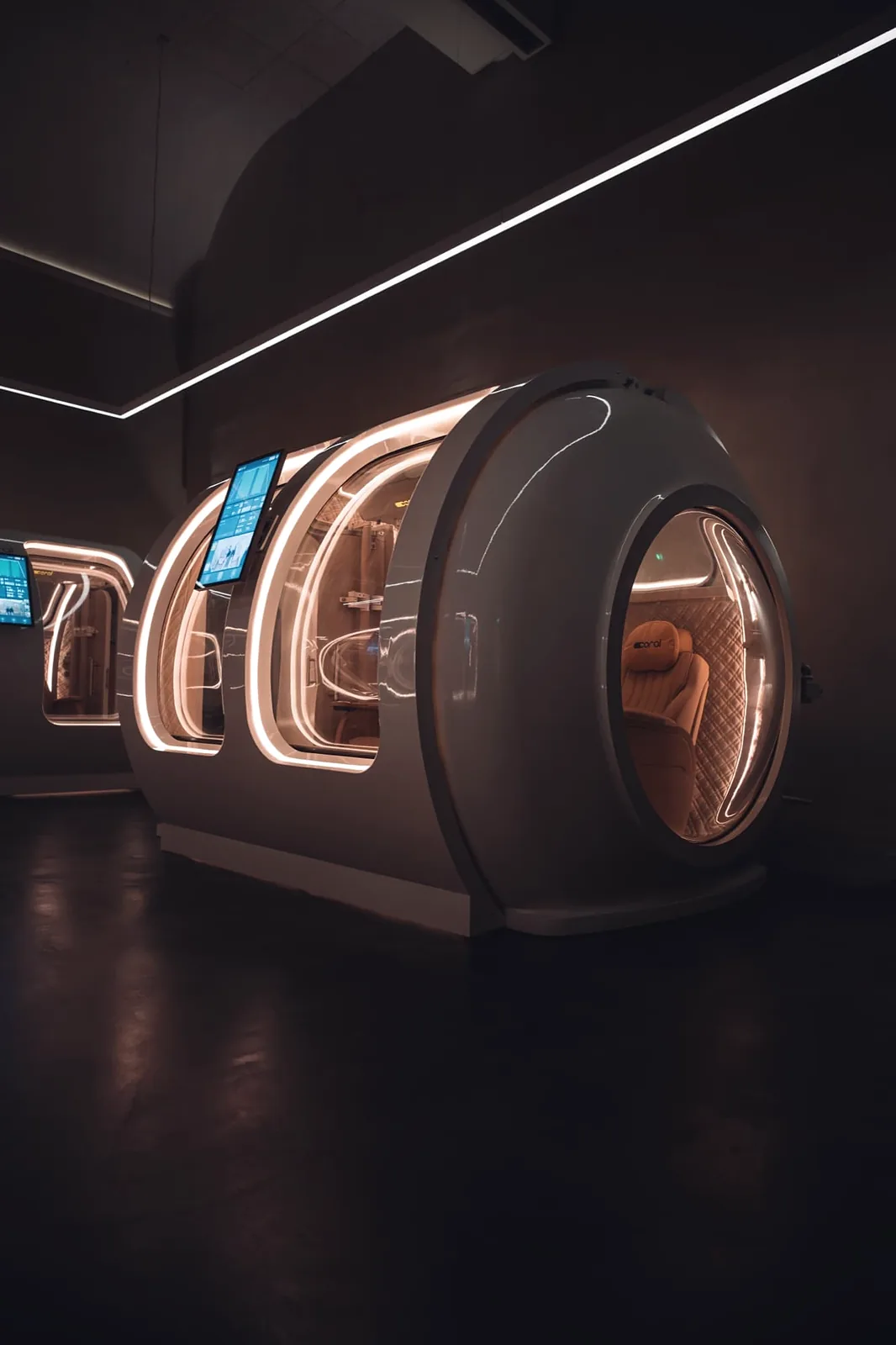
The physiology is reassuring in the abstract and less so if you have never been inside a chamber. You sit in a cabin. Ours are multiplace, so the cabin is pressurized with ordinary air and the oxygen reaches you through an individual mask you put on once seated. Staff are in contact throughout and the session can be stopped at any point.
Compression takes about ten minutes, and it is the part that needs something from you. Your eardrums feel the change as they would on an aircraft descent, and you clear them the same way: swallowing, yawning, or pinching your nose and blowing gently. Staff talk you through it and will slow the compression if you are struggling, which is the single thing that most reduces ear problems.
At pressure there is nothing to do. You breathe normally through the mask. Decompression takes about the same ten minutes, and your ears clear on the way up without effort.
Most people find the first session uneventful, which is the point. If you have had difficulty equalizing before, or you are unsure how you will find an enclosed space, say so before you book. Both are manageable, and easier to manage in advance.
Why the cycle, and not the session, is the active ingredient
If hyperbaric oxygen simply delivered oxygen, one long exposure would do most of the work and the rest would be diminishing returns. The reason it does not work that way is the mechanism Amir Hadanny and Shai Efrati named the hyperoxic-hypoxic paradox.
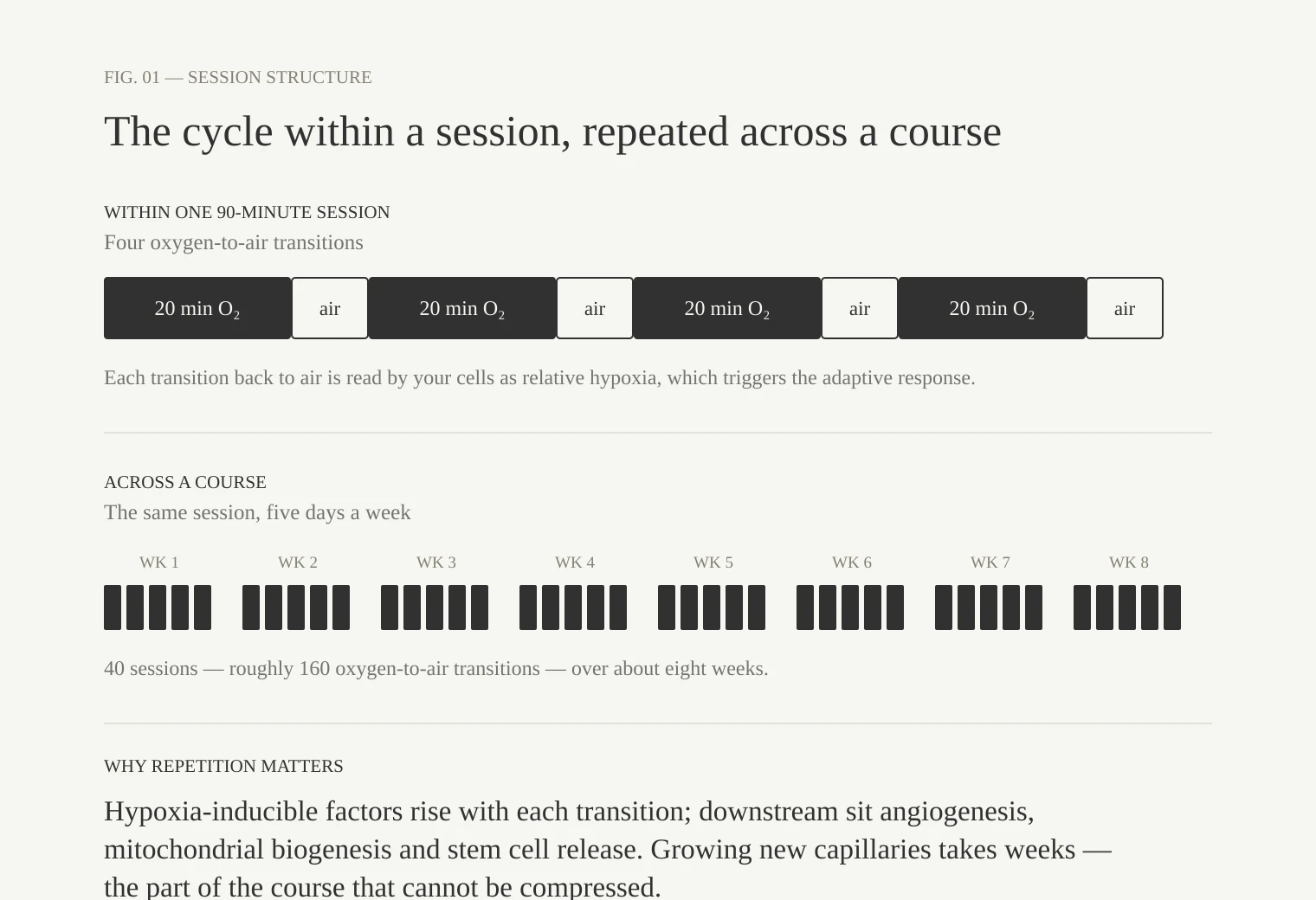
The therapeutic signal comes from fluctuation. When you come off oxygen and back to air, the relative drop is read by your cells as hypoxia, and it triggers the same adaptive machinery that real oxygen shortage would, without the damage that real oxygen shortage causes. Hypoxia-inducible factors rise, and downstream of them sit angiogenesis, mitochondrial biogenesis and stem cell release.
Two consequences follow, and both are practical.
Air breaks are part of the treatment, not a pause in it
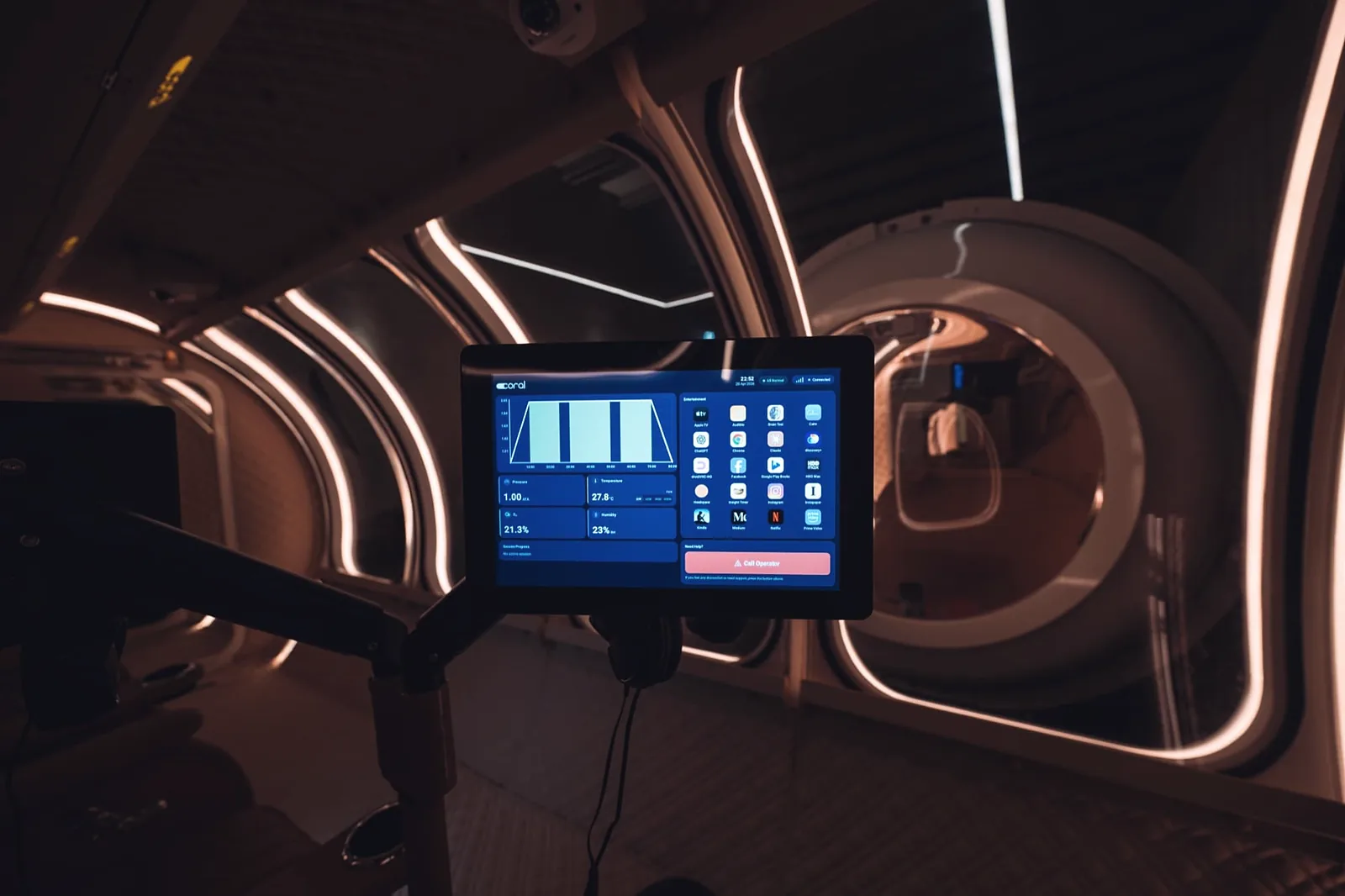
Air breaks are part of the treatment rather than a pause in it. A 90-minute session with a five-minute break every 20 minutes delivers four separate oxygen-to-air transitions. Our chambers log oxygen and pressure continuously and switch automatically between the two, which is what keeps those transitions consistent from session to session rather than approximate.
New capillaries are built on a timescale you cannot compress
Tissue remodeling also runs on a clock you cannot compress. Growing new capillaries is not a same-day process. If the goal is durable perfusion rather than a good afternoon, the course has to be long enough for the building work to happen, and that is measured in weeks.
A second course of 40 sessions added further gains at twelve months
The most useful clinical test of whether more sessions help came from Lindell Weaver and colleagues at Intermountain Health in Utah, published in Scientific Reports in 2025, the only trial in this area designed to answer the question directly.
Adults with persistent symptoms after brain injury were randomized to 40 hyperbaric sessions or 40 sham sessions over 12 weeks, double-blinded. Three months later, every participant was offered a further 40 unblinded hyperbaric sessions. At 13 weeks, the oxygen group had improved on the Neurobehavioral Symptom Inventory by 7.0 points more than sham (95% CI 1.7 to 12.3, p = 0.01), and had also improved on olfaction, anxiety, sleep difficulties and vestibular complaints.
Then the interesting part: after the additional 40 sessions, the original oxygen group reported further improvement on the same inventory at 12 months. Their own conclusion is that "80 HBO2 sessions may be superior to 40 sessions" for long-term brain injury outcomes.
The study also followed up at 24 and 36 months, unusually for this field. Among 13 eligible participants, the 36-month data showed a durable reduction in self-reported post-concussion symptoms.
Study limitations
- 49 enrolled, 47 analyzed. Small.
- The second course was unblinded, so expectation cannot be separated from treatment for those gains.
- Only 15 of the original sham participants completed the second series, which limits what the comparison can carry.
- The 36-month figure rests on 13 participants.
- Study operations were interrupted by the COVID-19 pandemic, which the authors flag as a possible influence on enrollment and outcomes.
- Conducted at 1.5 ATA rather than 2.0.
Gains reported in trials have held after treatment stopped
Durability is the question underneath course length, because a course you have to repeat forever is a different proposition from one that changes something. The clearest data come from the Shamir Medical Center group, who went back to patients from their post-COVID trial more than a year later. Thirty-one people who had completed 40 daily sessions were reassessed 486 ± 73 days after their last. On the SF-36 quality-of-life questionnaire, long-term results showed a similar magnitude of improvement to the short-term outcomes across most domains, and sleep quality had improved on the global score and five sleep domains with moderate effect sizes.
Neither that cohort nor Weaver's 36-month subset is large, and neither carried a control group that far out. What they establish is narrow but useful: the obvious worry, that gains evaporate within months of stopping, is not what the follow-up data show.
More sessions is a real variable, and it is not the only one
Two null results keep the dose story honest. HOT-LoCO, run at Karolinska University Hospital in Stockholm and published in BMJ Open in 2025, gave 80 adults with long COVID ten sessions at 2.4 ATA against a sham at 1.34 to 1.2 ATA. At 13 weeks both groups had improved on the RAND-36 physical functioning and role physical scales, with no significant difference between them. Ten sessions, no separation.
That looks like clean evidence for dose until you set it beside a trial in older adults with type 2 diabetes and mild cognitive impairment, reported by Ori Benari and colleagues as a conference abstract in Alzheimer's & Dementia in December 2025. That study used 60 sessions of 90 minutes at 2.0 ATA in 155 participants and found no cognitive advantage over sham. Sixty sessions, no separation either.
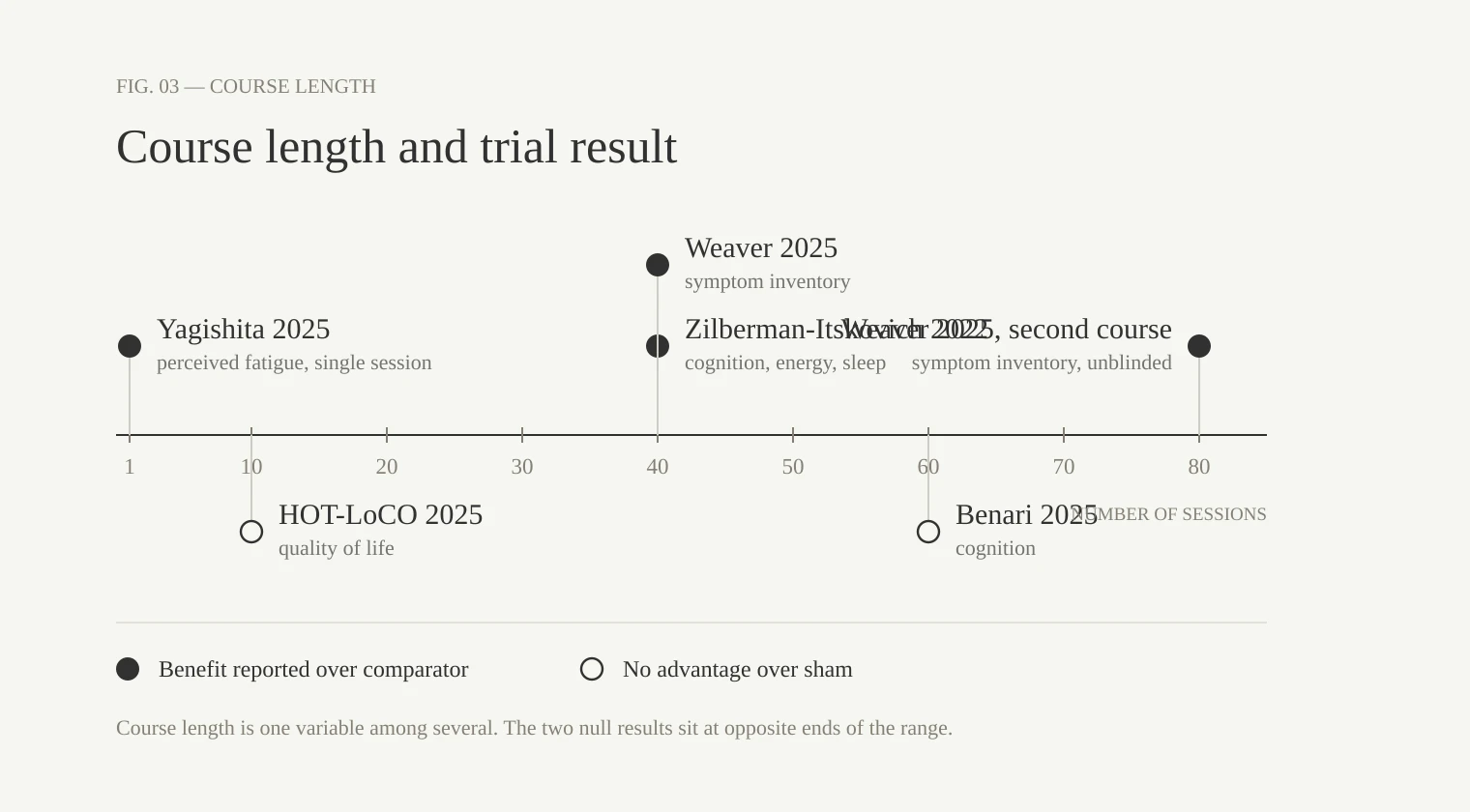
So a long course appears necessary for the effects these trials measure without being sufficient on its own. Nobody has run the study that would settle it, which is a 20 against 40 against 60 comparison in a single population.
Who responds, and on what timescale, varies by more than the protocol
The round numbers in trial protocols conceal something the trials themselves report: the same course produces different results in different people. The most direct evidence arrived in August 2026, when Hai-Tao Chu and colleagues at the First Hospital of China Medical University published a study built around that question. Participants completed 30 sessions at 2.5 ATA, with immune aging markers measured at baseline and again after 10, 20 and 30 sessions rather than only at the end.
Across the cohort as a whole, relative telomere length rose by up to 29.0% after 30 sessions, with p < 0.001 and a Cohen's d of 0.70, and the proportion of senescence-associated T cells fell, particularly within CD8+ subsets. The inflammatory cytokines TNF-α, IL-1β and IL-10 showed no significant change across the group.
That flat cytokine result is the interesting one, because the group average was concealing movement in opposite directions. Adults aged 20 to 59, women, and people with a normal BMI showed greater reductions in senescent T cells, while middle-aged participants and men showed significant reductions in inflammatory cytokines after only 10 sessions. Different people responded on different markers, on different timescales, under one protocol.
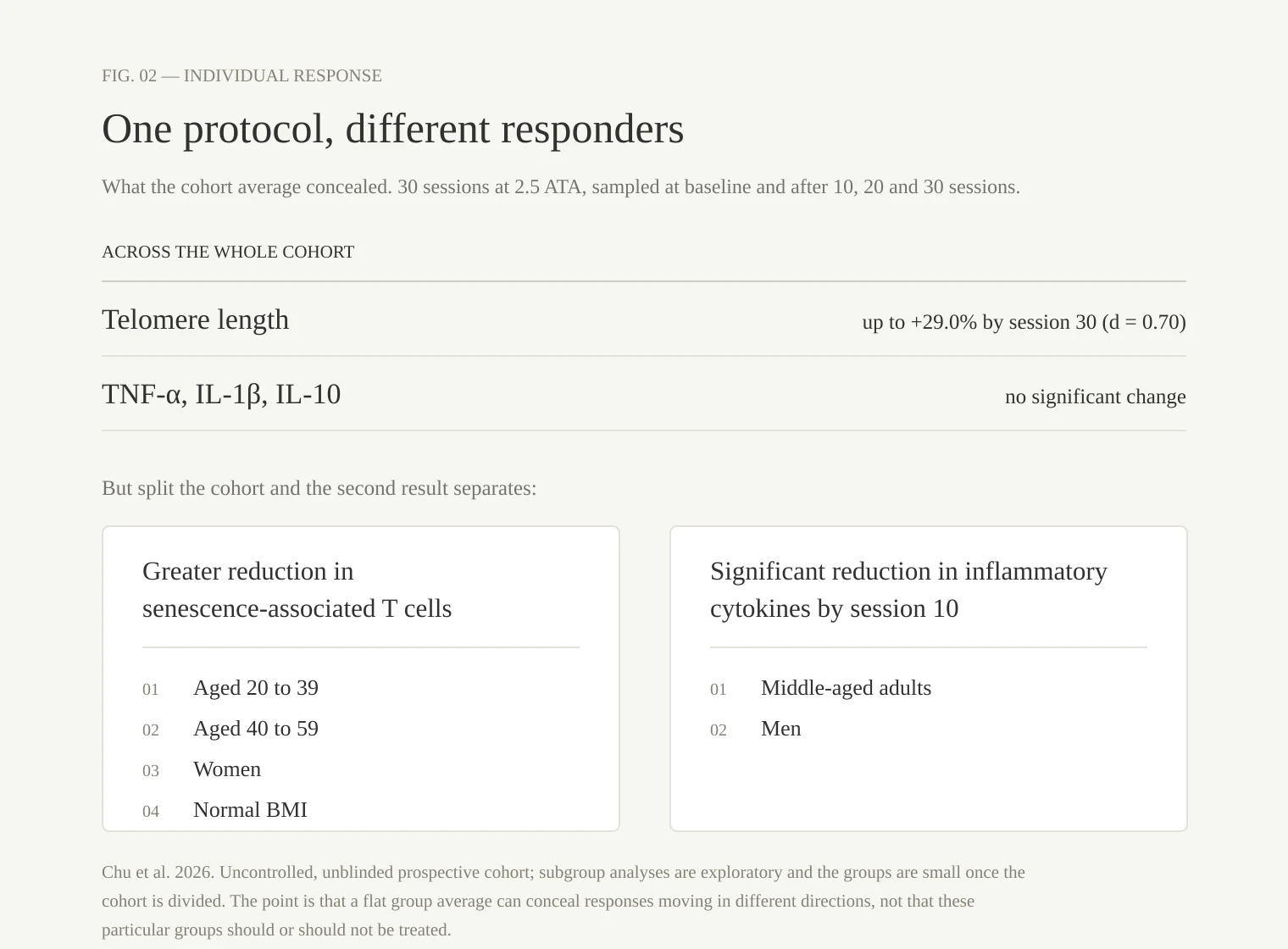
The authors conclude that responses were heterogeneous and influenced by demographic and metabolic factors, which points to real individual differences rather than noise.
That reframes the question for anyone deciding on a course. The useful version is not how many sessions work in general, but whether anyone is measuring your response as you go. Sampling at intervals rather than only at the end is the part of this study worth copying.
Study limitations
- Prospective cohort with no control group and no blinding. Change over time cannot be separated from natural variation or expectation.
- Clinically heterogeneous cohort, mixing apparently healthy participants with patients being treated for clinical indications.
- Subgroup analyses of this kind generate hypotheses rather than testing them, and the subgroups are small once the cohort is divided three ways.
- Run at 2.5 ATA for 60 minutes, not 2.0 ATA for 90.
- Funded by a hyperbaric technology company whose president and one employee are co-authors.
- Published as an early-access version ahead of the final version of record.
Where the evidence runs out
- No dose-ranging trial exists. The 40 to 60 session convention is inherited from protocol to protocol rather than derived from a study that compared different numbers head to head.
- Maintenance sessions have no evidence behind them. We are not aware of any controlled data on top-up or periodic sessions after a completed course, in either direction.
- Schedule flexibility is untested. Whether 40 sessions spread across four months works as well as 40 across two is the question working patients ask most often, and no trial has answered it.
- Durability data are uncontrolled. The one-year and three-year follow-ups track people who received treatment, without a comparison group followed the same distance.
- Where the curve flattens is unknown. Thom's data run to twenty treatments. What the same marker does between twenty and sixty has not been published.
None of that is unusual at this stage. Hyperbaric medicine has settled evidence and protocols for its approved indications; the questions above belong to its newer applications, where the trials are smaller and fewer. Knowing which of the two you are being offered is a fair question to ask any provider.
The protocols behind the evidence
Course length alongside inspired oxygen pressure
Two numbers describe a hyperbaric protocol: how much oxygen reaches your lungs per session, and how many sessions there are. Inspired oxygen pressure is chamber pressure multiplied by the fraction of oxygen breathed, so 2.0 ATA on 100% oxygen gives 2.0, and 2.0 ATA on 93% gives 1.86. Run both numbers on any offer and it becomes comparable.
| Study | Pressure | Gas | Session | Breaks | Course | Inspired O₂ | What it measured |
|---|---|---|---|---|---|---|---|
| Thom 2006, stem cell mobilization | 2.0 ATA | 100% | 120 min | Not reported | 1 session, and 20 | 2.0 ATA | CD34+ doubling, then eightfold |
| Heyboer 2014, dose comparison | 2.0 and 2.5 ATA | 100% | Not reported | Not reported | Sampled at 1, 10, 20 | 2.0 and 2.5 ATA | More cells at 2.5, equal signaling content |
| Yagishita 2025, post-exercise fatigue | 2.5 ATA | 100% by mask | 60 min | 2 × 5 min | 1 session | 2.5 ATA | Perceived fatigue down ~40% |
| Weaver 2025, brain injury | 1.5 ATA | >99% | 50 min at pressure | None reported | 40, then 40 more | 1.5 ATA | Symptom inventory, 13 weeks to 36 months |
| Zilberman-Itskovich 2022, post-COVID | 2.0 ATA | 100% by mask | 90 min | 5 min every 20 | 40 sessions, 5/week | 2.0 ATA | Cognition, energy, sleep, pain |
| Hadanny 2024, post-COVID follow-up | 2.0 ATA | 100% by mask | 90 min | 5 min every 20 | 40 sessions | 2.0 ATA | Same cohort at 486 ± 73 days |
| Benari 2025, diabetes with MCI | 2.0 ATA | 100% | 90 min | Not reported in abstract | 60 sessions | 2.0 ATA | Cognition, CBF, FDG-PET |
| HOT-LoCO 2025, long COVID | 2.4 ATA | 100% | 90 min | Not reported | 10 sessions, 6 weeks | 2.4 ATA | Quality of life at 13 weeks |
How this compares with our own protocol
We treat at 2.0 ATA in two CE-certified hard-shell multiplace chambers with seven seats between them. Oxygen is delivered by individual mask at approximately 93%, plus or minus 3%. Sessions run 65 or 95 minutes, with roughly ten minutes of compression at each end. Oxygen, pressure, temperature and humidity are logged continuously, with automatic switchover between oxygen and air if a reading leaves range.
On course length, the evidence range is 40 to 60 daily sessions, and that is the band the protocols above sit in. The number that applies to you is set at consultation rather than sold as a package, because it depends on what is being treated and on how you respond as the course progresses. What the table gives you is the range the research was conducted in, so you can check that whatever is proposed sits inside it.
The pressure is worth one more note. Thom's single-session and twenty-session human figures were both collected at 2.0 ATA, so the dose-response data that this guide rests on were generated at the pressure we treat at rather than extrapolated down to it.
A note on screening
A course is a commitment of 40 or more visits, so tolerability across that many is a fair thing to ask about. The record is reassuring. In the post-COVID trial, reported side effects ran at 35.1% in the oxygen arm against 38.9% in the sham arm, a difference that was not significant, and no participant discontinued because of them. The Undersea and Hyperbaric Medical Society describes middle ear barotrauma as the commonest side effect, citing a review of 1,446 patients across 31,599 treatments in which it occurred in approximately 2%, while noting that prospective studies using sensitive detection find considerably higher rates. A 2025 systematic review across 18,284 treated patients found 15% experienced otologic adverse events, of which 42.8% were mild and 6.4% severe. Prior difficulty equalizing and rate of compression were among the main risk factors, which is why compression over roughly ten minutes rather than two is worth asking any provider about.
One finding cuts the other way. The trial in older adults with diabetes and mild cognitive impairment reported three times as many serious adverse events in the oxygen arm as in sham, 25 against 8, across multiple organ systems. The abstract does not attribute them to treatment and the population carried substantial vascular comorbidity, but it argues for screening proportional to the course proposed: an older patient with vascular disease considering 60 sessions should expect a longer conversation than a healthy adult considering 40.
Before a first session, expect to be asked about untreated pneumothorax, which is an absolute contraindication; ear, sinus and eustachian tube function and any recent ear surgery; claustrophobia; seizure history; certain chemotherapy agents; pregnancy; and existing cataract or refractive change, since extended courses can produce a temporary myopic shift.
Frequently asked questions
Will I notice anything after the first session?
Some people do. The one blinded trial to test it found perceived fatigue after exercise dropped by around 40% after a single session, with no significant change in the air control. What the first session reliably does is biological rather than experiential: circulating stem cells roughly double. Whether that registers as feeling lighter varies between people, and no trial has tested whether an early response predicts the result of a full course.
If 40 sessions helps, would 80 help more?
Possibly, and one trial supports it. After a second course of 40 unblinded sessions, participants reported further gains at twelve months, and the authors concluded 80 may beat 40 for long-term brain injury outcomes. The second course was unblinded, so treat it as a promising signal. It is also not a decision for the start: that trial reassessed people after the first 40.
Do the benefits fade once I stop?
The follow-up data available do not show that pattern. Post-COVID patients reassessed more than a year after their last session showed quality-of-life improvements of similar magnitude to those measured immediately after treatment. Those cohorts are small and uncontrolled at that distance, so the finding is encouraging rather than conclusive, and there is no evidence either way on maintenance sessions afterwards.
Can I spread the course over four months instead of two?
Every published protocol compressed the course into roughly eight to twelve weeks, and there is no trial evidence on slower schedules in either direction. That does not make it impossible, it makes it a conversation. Bring your actual availability to the clinic rather than assuming it rules you out, because in practice most scheduling problems are solved by adjusting which weeks you attend rather than how far apart the sessions sit.
- 1.Thom SR, Bhopale VM, Velazquez OC, Goldstein LJ, Thom LH, Buerk DG. Stem cell mobilization by hyperbaric oxygen. American Journal of Physiology: Heart and Circulatory Physiology, 2006;290:H1378-1386. Link
- 2.Heyboer M 3rd, Milovanova TN, Wojcik S, et al. CD34+/CD45-dim stem cell mobilization by hyperbaric oxygen: changes with oxygen dosage. Stem Cell Research, 2014. Link
- 3.Yagishita K, Aizawa J, Ohji S, Hoshino T, Oyaizu T. Effect of one session of hyperbaric oxygen (2.5 ATA for 60 min) after moderate-intensity exercise on fatigue: a single-blind crossover randomized trial. Frontiers in Sports and Active Living, 2025. Link
- 4.Hadanny A, Efrati S. The Hyperoxic-Hypoxic Paradox. Biomolecules, 2020;10:958. Link
- 5.Weaver LK, Ziemnik R, Deru K, Russo AA. A double-blind randomized trial of hyperbaric oxygen for persistent symptoms after brain injury. Scientific Reports, 2025;15:6885. Link
- 6.Hadanny A, Zilberman-Itskovich S, Catalogna M, et al. Long term outcomes of hyperbaric oxygen therapy in post covid condition: longitudinal follow-up of a randomized controlled trial. Scientific Reports, 2024;14:3604. Link
- 7.Zilberman-Itskovich S, Catalogna M, Sasson E, et al. Hyperbaric oxygen therapy improves neurocognitive functions and symptoms of post-COVID condition: randomized controlled trial. Scientific Reports, 2022;12:11252. Link
- 8.Kjellberg A, Hassler A, Boström E, et al. Ten sessions of hyperbaric oxygen versus sham treatment in patients with long covid (HOT-LoCO): a randomised, placebo-controlled, double-blind, phase II trial. BMJ Open, 2025;15:e094386. Link
- 9.Benari O, Ravona-Springer R, Luo L, et al. Results of a double-blind sham-controlled trial examining the effects of hyperbaric oxygen therapy on cognition and brain biomarkers. Alzheimer's & Dementia, 2025 (conference abstract). Link
- 10.Chu HT, Zhao H, Wang SS, et al. Hyperbaric oxygen therapy modulates immune aging in a personalized manner: a linear mixed-effects analysis. Immunity & Ageing, 2026. Link
- 11.Undersea and Hyperbaric Medical Society. Side Effects of Hyperbaric Oxygen Therapy. Link
- 12.Systematic Review of Otologic Adverse Events in Hyperbaric Oxygen Therapy. 2025. Link